
Common-Cathode LED Explained: Where the Energy Savings Actually Come From
When you look at LED displays you usually notice how bright they are, how clear the picture is and how




Buying a large-format outdoor LED display is not only a visual decision. For billboard owners, DOOH operators, and stadium buyers, it is also an operational and financial decision that affects visibility, energy use, service costs, downtime, and long-term return on investment. That is why the most useful comparison is not just which display looks stronger on day one, but which display is designed to support better ownership value across its entire lifecycle.
March II is built for that kind of decision. It is a large-format outdoor LED display designed for roadside digital billboards, building-mounted installations, stadium screens, and other demanding outdoor applications. With 10,000 nits brightness, 26,000 contrast ratio, 3,840 Hz refresh rate, energy-saving technology, built-in redundancy systems, cloud-based monitoring and diagnostics, and a quick-assembly structure, it is positioned to improve the economics of ownership long after installation day.
A lot of outdoor LED purchases are judged too early, usually by upfront price or cabinet size alone. That is understandable, but it is not enough. Once a display is installed, the true economics begin to show up in power consumption, maintenance, service response, uptime, and how consistently the display can generate revenue or audience impact over time.
That is why lifecycle ROI is a better measure than purchase price alone. A display that looks less expensive at purchase can still become costly if it uses more power, requires more hands-on servicing, takes longer to install, or suffers from avoidable downtime. On the other hand, a display that is designed to reduce operating friction can produce stronger long-term value even if the initial investment is higher.
March II is positioned around that logic. It is designed to support total cost of ownership reduction, long-term return, and operational efficiency, which makes it especially relevant for buyers who need a screen that is not only bright and durable, but also manageable to own.
For outdoor LED displays, visibility is where revenue potential begins. If a screen cannot remain bright, sharp, and legible in direct sunlight, it loses value quickly in the eyes of advertisers and venue operators. That is especially true for roadside digital billboards and large public displays, where the audience may be moving quickly and only has a short window to see the message.
March II is specified at 10,000 nits brightness, which is a strong outdoor brightness level for maintaining clarity in demanding daylight conditions. The display also delivers a 26,000 contrast ratio and a 3,840 Hz refresh rate, both of which support image quality by improving perceived sharpness, motion performance, and content readability. In practical terms, these specifications help the display remain visually compelling when it is exposed to intense sunlight or viewed from longer distances.
The value of that visibility is easy to understand. Advertisers want messages that look clean and premium. Stadium buyers want content that feels sharp and professional. DOOH operators want a screen that can support premium inventory and keep the content looking consistent across long operating hours. A display that performs well visually can support stronger audience impact, which is the first step toward better ROI.
Energy is one of the most important recurring costs in outdoor LED ownership, and it is often underestimated during the buying process. A display can look efficient at the point of sale and still create a heavy monthly utility burden if its power profile is not well managed. Over years of use, those energy costs add up and can materially affect the profitability of the installation.
March II gives energy efficiency a central role in the product story. It achieves up to 56% energy savings and supports 100–200W/m average power consumption for the 10,000-nit version. It also uses high-efficiency LEDs, common-cathode driving, automatic brightness adjustment, cloud-based energy management, and power supplies with 90% conversion efficiency and active PFC 0.98. Those details matter because they show that energy efficiency is being addressed at multiple levels of the system, not through a single isolated feature.
For billboard owners and DOOH operators, lower average power use can reduce monthly operating expenses and improve long-term margins. For stadium buyers, it can help control utility load in venues where multiple systems already compete for power. In either case, energy savings improve the total cost of ownership and make the display easier to justify financially over a multi-year lifecycle.
Downtime is one of the most expensive problems in outdoor LED ownership because it affects both revenue and reputation. A display that goes dark during a high-traffic period, a major event, or a premium advertising campaign loses value immediately. The lost value is not just the impressions that were missed. It also includes repair labor, dispatch time, potential replacement parts, and the operational disruption that follows.
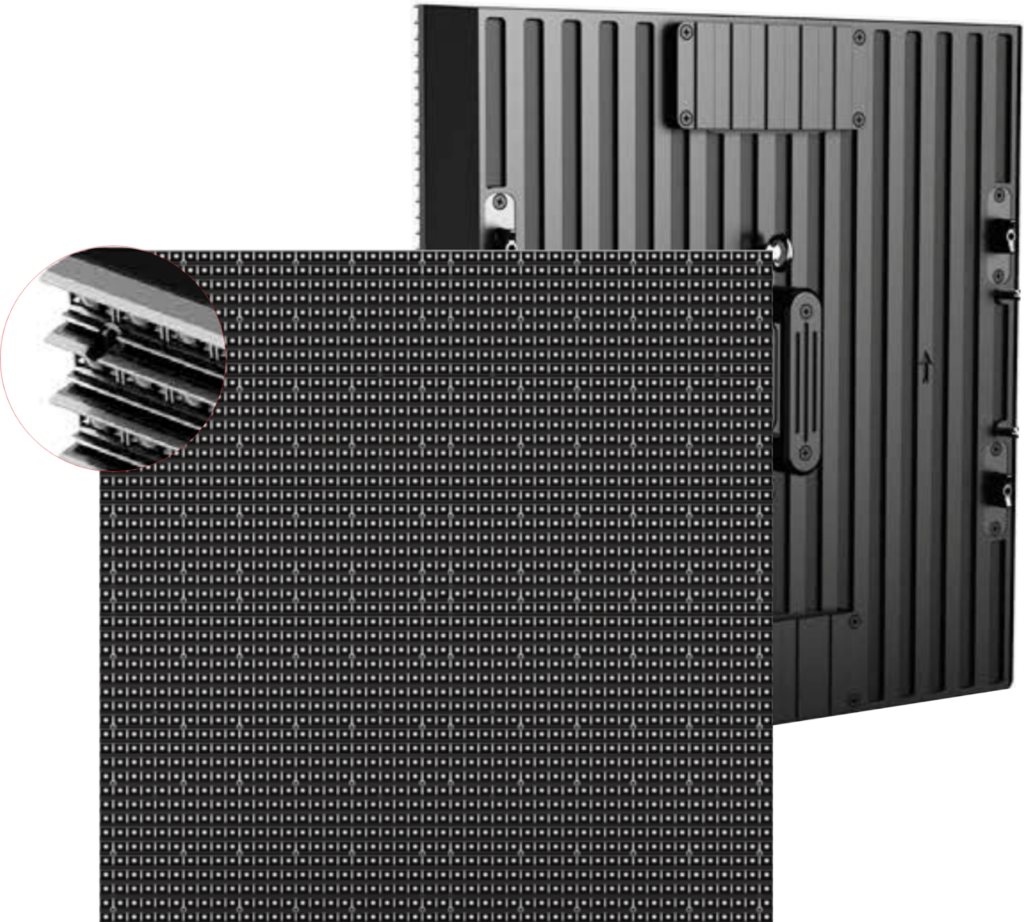
March II addresses this risk through built-in redundancy features. All module power signal pins are redundantly configured so that a pin contact issue will not impact display performance, and dual power supplies operate in parallel so that if one fails, the other can instantly take over the load. That kind of redundancy is important because it helps the display remain operational even if a component problem occurs.
From a buyer’s perspective, that matters because uptime is part of the revenue model. A screen that stays online more consistently can keep selling impressions, maintain advertiser confidence, and reduce the chance of emergency service interruptions. For live-event and stadium environments, redundancy is especially valuable because the cost of a failure during a game or event can be far higher than a normal service call.
Traditional large-format outdoor LED systems may still provide strong visual quality, but if they do not have comparable redundancy, the operator may face more exposure to unplanned downtime. Over the full life of the display, that can reduce effective ROI in ways that are not always obvious during procurement.
Installation speed is often overlooked, but it is one of the clearest ways to improve the economics of a large-format LED project. Every extra day of installation means delayed revenue, additional labor, and more scheduling pressure. For projects involving billboards, venue retrofits, or outdoor advertising networks, that delay can become expensive very quickly.
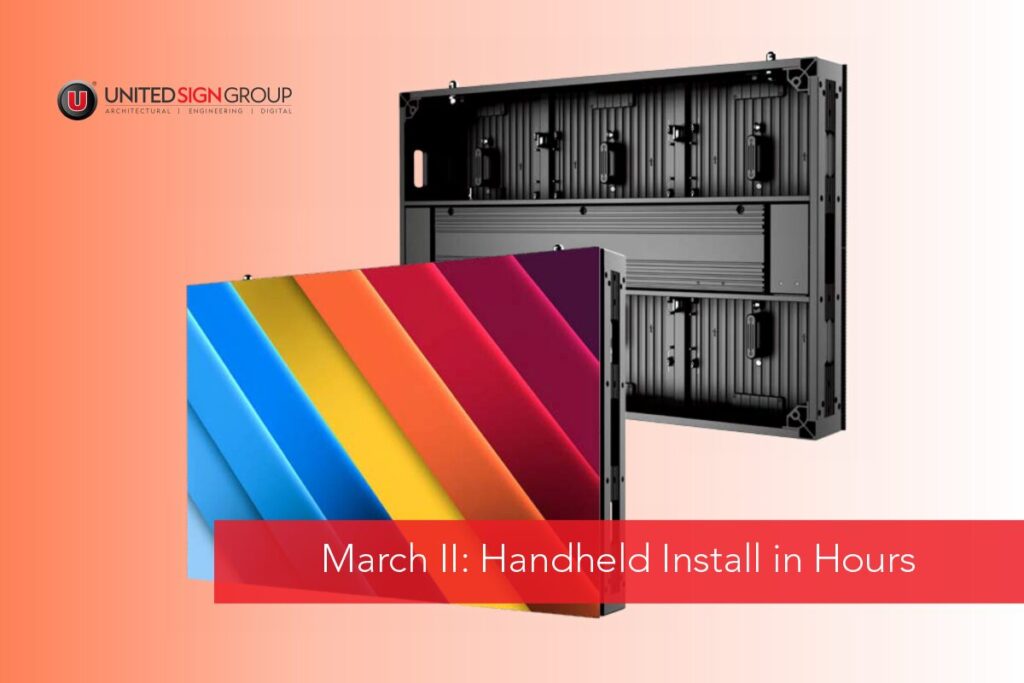
March II is designed with a quick-assembly structure and a practical cabinet layout intended to make installation and maintenance easier. It also uses front and rear access, quick-connect weatherproof power and signal connectors, and a lightweight but robust cabinet frame. Those design choices matter because they reduce the friction that often comes with large-format outdoor installations.
This matters for ROI because time to activation affects time to income. The sooner the display goes live, the sooner it can begin producing impressions, generating revenue, or supporting sponsorship commitments. Faster installation also reduces the burden on project teams and can help lower the soft costs associated with complex field work.
For buyers comparing March II against a traditional large-format outdoor LED display, the install advantage may not look dramatic on paper, but it can have a real impact on project timing and overall ownership experience. In commercial display work, speed is often a financial asset.
Modern outdoor LED ownership is increasingly shaped by remote monitoring and data visibility. In older service models, operators often found out about a problem only after someone physically noticed it on site. By then, the issue had already affected the audience or the advertiser. Cloud-based monitoring changes that by allowing operators to identify and respond to issues earlier.
March II includes cloud-based monitoring and diagnostics as a core feature. It keeps operators informed of real-time status, triggers alerts when faults are detected, and provides detailed diagnostics for troubleshooting and service planning. It also allows configuration files to be uploaded and sent from the cloud without connecting a computer to the player on site.
That is valuable for billboard owners and DOOH operators because it can reduce the need for unnecessary site visits and help service teams respond more efficiently. It also supports more proactive maintenance planning, which can lower downtime and improve operational control. For stadium buyers, monitoring adds confidence because live-event environments leave very little room for guesswork.
In ROI terms, monitoring helps protect revenue by reducing the duration and severity of problems. It also helps control maintenance costs by making service more targeted and less reactive. That makes it one of the more meaningful ownership features in the product.
A display is only as good as its ability to be maintained efficiently. Even the best outdoor LED screen will eventually need service, replacement parts, or some level of troubleshooting. The difference between a manageable ownership experience and a frustrating one often comes down to how quickly technicians can access, diagnose, and repair the system.
March II is strong on serviceability. It supports front and rear access, easy replacement of modules and power units on site, and a design intended to make maintenance intuitive and hassle-free. It also includes calibration memory built into each module so that replacement modules retain consistent brightness and color behavior after installation. That feature is particularly helpful because it reduces the risk of visible inconsistency after service.
This matters for lifecycle ROI because maintenance cost is not only about parts. It includes labor, lift rental, downtime, travel time, and the operational disruption of getting the job done. A display that is easier to service tends to be cheaper to own over time, especially in larger installations where access is more difficult.
Traditional large-format outdoor LED displays may still be maintainable, but if access is slower or more complicated, the cost of ownership tends to rise. March II’s service-friendly design helps reduce that burden and supports the idea of lower total cost of ownership.
When buyers compare outdoor LED options, the conversation often starts with brightness, size, or cabinet dimensions. Those are useful details, but they do not tell the full story. The real question is which display supports the strongest business outcome over time.
March II is built around that long-term ownership perspective. It is designed to maximize ROI and minimize TCO through strong visual performance, ultra-low power consumption, quick installation, built-in redundancy, smart monitoring, and reliable outdoor performance. That combination is important because it addresses the actual pain points that outdoor display owners face after the purchase is made.
For billboard owners, that means more dependable inventory and lower operating burden. For DOOH operators, it means easier scaling and better network management. For stadium buyers, it means a more reliable and serviceable display that can perform in demanding event conditions. The common thread is that the display is not just an asset to look at; it is an asset to operate.
That is why March II stands out in the large-format category. It is not simply pitched as a bright screen. It is presented as a business tool designed to improve the economics of ownership throughout the product lifecycle.
A serious buyer should evaluate more than the headline spec sheet. The best purchase decision comes from asking how the display will perform in real conditions over time.
Important questions include:
March II provides meaningful answers to many of those questions. That does not automatically make it the right choice for every project, but it does mean the product is being presented with the kinds of features that matter most in lifecycle ownership.
March II is best understood as a large-format outdoor LED display designed around operational value, not just visual impact. It offers 10,000 nits brightness, 26,000 contrast ratio, 3,840 Hz refresh rate, up to 56% energy savings, built-in redundancy, cloud monitoring and diagnostics, quick installation, front and rear access, and calibration memory for service consistency. Those features work together to support a lower total cost of ownership and a stronger long-term ownership experience.
For billboard owners, DOOH operators, and stadium buyers, that combination is what matters most. The display that keeps running efficiently, stays visible, is easier to service, and can be monitored remotely is often the display that produces the better financial result over time. That is the core of lifecycle ROI, and it is exactly where March II is positioned to compete.
When you look at LED displays you usually notice how bright they are, how clear the picture is and how
Retrofit Faster: Replacing Traditional Sign Faces with Modular Outdoor LED A retrofit sounds simple until you are the one responsible
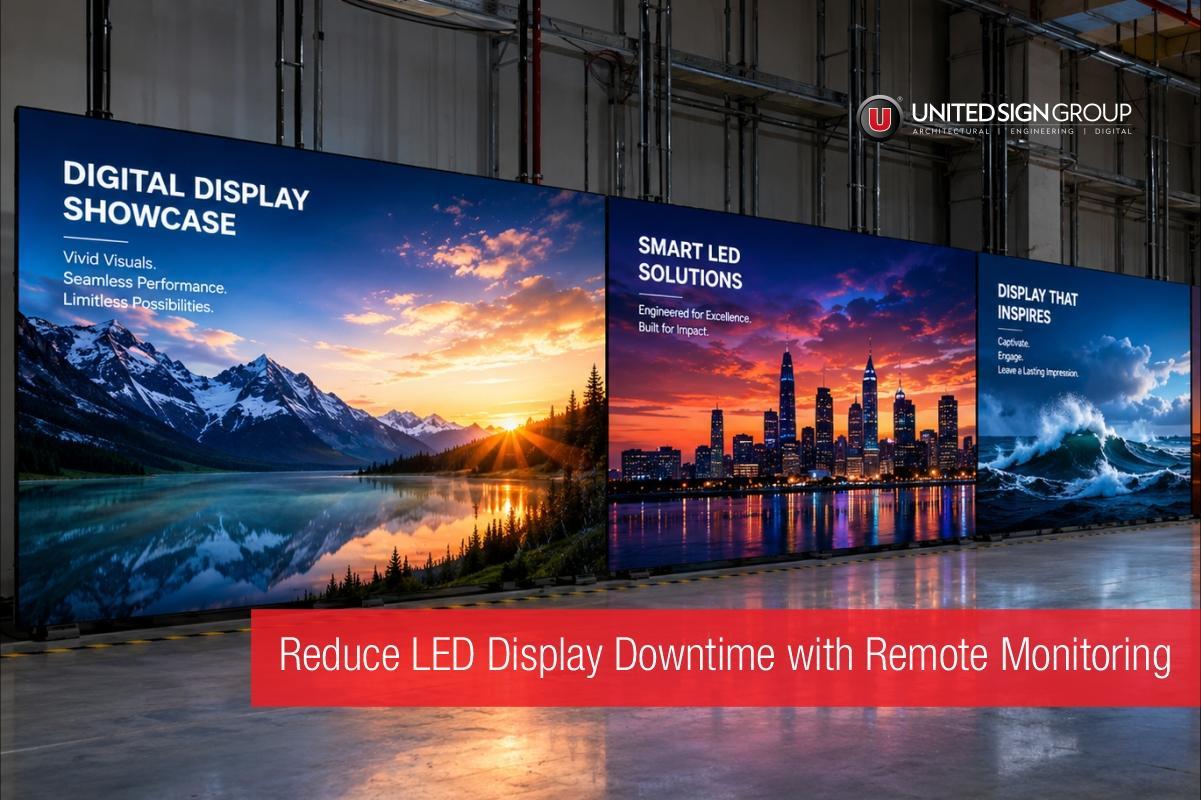
When you manage digital signage across multiple locations, one offline screen can create a chain reaction of problems. A message


Thanks for stopping by! We're here to help, please don't hesitate to reach out.