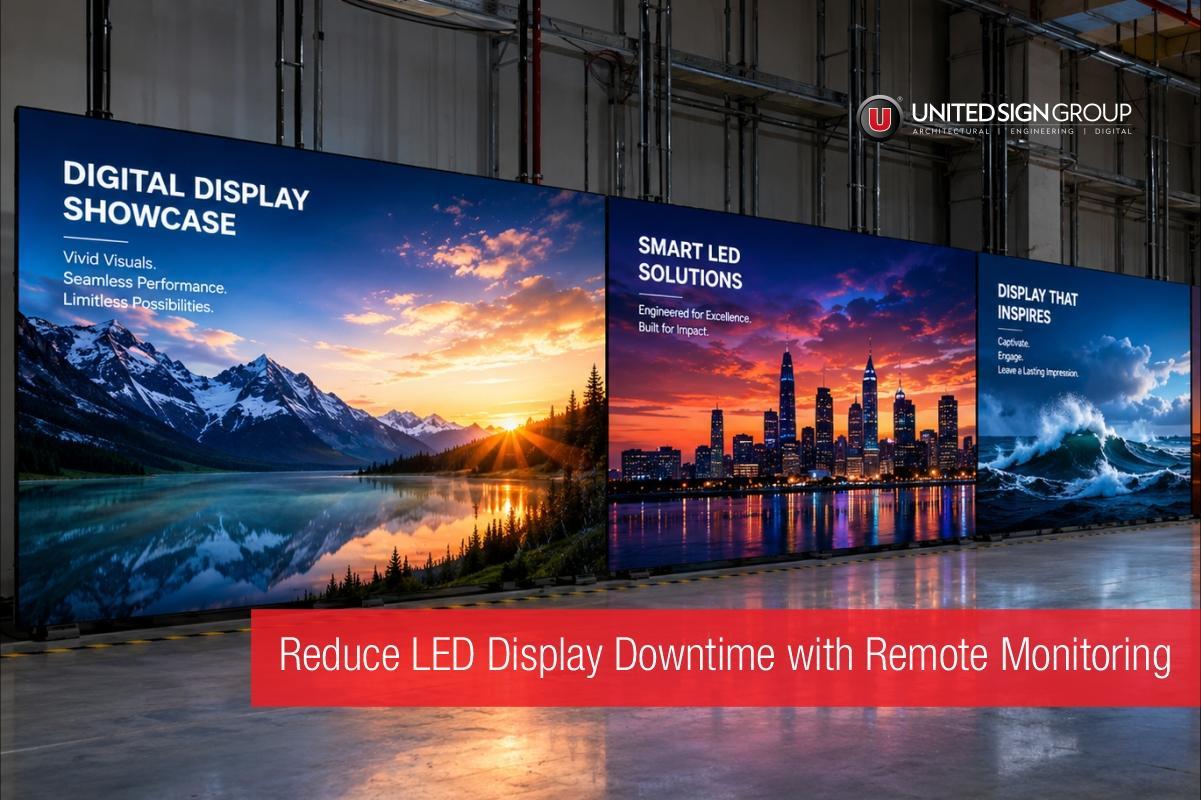
When you manage digital signage across multiple locations, one offline screen can create a chain reaction of problems. A message that fails to play on time, a module that goes dark, or a power issue that slips by unnoticed can weaken brand consistency, interrupt campaigns, and send your service costs climbing. That is exactly why LED display remote monitoring has become a core buying consideration for multi-location operators who need uptime, control, and faster diagnostics across every screen in the network.
For buyers comparing systems, the real question is not whether a display can show content. It is whether the network can stay visible, report issues early, and make service easier when something does go wrong. A strong monitoring platform gives you visibility into power, modules, pixels, and playback visibility, which turns downtime from a surprise into something you can detect, isolate, and fix faster.

Why downtime is expensive
Downtime is more than a blank screen. It can mean missed promotions, confused local staff, emergency service calls, and lost trust from managers who expect the network to work every day. In a multi-site operation, those costs multiply quickly because one issue can affect multiple locations, campaigns, and teams at once.
That is why any serious LED display buying guide should treat monitoring and control as part of the product itself, not as an optional add-on. If a display is hard to check, hard to diagnose, or slow to recover, the total cost of ownership rises even if the hardware looked affordable at purchase time. For digital signage networks, uptime is a business metric, not just a technical one.
What remote monitoring actually does
Remote monitoring gives operators a central way to see what is happening across the network without traveling to each site. It can surface alerts about signal loss, overheating, controller issues, playback failures, or power irregularities before they become visible to customers. That is the main reason LED display control matters so much in multi-location environments.
Take ViPlex and VNNOX as an example of why this is important in practice: They’re built for remote cluster management, device monitoring, smart maintenance and playback oversight from a single interface. That means teams can track display status, adjust content, and respond to faults from one place instead of relying on someone on-site to notice a problem first. For operators, that is the difference between reactive service and proactive network management.
Diagnostics make faster repairs possible
The most valuable monitoring systems do more than say whether a screen is on or off. They provide diagnostics. That matters because diagnostics help identify what failed, where it failed, and how urgent the issue is. Instead of guessing, teams can see whether the problem is related to power, modules, pixels, playback, or connectivity.
Power diagnostics matter because unstable power can affect the full system long before it causes a complete outage. Module diagnostics help isolate damaged sections quickly, which is especially useful when one part of a display starts showing errors or blank areas. Pixel-level visibility matters because even small defects can hurt the appearance of customer-facing displays, especially where message clarity affects brand perception. When diagnostics are built into the workflow, repair time drops and the network becomes easier to manage at scale.
Playback visibility is just as important
A display can be powered on and still fail to do its job if the content is not actually playing. That is why playback visibility is a key part of modern digital signage management. Multi-location operators need to know not only whether the screen is alive, but whether the correct content is being delivered at the correct time.
Remote monitoring helps verify playback status, schedule execution, and source behavior from a distance. This is especially useful when campaigns need to stay synchronized across many sites. If a file fails, a schedule breaks, or a player freezes, teams can catch it faster and restore the message before the issue becomes visible to customers or staff. In a commercial environment, that kind of control protects both the brand and the campaign.

How control systems support uptime
The best remote monitoring setups are usually tied to a larger control ecosystem, not just a single screen dashboard. That is where platforms like VNNOX become relevant, because they support remote content management, player control, device monitoring, and playback reporting across connected displays. In practical terms, that means operators can push content, review device status, restart players, and manage multiple sites from one interface.
This is useful for sales conversations, too. Buyers often start by asking about screen specs, but they usually care more about outcomes: fewer truck rolls, fewer emergency calls, and better network visibility. When a system offers both hardware and software support, it becomes easier to match the solution to the buyer’s actual operating model. That is why remote monitoring should be presented as a business advantage, not just a technical feature.
A practical example
We’ll take a retail chain with LED displays in ten locations, for example. One screen begins losing pixels on the lower corner, another has a power warning, and a third stops playing scheduled content after an update. Without remote monitoring, each issue may go unnoticed until a local manager calls for help. That means extra downtime, extra service cost, and extra pressure on the operations team.
With a monitoring platform in place, the team can see diagnostics immediately, identify whether the issue is tied to power, modules, or playback, and route the repair to the right location first. That is the real value of LED display remote monitoring: it helps operators catch small problems before they grow into expensive outages. For multi-location networks, that kind of visibility is often worth more than the hardware spec sheet alone.
What to look for in a buying guide
A good LED display buying guide for multi-location operators should focus on more than brightness and pixel pitch. It should ask how the system handles diagnostics, how quickly it reports failures, how well it manages power, and how clearly it shows playback status. It should also explain whether the platform supports remote control, cluster management, and service-friendly workflows.
That is the best-fit product conversation United Signs can lead. The right solution is not always the brightest or the most feature-heavy. It is the one that fits the operator’s scale, service model, and content workflow. When a product is easy to monitor and easy to maintain, it tends to perform better over the long term and create less friction for the people running it.
Schedule a demo
For multi-location operators, the smartest way to reduce downtime is to see problems earlier and fix them faster. Remote monitoring makes that possible by improving diagnostics, tracking power and module health, confirming playback visibility, and giving teams better control over the full network.If you are comparing digital signage options and want the best-fit solution for your network, schedule a demo with United Signs to see how LED display remote monitoring can support uptime, serviceability, and day-to-day control.