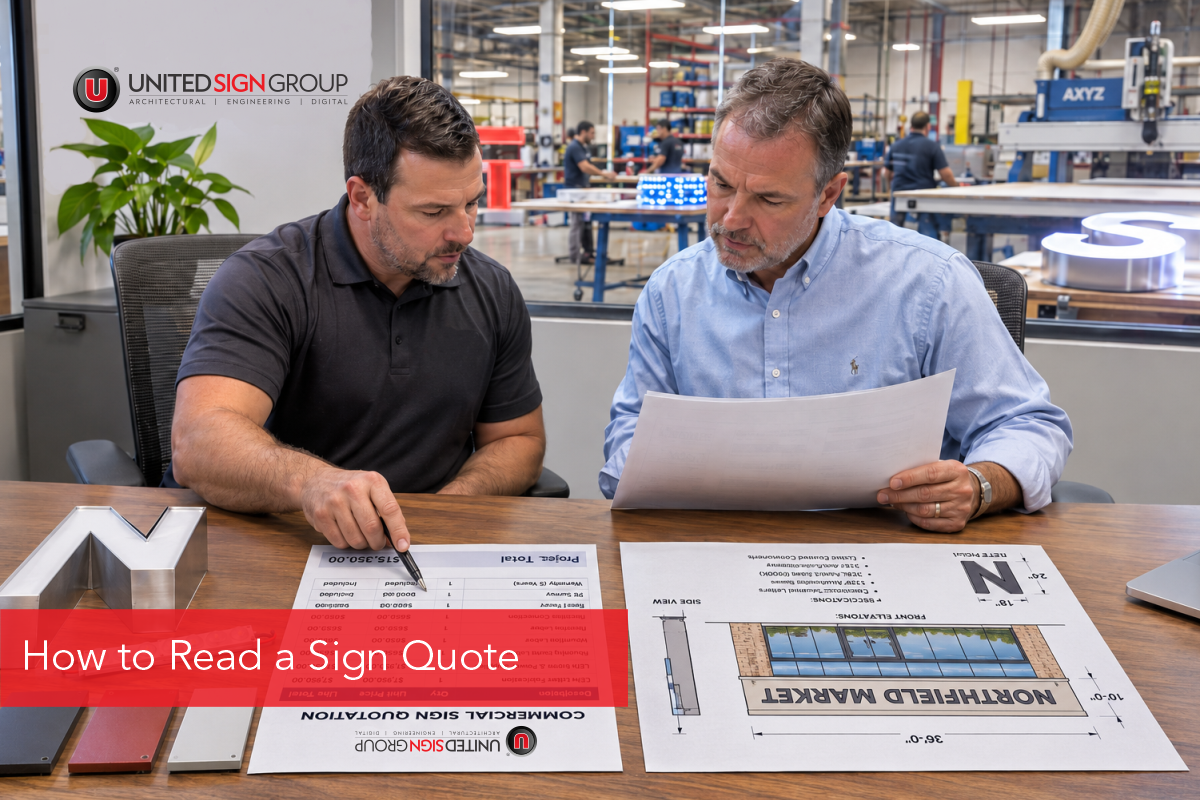
Two sign quotes for the same job can land thousands of dollars apart. When that happens, the cheaper one is not always the better deal, and the higher one is not always padded. The difference usually sits in what each document includes and what it quietly leaves out. So if you handle procurement or run a business, learning to read a sign quote protects your budget and keeps surprises off your invoice.
This guide shows what a complete quote looks like, where gaps hide, and which warning signs to watch for.
Why a Sign Quote Needs a Close Read
A sign is not an off-the-shelf product. Instead, each one needs design, fabrication, permits, and installation for a specific site. As a result, a sign quote can bundle many separate costs into a single number. If you only compare the bottom line, however, you may compare two different scopes of work.
Ultimately, reading the details lets you compare like for like. It also shows how a sign company handles transparency, which tells you a lot about how the project will go.
What a Complete Sign Quote Includes
First, a solid quote breaks the project into clear parts. Look for these items:
- Design and drawings. Concept art, shop drawings, and the number of revisions included.
- Site survey. Whether the team verifies measurements and site conditions before fabrication.
- Materials and specs. Face material, cabinet or letter construction, finishes, and lighting type.
- Fabrication. Labor and shop work for each sign or sign type.
- Engineering. Structural calculations, stamped drawings, and foundation design where needed.
- Permits. Who prepares and files them, and whether the price covers fees.
- Installation. Crew, equipment, electrical hookup, and site restoration.
- Warranty. What is covered, for how long, and what voids it.
- Timeline. Estimated dates from approval to completion.
In short, each line should be specific enough that you could hand it to another company and get a comparable bid.
What Is Often Missing From a Sign Quote
Gaps are where budgets slip. In many cases, quotes leave out or bury these items:
- Permit fees and engineering. For instance, some quotes list the sign but not the paperwork behind it.
- Electrical work. For example, running power to the sign may fall to you or an electrician you hire.
- Foundation and site work. In particular, footings, trenching, and concrete are easy to overlook on monument and pylon signs.
- Crane or lift charges. Likewise, tall or heavy signs may need equipment that the company bills separately.
- Removal of the old sign. Also, many quotes do not include teardown and disposal.
- Taxes and shipping. Together, these can add a meaningful amount to the total.
- Change order terms. Finally, a quote may not say how the company prices scope changes.
If the quote does not list an item, assume it does not cover it. Therefore, ask about each one before you sign.
Red Flags in a Sign Quote
In fact, some problems show up on the page itself. Watch for these:
- A single lump sum with no breakdown. As a result, you cannot check what you are paying for.
- Vague language. For example, phrases like “standard materials” or “as needed” leave room for disputes.
- A price far below the others. In many cases, low numbers mean missing scope, cheaper materials, or add-ons later.
- No mention of permits or engineering. Also, this is a common source of delays and extra cost.
- Pressure to sign today. Instead, a fair quote should hold for a reasonable period.
- No warranty terms. If coverage is not written down, you may not have any.
- No company details. Missing license numbers, insurance, or a physical address deserve a follow-up.
One red flag may have a simple explanation. However, several together usually mean you should keep looking.
How Commercial Sign Cost Gets Built
Understanding commercial sign cost makes quotes easier to judge. Several factors drive the number:
- Size and complexity. Generally, larger and more detailed signs take more material and labor.
- Materials. For example, aluminum, stone, acrylic, and other choices change both price and lifespan.
- Lighting. LED illumination adds cost up front but can lower energy and maintenance over time.
- Engineering and foundation. Freestanding signs need structural design and proper footings.
- Permits and local rules. Fees and review requirements vary by city.
- Installation access. Tight sites, height, and utilities affect labor.
Because so many variables apply, a single price per square foot rarely tells the full story.
How to Compare Sign Company Pricing
Fair sign company pricing comes from comparing the same scope. To get there, follow these steps:
- First, give every vendor the same brief. Share the same drawings, specs, and site details.
- Ask for an itemized quote. Line items make differences easy to spot.
- Build a simple comparison sheet. List each item and mark who includes it.
- Check what each quote excludes. The gaps often explain the price difference.
- Compare warranties and timelines. A longer warranty or faster schedule can justify a higher price.
- Verify credentials. Confirm licensing, insurance, and references.
Questions to Ask Before You Accept a Sign Quote
Bring these to the conversation before you approve anything:
- Does this price include permits, engineering, and installation?
- What is not included?
- How are change orders priced?
- What does the warranty cover, and who services it?
- How long is this quote valid?
- What are the payment terms and deposit schedule?
- Who handles inspections and final approvals?
In the end, clear answers signal a company that stands behind its numbers.
Request an Itemized Sign Quote
If you want a number you can trust, start with a clear scope. Send us your project details, site photos, and any drawings, and our team will prepare a quote that spells out every part of the work. In other words, you will see what is included, what is not, and why.
Request an itemized sign quote or call (800) 935-8094. A specialist responds within 24 hours with a clear next step and no obligation.
FAQs
A complete sign quote lists design, site survey, materials, fabrication, engineering, permits, installation, warranty, and timeline. Each item should be specific and priced, so you can compare it with other bids.
Quotes differ because scope, materials, and included services differ. For example, one company may include permits and engineering while another leaves them out. Comparing line items shows where the gap comes from.
Not always. In fact, a low price can mean missing scope, lower-grade materials, or extras billed later. For that reason, compare what each quote covers before you decide.
Validity varies by company, often 30 to 90 days, because material and labor costs change. Check the date on the quote and ask for an extension if your approval process takes longer.