Pylon Signs
Height is a strategy. We build signs that use it well.
Pylon Signs for Maximum Visibility
When your property sits on a highway, a high-traffic arterial, or a road where drivers are moving fast and making decisions quickly, a ground-level sign does not cut it. Pylon signs are tall freestanding structures, typically mounted on one or two steel poles, engineered to put your identity at the height where it can be read before a driver has already passed your entrance.
United Signs engineers, fabricates, and installs pylon signs for shopping centers, fuel stations, hotel properties, automotive dealerships, and any commercial facility where road visibility at distance is what the sign program is built around. Structural engineering, foundation design, cabinet fabrication, illumination, and installation are all handled in-house. Nothing about a pylon sign is a standard catalog item, and we do not treat it like one.
The height and exposure that make pylon signs effective also make engineering the part that cannot be short-cut. Wind load calculations, foundation depth, pole gauge, and cabinet weight distribution are all documented in the structural drawings before fabrication begins. A pylon sign that fails structurally or settles over time is a liability, not just an aesthetic problem.
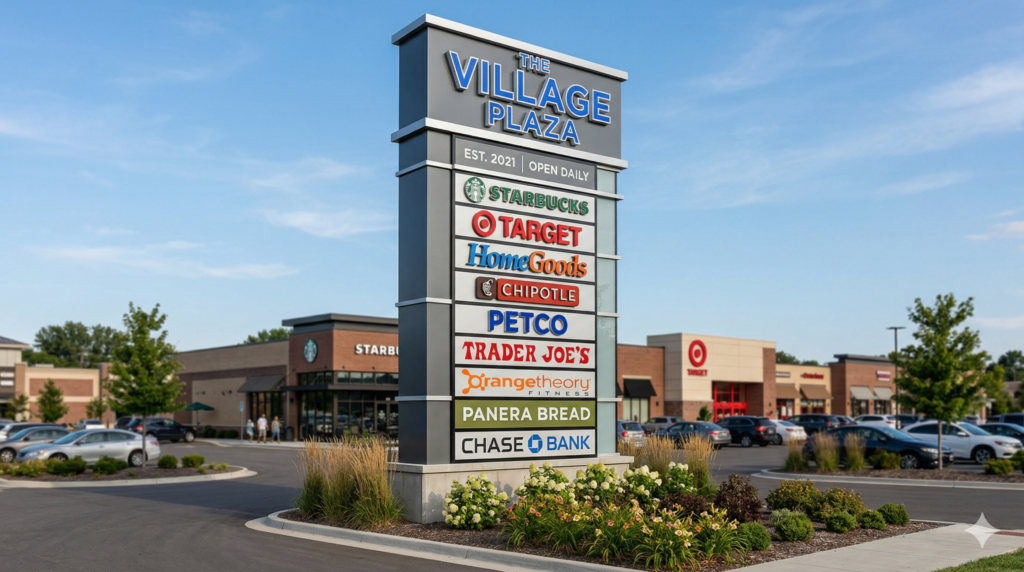
Pylon Sign Types We Build
Pylon signs vary in structure, cabinet configuration, and the number of tenants they need to display. Here is what we build and where each type applies.
Single-Pole Pylon Signs
A single steel pole supports the sign cabinet above grade. The most common configuration for single-tenant properties, fuel stations, and standalone retail locations where the sign needs height and visibility without the footprint of a two-pole structure. Cabinet size and pole height are engineered to the viewing distance and local sign code height limits.
Two-Pole Pylon Signs
Two steel poles support a wider cabinet, allowing for larger sign faces and more tenant panels. The standard configuration for shopping centers, strip malls, and multi-tenant commercial properties where the sign needs to carry multiple names at road-visible height. Cabinet width, pole spacing, and foundation design are all engineered as a single structural system.
Freeway and High-Rise Pylon Signs
Taller structures engineered for freeway interchange visibility, typically 50 feet and above. Used by hotel brands, fuel station chains, and large retail anchors at highway exits where the sign needs to be read from a significant distance and at highway speeds. Structural engineering requirements at this height are substantially more complex and require stamped drawings from a licensed engineer.
Multi-Tenant Pylon Signs with Changeable Panels
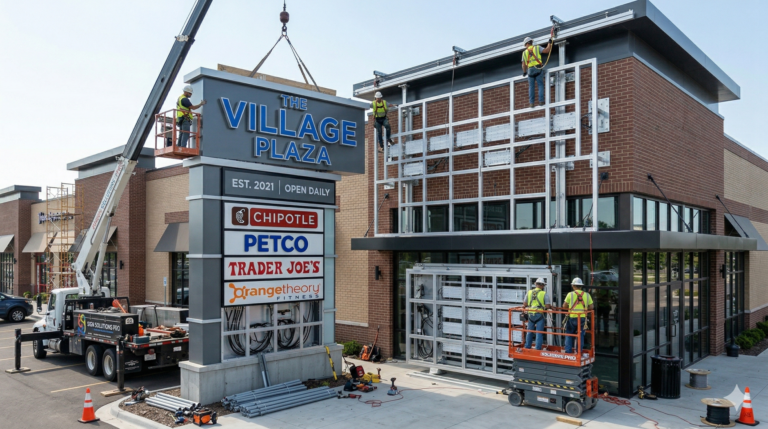
Pylon cabinets designed with individual tenant panel inserts that can be replaced when tenants turn over without rebuilding the cabinet. The standard approach for shopping center pylon signs where tenant mix changes regularly. Panel formats, track systems, and cabinet depths are designed to allow panel swaps without crane work or major disassembly.
Illuminated Pylon Cabinets
Internally illuminated cabinet faces using LED arrays sized for the cabinet depth and face area. Produces consistent, even illumination across the full sign face without hot spots or dark edges. The standard for any pylon sign that needs to be legible after dark, which covers most commercial applications.
Pylon Signs with Integrated Electronic Message Centers
LED message center panels integrated into the pylon cabinet structure, allowing the property or individual tenants to update pricing, hours, or messaging remotely. Common for fuel stations, quick-service restaurants, and any property where time-sensitive information needs to reach drivers before they pass the entrance. Panel brightness is calibrated for the ambient light conditions of the site so the display is readable in daylight without being overbearing at night.
Is a Pylon Sign Right for You?
Pylon signs are engineered for a specific type of visibility challenge. Here is a direct look at where they are the right call and where a different sign type would serve the application better.
A pylon sign makes sense if:
- Your property is on a road where traffic moves at 35 mph or faster, and drivers need to see your sign well in advance of your entrance to react in time. At those speeds, a ground-level monument sign is simply not visible soon enough to be useful.
- Your building is set back significantly from the road, behind a parking lot, landscaping, or other structures that block a building-mounted sign from road view. Pylon height clears those obstructions.
- You are operating a shopping center, fuel station, hotel, or automotive dealership where the sign needs to carry multiple tenant names or product pricing visible from the road. Pylon signs are engineered for exactly that use case.
- Your local sign code permits taller freestanding signs along your road classification. Most jurisdictions allow pylon signs on arterials and highways where they restrict monument sign heights.
A pylon sign may not be the right fit if:
- Your property is in a zoning district, historic area, or planned development where tall freestanding signs are restricted or prohibited. Many municipalities have moved to cap pylon heights or ban them in certain corridors. We pull the applicable sign code for your site before design begins so there are no surprises.
- Your road has low traffic speed and short setbacks where a monument sign provides sufficient advance visibility. Pylon height is an engineering and cost investment that only pays off when the viewing distance genuinely requires it.
- You need signage primarily for pedestrian traffic or a property where the entrance is clearly visible without advance identification. In those situations, building-mounted channel letters or a monument sign at the entrance are the more appropriate and cost-effective solution.
Not sure if your site warrants a pylon sign? We will assess your road classification, your property setback, and your local sign code and give you a direct answer before any design work begins.
Request a ConsultationWhy Choose United Signs for Pylon Signs
Maximum Visibility
Built tall enough to clear surrounding structures and readable from the road at speed.
Multi-Tenant Capable
Height, scale, and layout are determined by your property and what the road demands.
Modern Lighting
LED keeps your sign working long after the sun goes down.
What Goes Into Every Pylon Sign We Build
A pylon sign is a structure engineered to stand in the ground for 20 years and take the wind load of whatever market it is installed in. What it is built from matters as much as what it looks like.
Aluminum Cabinets
Sign cabinets are fabricated from aluminum extrusions and sheet panels. Aluminum is used because it provides the structural integrity required for a cabinet at elevation without adding weight that increases structural requirements at the pole and foundation level. Cabinets are painted, powder-coated, or finished with vinyl graphics depending on the design.
LED Illumination Arrays
Internal illumination is provided by commercial-grade LED modules sized to the cabinet depth and face area. LED systems are significantly more energy-efficient than fluorescent alternatives and do not require ballast replacement over the service life of the sign. Brightness is calibrated to ambient light conditions so the sign is visible in full daylight without creating glare issues at night.
Electronic Message Center Modules
Where specified, LED message center panels are integrated into the cabinet as a factory-assembled module. Panel size, pixel pitch, and brightness are selected based on the minimum legible character height at the intended viewing distance. All electronic message centers include remote content management capability.
How We Work
Consultation & Survey
We review your site, define your sign program, and map every location, size, and mounting spec before design begins.
Design & Permitting
Certified shop drawings are produced and submitted for permit approval u2014 signed off by your team before production starts.
In-House Fabrication
Every sign is built in our own facility with in-house QC. No outsourcing means tighter quality and reliable lead times.
Installation & Sign-Off
Certified crews install every sign. We conduct a full walkthrough and provide documentation before handover.












Industries We Serve





Frequently Asked Questions
That depends on your local zoning regulations and what the site actually needs. We assess your property, review the applicable height limits, and recommend what works within those boundaries before design begins.
In most cases, tenant panels and sign faces can be changed without replacing the entire structure. This makes pylon signs a practical long-term investment for properties where tenants change over time.
Yes. Because of their height and structural demands, pylon signs require engineering drawings as part of the permitting process.
They are actually one of the best solutions for high-speed road environments.
Yes. Every pylon sign we install includes stamped structural drawings from a licensed engineer covering wind load calculations, pole sizing, and foundation design. This documentation is required as part of the permit submission in virtually every jurisdiction. It is also the documentation that protects the property owner if the sign is ever subject to a structural inspection or an insurance claim.
Yes. Multi-tenant pylon cabinets are designed with individual panel slots that allow tenant names to be changed without rebuilding the cabinet. Panel size, track system, and the number of tenant slots are all specified during the design phase based on the current and anticipated tenant mix.
A properly engineered pylon sign with an aluminum cabinet and commercial-grade LED illumination will last 20 years or more under normal operating conditions. The foundation and structural members, when correctly sized and installed, have a service life that exceeds the cabinet. The components most likely to require attention over time are the cabinet faces and the LED modules, both of which can be serviced or replaced without replacing the structural assembly.
In many cases yes. If the structural assembly is sound, cabinet faces can be replaced, illumination can be upgraded from fluorescent to LED, and tenant panels can be updated without replacing the poles or foundation. We assess the existing structure before recommending a retrofit versus a full replacement.