A branch rebrand puts your name in front of every customer at once. It also puts your sign program under pressure. If customers can’t find the branch, or if the new name looks unfamiliar on the building, trust drops fast. Bank signage carries more weight than most signage, because people use it to decide where to put their money.
This guide helps bank and credit union marketing and facilities teams plan a rollout that keeps customers confident, keeps branches open, and keeps the schedule on track.
Why Bank Signage Needs Extra Care
A retail sign tells people what a store sells. Bank signage tells them whether an institution is stable, legitimate, and still the same one they trusted last week. For that reason, a rebrand carries real risk.
Customers also use your signs in practical ways. They look for the drive-through lane, the ATM, the night deposit box, and the entrance. If any of those change without warning, frustration shows up in your call center and your reviews.
Start With a Full Bank Signage Audit
Before you design anything, count what you have. Many teams find they own more signs than they thought. A branch audit should cover:
- Exterior signs. Building letters, monuments, pylon signs, and awnings
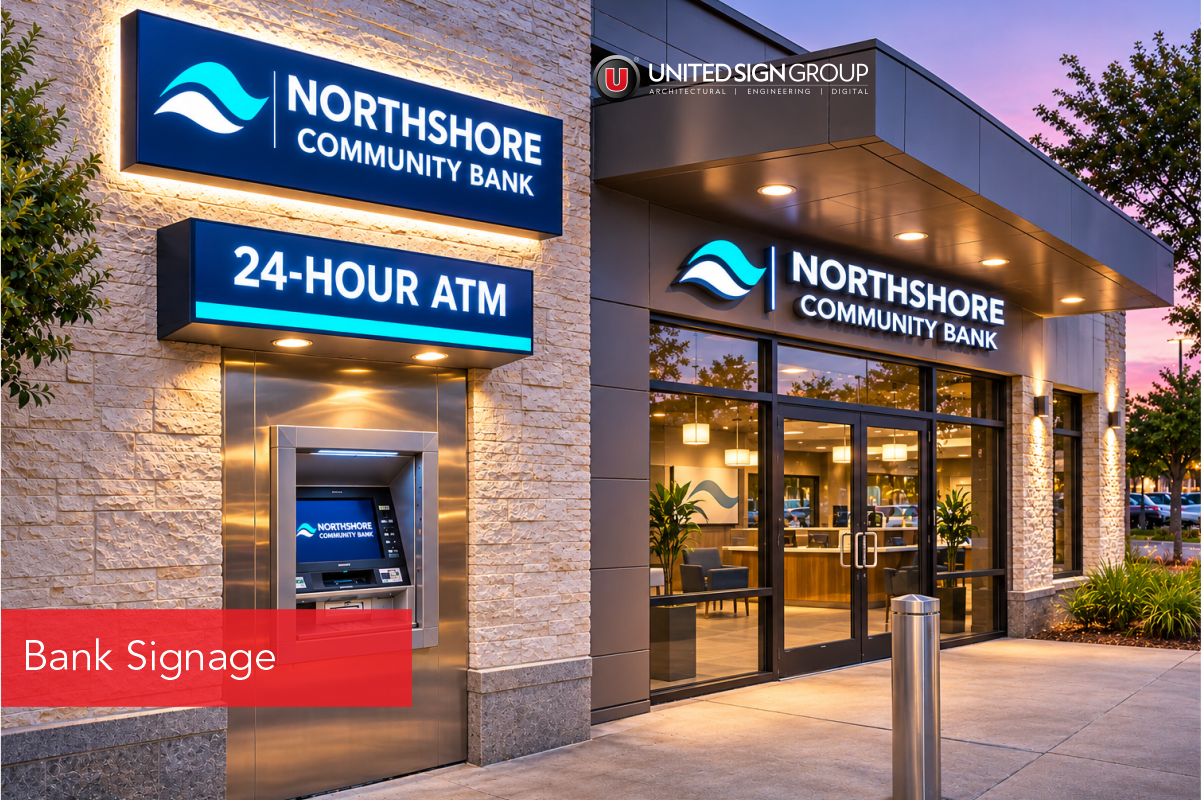
- Drive-through and ATM signs. Canopy signs, lane signs, and machine toppers
- Directional and parking signs. Customer parking, drive-through exits, and accessible spaces
- Interior signs. Lobby identity, teller line signs, and offices
- Regulatory signs. Insurance, lending, and hours notices
- Window graphics and displays
Then record each sign’s size, condition, mounting method, and lighting. As a result, every branch gets an accurate scope and a reliable price before the project starts.
Know the Compliance Rules for Financial Institution Signage
Financial institution signage includes items that carry legal requirements. Banks display the FDIC official sign, and federally insured credit unions use the NCUA official sign. Both programs set rules for how and where the sign appears. Lenders also use the Equal Housing Lender logo.
Your compliance team should review every rebrand drawing before fabrication. Required notices and official signs each come with rules for placement, size, and wording, and your regulator or legal team can confirm the details for your institution. Because these rules shape the layout of a branch, catching issues at the drawing stage costs far less than fixing them after install.
Plan Your Bank Signage Rollout in Phases
Rebranding every branch overnight rarely works. Instead, most institutions roll out in waves. A phased plan protects service and spreads the work.
- Pilot one or two branches. Test the design, the install process, and customer response.
- Group the remaining branches by region. Local crews finish faster and travel less.
- Set a launch date for the new name. Everyone should know when the change goes live.
- Install and cover. Crews prepare new signs, then swap them in a single visit.
- Review and adjust. Fix issues before the next wave begins.
If a legal name change drives the rebrand, such as a merger, coordinate sign installs with the effective date. Some teams install new signs early and cover them until launch day.
Keep Branches Open During the Install
Closing a branch for a sign project loses business, so most work happens around operations. Several tactics help:
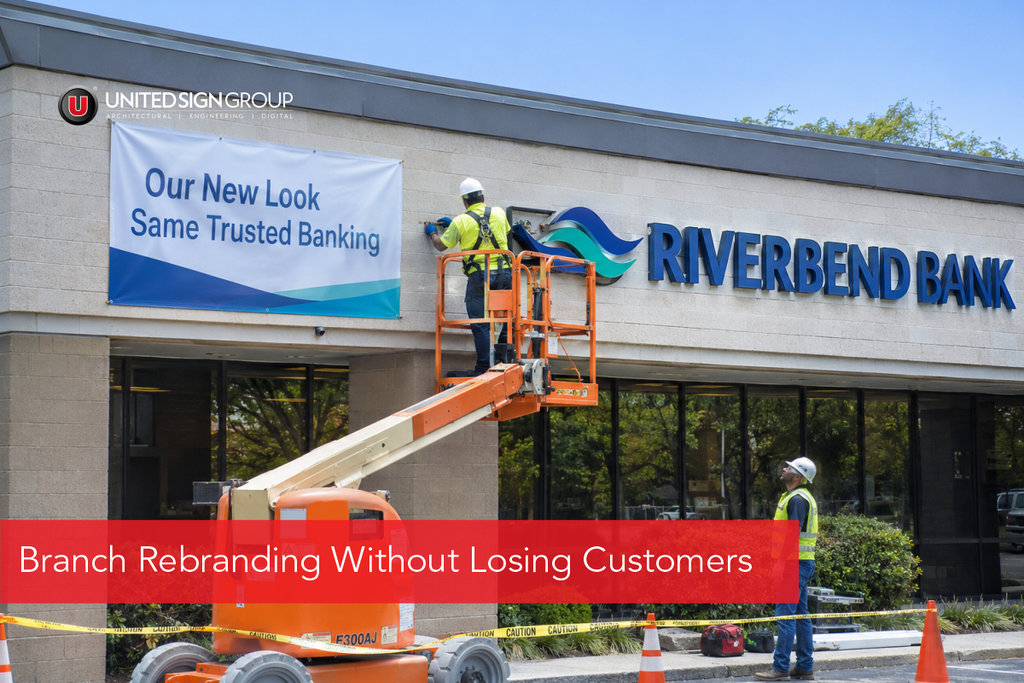
- Install exterior work first. Crews can finish most of it without entering the lobby.
- Schedule noisy or disruptive work after hours. Nights and weekends often work best.
- Protect drive-through lanes. Keep at least one lane open whenever possible.
- Use temporary signs. Clear directional signs guide customers during the transition.
- Coordinate with branch managers. Staff should know the schedule and the safety limits.
In addition, ask your sign partner how it handles lifts, traffic control, and site safety. Branch parking lots are busy places, and good planning keeps customers and crews safe.
Tell Customers Before the Sign Changes
A sign change should never be the first notice a customer gets. Consider these steps well before install day:
- Email and statement inserts. Explain the new name and what stays the same
- In-branch notices. Place them at the lobby, teller line, and ATM
- Website and app updates. Match the new branding before the signs go up
- Staff talking points. Tellers should answer questions with one clear message
Meanwhile, keep some familiar elements in place when possible, such as colors, logo shapes, or the branch location itself. Familiar cues reduce confusion.
Handle Permits, Landlords, and Local Codes
Sign changes often need approval, even when the sign size stays the same. Cities may require a new permit for a new name. Branches in leased buildings may also need landlord sign-off. Therefore, start the permit and approval process early, since review times vary by city.
Some locations add complexity, such as historic districts, shopping centers with sign criteria, or properties with illuminated sign limits. A sign partner familiar with local codes can flag these before they delay the schedule.
Choose Materials That Hold Up Across Branches
Consistency matters across a branch network. Pick materials and lighting that look the same in every market and hold up in each climate. For instance:
- LED lighting. It uses less power and needs less maintenance than older lighting.
- Durable finishes. Painted aluminum and UV-stable faces keep colors accurate.
- Standard sign families. A shared kit of parts keeps costs predictable.
Common Bank Signage Mistakes in a Branch Rebrand
Most problems come from rushed planning. Watch for these:
- Skipping the audit. Surprise signs show up mid-project and raise costs.
- Removing old signs too soon. Branches can end up with blank walls.
- Forgetting ATMs and drive-throughs. These locations matter most to customers.
- Starting permits late. Approvals can stall the whole schedule.
- Treating every branch the same. Site conditions and codes vary.
Request a Bank Signage Quote
If you are planning a branch rebrand, start with a clear scope. Send us your branch list, photos, and brand guidelines, and our team will build a sign audit, a phased plan, and a clear price for each location.
Request a bank signage quote or call (800) 935-8094. A specialist responds within 24 hours with a clear next step and no obligation.
FAQs
Timelines depend on the number of branches, permit speed, and sign complexity. A single branch moves faster than a full network. A sign audit and permit review give you a realistic schedule.
Yes, in most cases. Crews typically complete exterior work during or after business hours and keep drive-through lanes open when possible. Temporary signs guide customers during the change.
A branch typically needs building and monument signs, drive-through and ATM signs, directional and parking signs, lobby signs, and required regulatory signs such as the FDIC or NCUA official sign.
Often, yes. Many cities treat a sign face change as a new permit. Check local code and landlord requirements before you order.