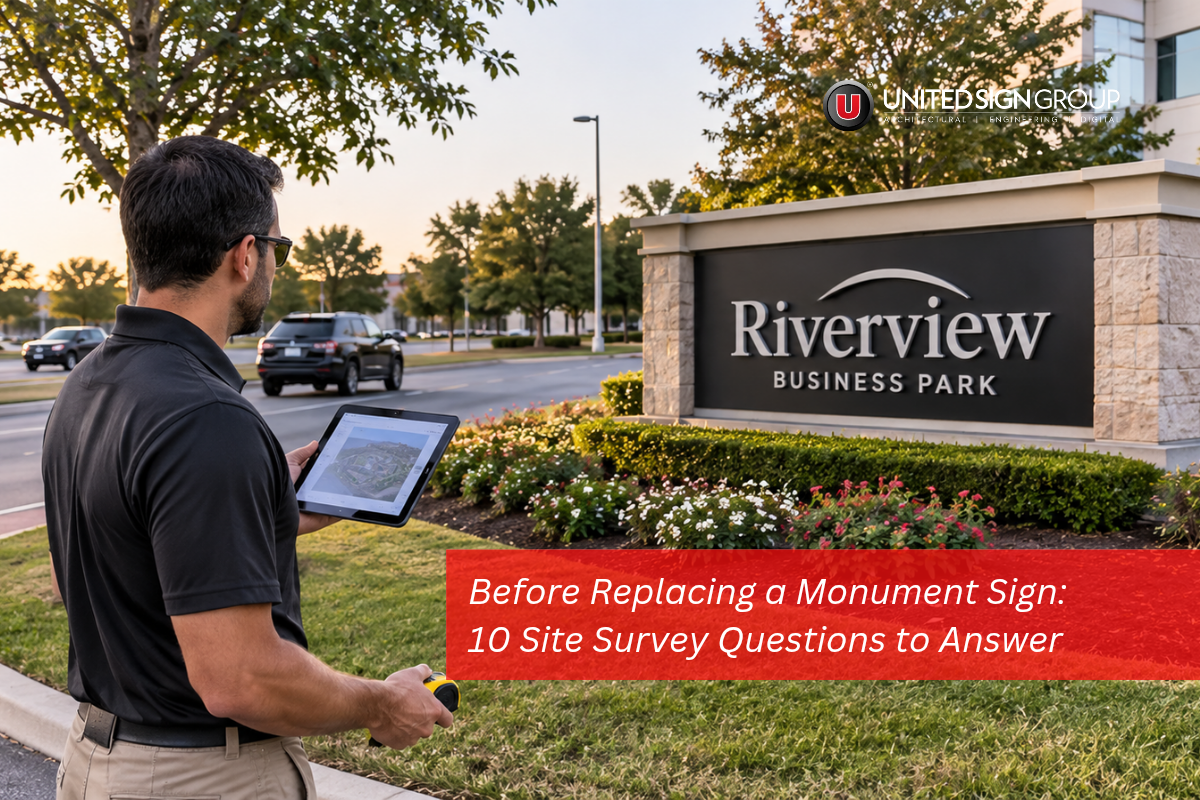
A monument sign site survey should come before the design, the quote, and certainly before the excavator arrives. It tells you whether the old sign can be reused, what the property will allow, and what the replacement needs to do from the road. The goal is simple: find the constraints first, then design around them.
Monument signs may look straightforward, but they sit at the intersection of branding, civil engineering, electrical work, zoning, and daily traffic. United Signs recommends an early survey because foundations, trenching, utility connections, engineering, and permit requirements can change both the scope and cost of a replacement.
A monument sign replacement starts at ground level, much before a design mockup.
Monument Sign Site Survey: Read the Existing Sign
Start with the sign that is already there. It holds clues about the site, the original permitting approach, and the conditions your replacement must overcome.
Measure the full footprint, overall height, cabinet size, sign-face area, base dimensions, and distance from nearby driveways, walkways, and property lines. Do not rely on old drawings alone. Conditions change, additions happen, and the original sign may no longer match the approved site plan.
Inspect the base, masonry, frame, cabinet, anchorage, and wiring. Look for cracked stone, rusted steel, loose panels, water intrusion, damaged conduit, or a leaning structure. A cosmetic refresh may be possible. A structural failure usually calls for a full replacement.
A larger sign, taller cabinet, heavier materials, or digital display may need a new footing. United Signs performs structural calculations for monument signs based on dimensions, material weight, mounting method, and site-specific wind and load conditions.
Do not assume a new sign can simply sit where the old one stood.
Monument Sign Site Survey: Test What Drivers See
A monument sign is not successful because it looks good in a rendering. It succeeds when a driver notices it, reads it, and safely finds the entrance.
Walk or drive the main approach. Note the point where the sign becomes readable, the angle of view, and the distance from the entrance. Check traffic moving in both directions.
Trees grow. Shrubs spread. Vehicles park. Seasonal landscaping changes. Grade shifts after storms. Identify anything that could obstruct the sign now or in the next few years, then build clear sightlines into the plan.
Decide whether the sign needs a logo, tenant panels, directional information, hours, a changeable-copy section, or a digital message center. The content requirement affects sign-face dimensions, illumination, electrical capacity, and permit review.
Monument Sign Site Survey: Locate Power and Utilities

This is where many projects become complicated. A monument sign with internal lighting, LED modules, or a digital display needs a dependable power source, safe routing, and a clear plan for underground work.
Locate the electrical panel, available capacity, disconnect location, conduit route, and voltage requirements. United Signs includes conduit routing, disconnect locations, and service requirements in installation documentation so electrical rough-in is completed correctly before the sign goes up.
Arrange a utility locate before any excavation. Footings, trenching, and utility connections often surprise first-time buyers, especially when underground lines were not identified early.
The cheapest time to find a buried utility line is before the excavator arrives.
Monument Sign Site Survey: Clear the Approval Path
A replacement may need a new permit even if it occupies the same footprint. Local jurisdictions often review monument sign height, area, setbacks, illumination, digital displays, and structural design. United Signs prepares permit packages, submits engineering drawings, and coordinates with the authority having jurisdiction.
Confirm the permitted height, square footage, setbacks, illumination rules, digital-display rules, and whether the replacement triggers a new permit. Permits commonly address size, height, setback, lighting, and structural review.
Review the lease, property standards, approved sign band, colors, materials, and removal requirements. Secure written approval before fabrication begins.
Plan the Replacement With Confidence
A strong monument sign site survey prevents redesigns, permit delays, utility surprises, and installation problems. United Signs conducts site surveys to document existing conditions, mounting surfaces, utility locations, and site-specific requirements before design, engineering, or installation planning begins.
United Signs has designed, engineered, fabricated, and installed signage nationwide since 1984, guiding projects from the first site survey through final installation sign-off. Review the monument sign cost guide, sign engineering services, and project management services before planning a replacement
The best monument sign replacement is planned before the first shovel hits the ground.
Schedule a site survey with United Signs. We will document the site, review code and utility requirements, and help you choose a replacement that fits your property, budget, and approval path.