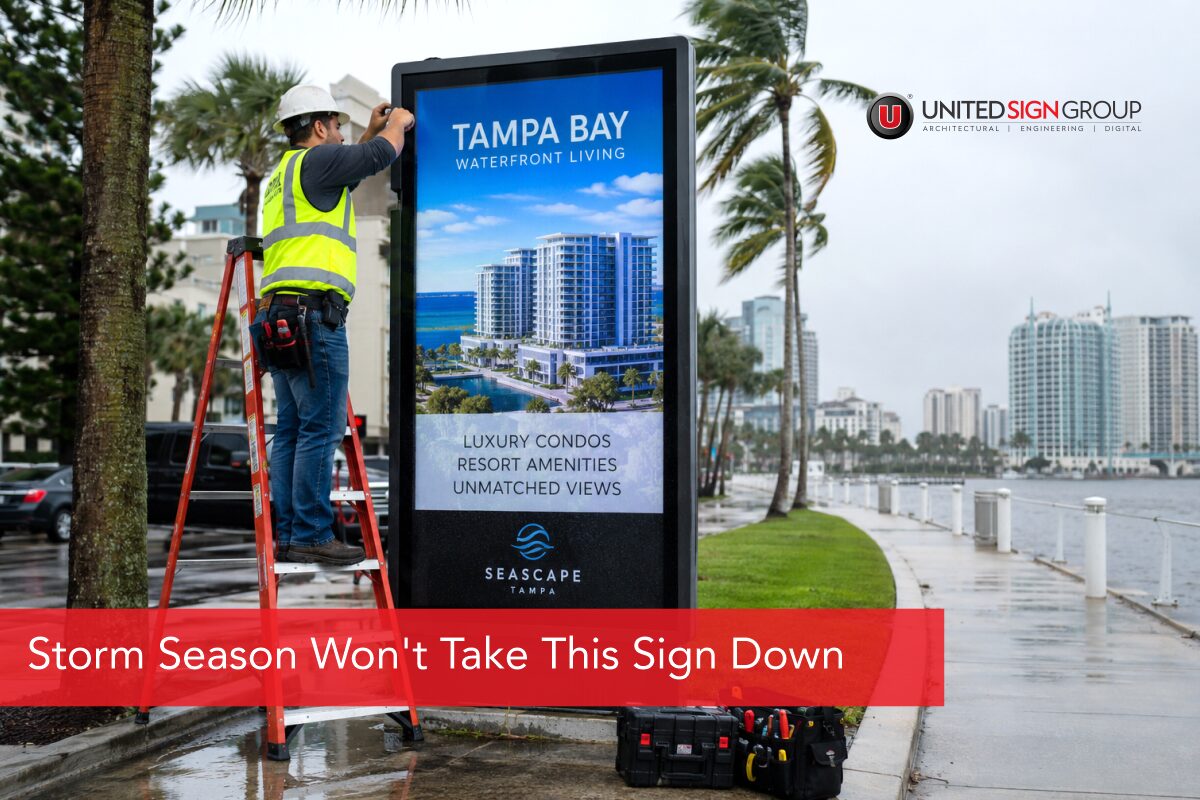
Signage for Tampa businesses faces a test most inland displays never see: Hurricane season runs from June through November, and every outdoor sign sits in its path. If you own a retail storefront or hospitality property here, your outdoor LED display isn’t just a marketing tool. It’s a structure exposed to sustained wind, flying debris, and heavy rain for months at a time. A sign that can’t handle this climate turns into a liability fast.
Here’s what Tampa business owners should know about keeping an outdoor LED display standing and functioning through storm season.
Why Tampa’s Weather Is a Different Kind of Test
Coastal humidity, salt air, sudden downpours, and wind gusts that spike during tropical systems all put stress on electronics that weren’t designed for them. A display designed for a mild inland climate may hold up fine in Ohio and still fail in Tampa within a couple of storm seasons. Local code requirements exist for a reason, and any sign installed here needs to meet wind load standards specific to the region.
Wind Rating: What Signage for Tampa Needs to Survive Storm Season
When people ask about a “hurricane-rated LED sign,” what they’re really asking about is wind load engineering. Every outdoor display and its mounting structure need to be engineered to withstand the wind speeds Tampa can see during a named storm. This isn’t something to guess at. It requires certified structural drawings and a fabricator who understands Florida wind load codes, not a generic national spec sheet.
A few things to check with any vendor:
- Did the engineer design the structure specifically for your site’s wind zone?
- Do the mounting posts, footings, and cabinet carry a rating as a system, not just individually?
- Does the permitting process account for wind load compliance before installation begins?
Sealed Cabinets: Protecting Tampa Signage from Salt and Water
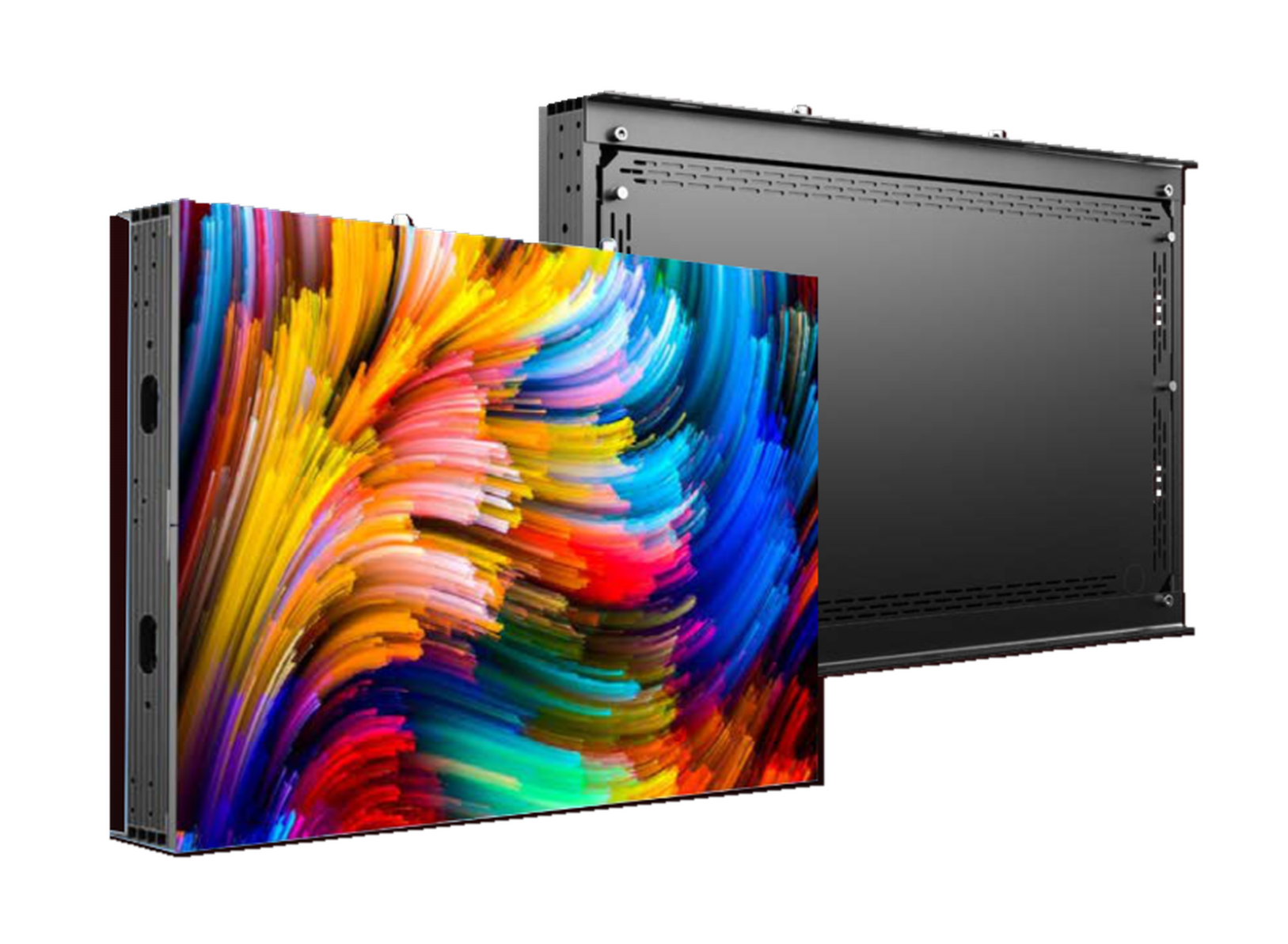
Rain isn’t the only concern. Tampa’s air carries salt and moisture that can corrode components over time, even without a direct storm hit. This is where cabinet sealing matters. United Signs builds displays like the US-Genesis II with an IP65 ingress protection rating, which means the enclosure is sealed against dust and water jets, not just light drizzle. A single aluminum enclosure and a polyurethane gasket seal the cabinet against the elements, so there’s no separate back-end box or exposed wiring for water to find its way into.
Power supplies matter here too. Fan-cooled systems draw in outside air, which means they also draw in moisture and salt. Power supplies operating at over 90% efficiency without their own cooling fans avoid pulling in the elements that corrode internal parts over years of coastal exposure.
Storm-Season Checklist for Outdoor LED Displays
Use this before hurricane season ramps up each year:
- Confirm your wind rating on file. Ask for the engineered structural documents, not a verbal assurance.
- Inspect the cabinet seal. Look for cracked gaskets, loose panels, or gaps where water could enter.
- Check mounting hardware. Check that bolts and footings are rust-free and fully tightened.
- Test remote monitoring, if available. Cloud-based diagnostics let you check on display health without a technician driving out during or after a storm.
- Review your power and surge protection. Electrical surges are common during storm season and can damage a display even if the structure holds.
- Photograph the installation before storm season. A baseline record helps if you ever need to file an insurance claim.
- Have a post-storm inspection plan. Don’t wait for a visible problem. Small issues after high winds can turn into bigger failures later.
Why This Matters for Retail and Hospitality
For Tampa retail and hospitality properties, an outdoor LED display is often the first impression a customer gets, whether that’s a restaurant promoting a nightly special or a hotel directing guests to the entrance. A sign that goes dark or gets damaged during storm season means lost visibility right when foot traffic and travel patterns are already unpredictable. Replacing a poorly built sign after a storm costs far more than investing in one engineered to survive it. Signage for Tampa properties has to survive the season it’s most needed to do its job.
A Local Team Matters as Much as the Hardware
Storm readiness isn’t only about the display itself. It’s about having a team that understands Tampa’s permitting process, wind load codes, and installation standards from the start. United Signs has worked in Tampa for years, managing everything from site review to permitting to fabrication and installation in-house, having installed 10,000+ signs in Tampa and built a track record specifically around Florida weather conditions.
If you haven’t checked your signage for Tampa ahead of this year’s storm season, now is the time.