“Jacksonville sits right where the Atlantic meets the St. Johns River, and that coastal position brings a slow, quiet threat to outdoor LED signs in Jacksonville that most business owners don’t think about until it’s too late. Salt air doesn’t announce itself the way a hurricane does. It settles on metal surfaces, circuit boards, and connection points day after day. Over time, corrosion starts eating away at components that were never built to handle it.
If you run a retail location or hospitality property near Jacksonville’s coastline, understanding how salt air affects an outdoor LED display is worth the ten minutes it takes to read this.
How Salt Air Damages Outdoor LED Signs Jacksonville
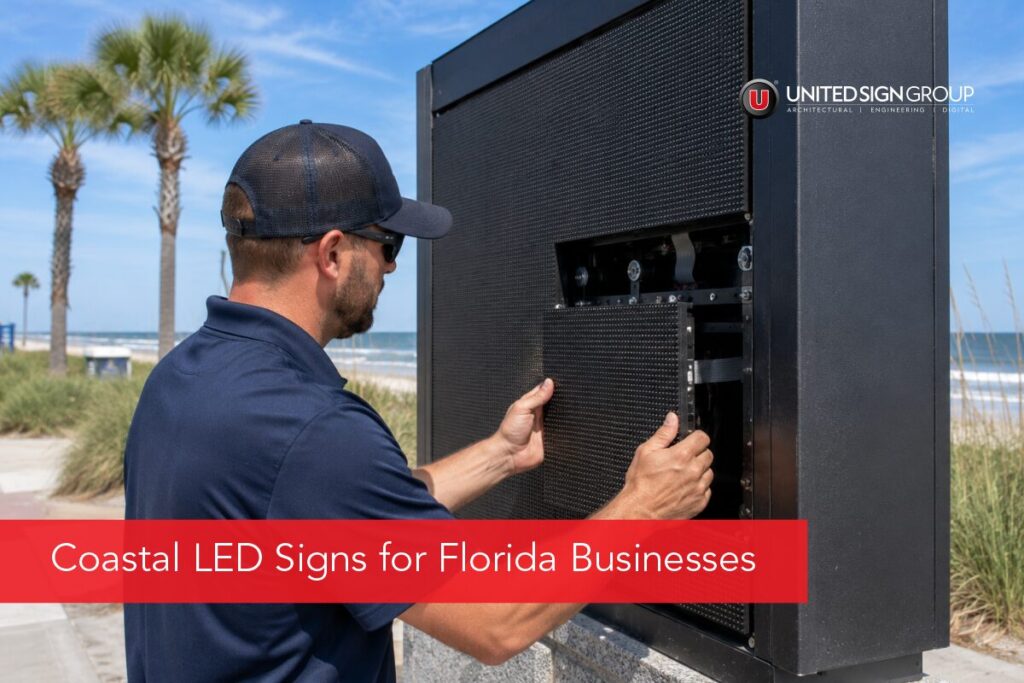
Salt in the air isn’t just a surface issue. Airborne salt particles are hygroscopic, meaning they pull moisture out of the atmosphere and hold onto it, the same corrosive mechanism manufacturers measure using a salt spray test to rate outdoor equipment durability. That moisture, combined with the salt itself, creates a corrosive layer on any exposed metal or electronic component. Over time, this layer eats through unprotected surfaces. It causes rust on structural elements and, more critically, corrosion on circuit boards, connectors, and power supplies inside a display cabinet.
The tricky part is that this damage builds slowly. A display might run fine for a year or two, then start showing dead pixels, flickering panels, or intermittent failures. These issues seem random, but they trace back to corrosion that’s been building the entire time. By the time the problem is visible, the internal damage is often already extensive.
Why Standard Outdoor Ratings Aren’t Enough for Jacksonville Coastal Signs
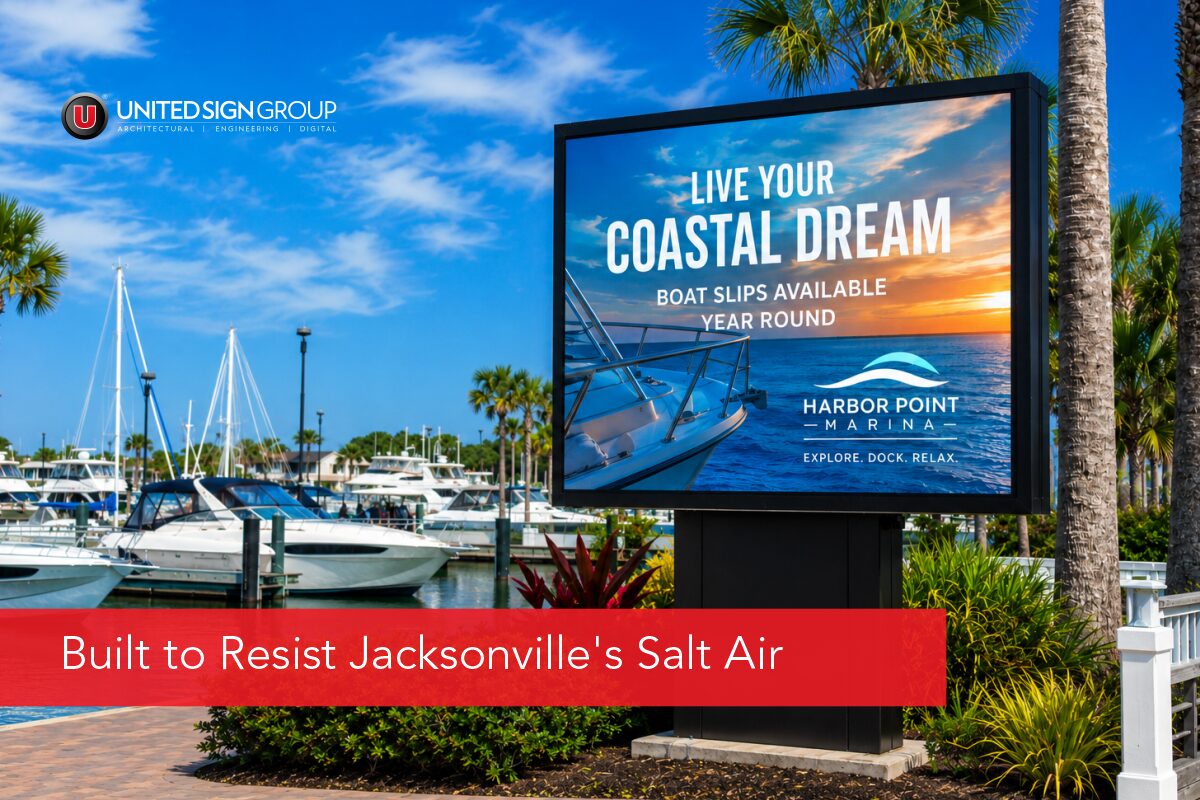
Many displays on the market carry an ‘outdoor rated’ label. But that rating often reflects testing for general weather exposure, not sustained salt air. Jacksonville’s proximity to the coast means outdoor LED signs in Jacksonville deal with a different level of exposure than an inland location, even a few miles away. A cabinet that holds up fine in Ocala might start showing corrosion issues within a couple of seasons near the Jacksonville Beaches.
This is why sealed cabinet construction matters so much for coastal installations. A properly sealed enclosure keeps salt-laden moisture away from the internal components entirely, rather than relying on coatings alone to slow down the damage after exposure has already occurred.
Sealed Construction for Outdoor LED Signs Jacksonville
A well-built coastal display typically includes a few specific design choices:
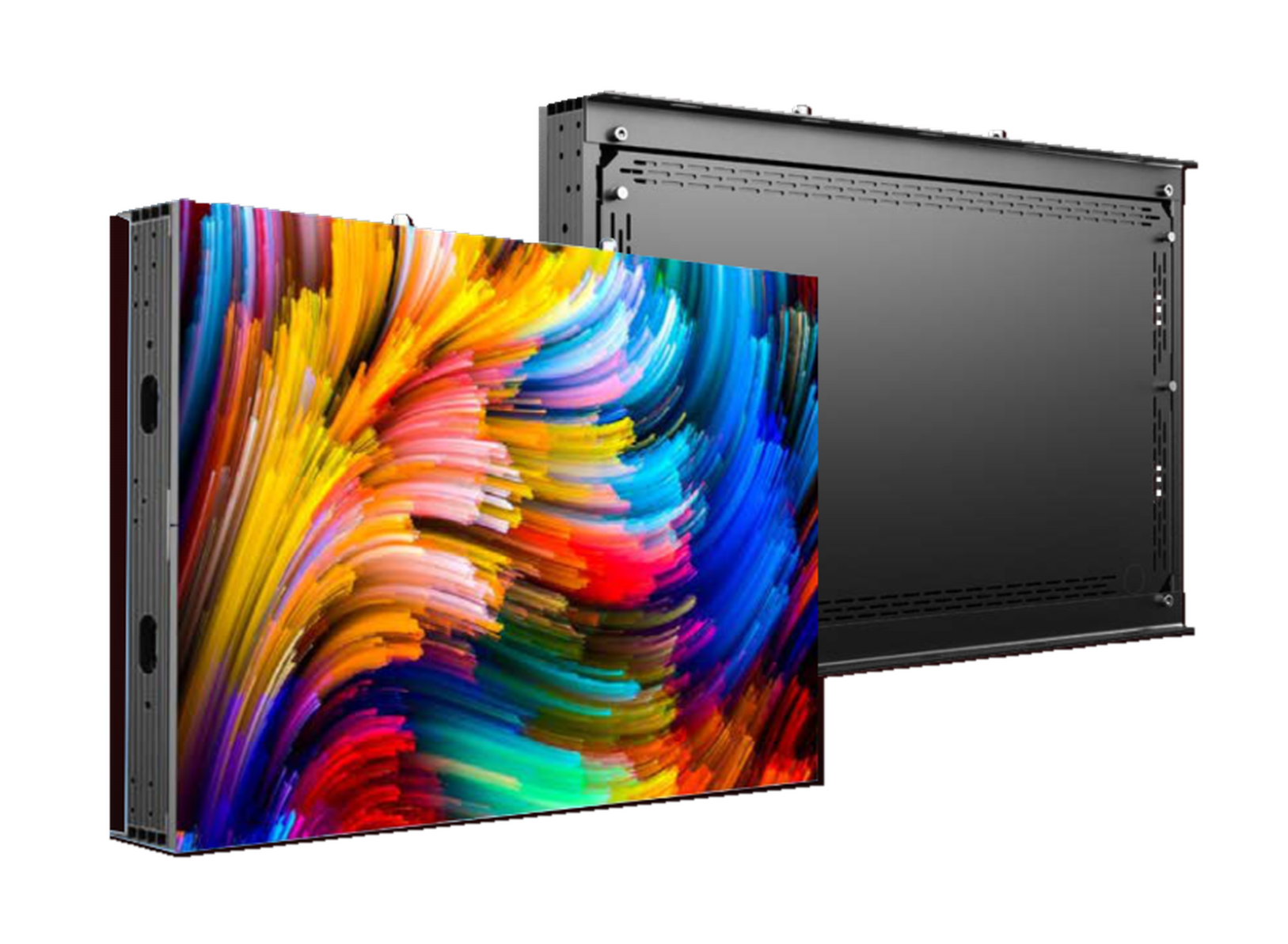
- A fully sealed aluminum cabinet that keeps moisture, salt, and dust from reaching internal wiring and boards.
- Corrosion-resistant hardware and finishes on any exposed structural components, including mounting posts and fasteners.
- Gasket-sealed panel connections so there are no gaps where salt air can work its way in over time.
- Powder-coated or anodized surfaces on the cabinet exterior, which resist pitting and surface corrosion far better than untreated metal.
None of this is about overbuilding a sign. It’s about matching the construction to the actual environment the sign will sit in for the next several years.
Checklist for Outdoor LED Signs Jacksonville
If you already have an outdoor LED display near the Jacksonville coastline, or you’re evaluating one for a new location, run through this:
- Ask what the cabinet is sealed against, specifically salt air exposure, not just general rain resistance.
- Check the hardware finish. Exposed bolts, brackets, or mounting hardware should be corrosion-resistant, not standard steel.
- Look at the maintenance history. If you’re inspecting an existing sign, check for rust streaks, pitting, or discoloration around seams and vents.
- Ask about proximity-based recommendations. A vendor familiar with Jacksonville should be able to tell you how exposure changes based on distance from the water.
- Confirm wind load engineering is also in place. Coastal properties often deal with both salt exposure and higher wind loads, and both need to be addressed together.
Why This Matters for Jacksonville Business Owners
Outdoor LED signs in Jacksonville represent a long-term investment, and coastal corrosion is the kind of problem that quietly shortens that lifespan if it’s ignored. Replacing a corroded display years ahead of schedule costs far more than choosing the right construction from the start. For retail and hospitality properties where the sign is often a customer’s first impression, keeping it running reliably matters just as much as how it looks on day one.
Local Experience Makes the Difference
Salt air resistance isn’t something you can evaluate from a generic spec sheet. It takes a team that understands how Jacksonville’s coastal conditions actually affect signage over time. United Signs has installed 10,000+ signs in the Jacksonville area, managing design, permitting, fabrication, and installation in-house, with materials selected for Florida’s coastal weather from the start.
If your outdoor display is showing early signs of wear or you’re planning a new coastal installation, it’s worth getting a second opinion before the salt air does more damage.
Frequently Asked Questions
It depends on proximity to the coast and how well the cabinet is sealed, but damage often builds for a year or more before becoming visible as flickering panels or dead pixels.
Not always. General outdoor ratings often don’t account for sustained salt air exposure, which is more aggressive than typical inland weather conditions.
Look for rust streaks, pitting, or discoloration around seams and vents, and ask a specialist to inspect the cabinet seal and hardware finish.
Yes. Coastal properties often deal with both higher wind exposure and salt air, so displays in these areas need engineering that accounts for both factors together.