Every outdoor LED display looks impressive in a spec sheet. Bright nits, sharp pixel pitch, bold promises about durability. What most spec sheets don’t spell out clearly is whether the display is actually legal to install, safe to operate, and built to survive the environment it’s going into. That gap is exactly where LED display certifications come in, and it’s exactly where a lot of procurement teams feels burned.
If you’re buying, specifying, or approving outdoor digital signage for a municipality, campus, retail portfolio, or public venue, understanding what these certifications actually mean isn’t optional. It’s the difference between a display that clears inspection on day one and one that shows up as fagged, delayed, or pulled entirely.
LED Display Certifications: Why They Exist
Outdoor LED signs run outside, unprotected, for years at a stretch. They face rain, humidity, salt air, temperature swings, and constant electrical load. Certifications exist to prove, independently, that a display can handle all of that without becoming a fire hazard, an electrical interference problem, or a liability sitting in a parking lot.
Three certifications matter most for outdoor LED buyers:
FCC Certification confirms the display’s electronics don’t emit harmful radio frequency interference that could disrupt nearby communications equipment. Every electronic device sold in the U.S. that emits RF energy is legally required to carry this. No FCC certification means no legal sale or installation in the United States.
ETL/UL Listing confirms the display has been independently tested for electrical and fire safety by a Nationally Recognized Testing Laboratory (NRTL). ETL, UL, and MET are all OSHA-recognized NRTLs, and any of their marks carries equal legal weight. For signage specifically, the relevant standard is often UL 48, the UL standard written specifically for electric signs, tested and certified by whichever NRTL performed the evaluation. This is frequently the certification a building inspector or fire marshal asks for by name before signing off on a permit.
IP Rating (Ingress Protection) confirms how well the display resists dust and water intrusion. This is where “outdoor rated” stops being a marketing phrase and becomes a tested number. An IP65-rated display, for example, is fully dust-tight and safe against low-pressure water jets from any direction, which is the baseline most reputable outdoor LED signs need to meet.
Certifications Buyers Should Verify
| Certification | What It Confirms | Why It Matters to Buyers | Who Requires It |
| FCC | No harmful RF interference | Legal requirement for sale/use in the US | Federal Law |
| ETL/ UL/ MET (NRTL) UL 48 | Electrical & fire safety Standard specific to electric signs | Required for permit approval, insurance Confirms sign-specific safety testing, not just general electronics | Inspectors, Fire Marshals Sign permitting authorities |
| IP Rating (e.g. IP65) | Dust and water resistance | Determines real outdoor survivability | Engineers, Procurement |
| Operating Temp Range | Functions in heat/cold extremes | Prevents shutdowns in climate extremes | Municipalities, Cold/Hot Regions |
| MTBF (Mean Time Between Failures) | Expected reliability window | Predicts maintenance cost over time | Procurement, Budget Planning |
Cabinet Durability, Brightness, and Cooling: The Buying Factors Certifications Actually Protect
Certifications are not about doing the paperwork alone. Each one maps directly to a real durability factor that determines whether a display survives its first Georgia summer or its first Midwest winter.
Cabinet construction matters as much as the certification itself. Look for aluminum cabinets with sealed gaskets, since these physically block the moisture and debris an IP rating is tested against in the first place.
Brightness and contrast aren’t just about image quality. In fact, displays built for direct sunlight typically use extended louver designs and matte masks to block glare, protecting both readability and the internal components from heat buildup.
Cooling systems are where a lot of cheaper displays fail early. Thermostatically controlled fans that activate automatically at high temperatures, paired with common-cathode power designs that generate less heat to begin with, directly extend the life of the LEDs and electronics inside.
Serviceability rounds out the picture. Front-access modules that pull out in seconds without special tools mean a technician can service a display without a lift truck or a multi-hour shutdown, which matters enormously for municipalities managing displays across multiple sites.
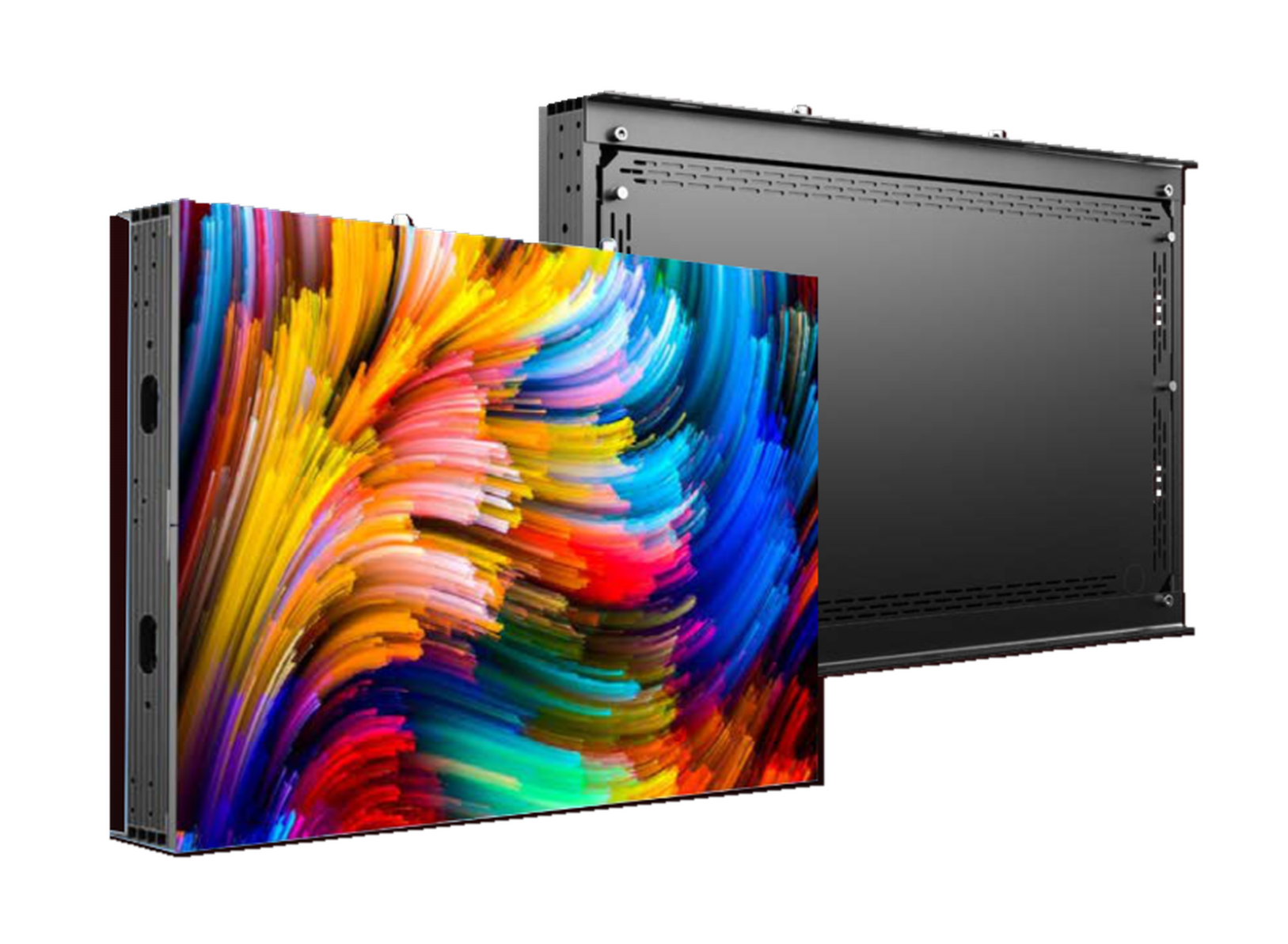
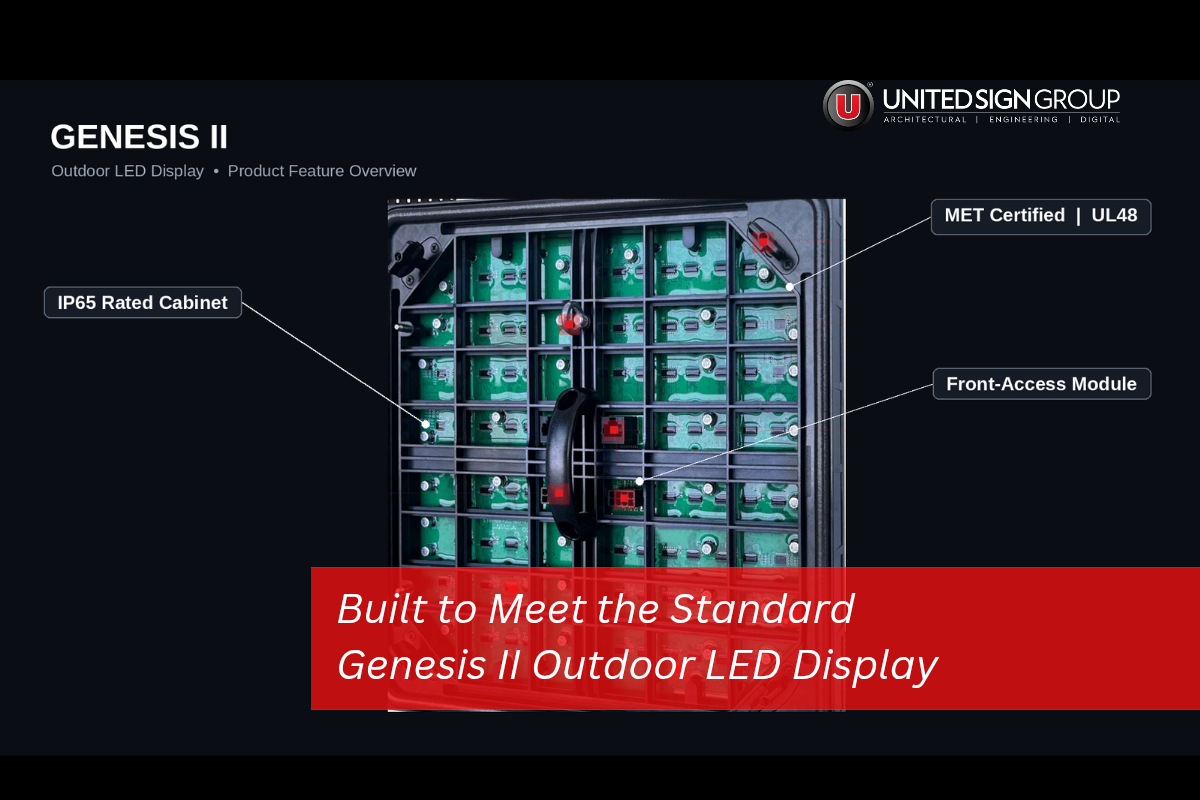
United Signs’ Genesis II outdoor display, for example, carries MET certification (a Nationally Recognized Testing Laboratory mark, tested to UL 62368-1 and CSA C22.2 No. 62368-1) along with UL48 and cUL48 certification, the UL standard written specifically for electric signs. It’s also FCC compliant, CE marked, RoHS compliant, and IP65-rated, built with an aluminum cabinet, gold wire bonding LEDs, and common-cathode technology that cuts heat generation significantly compared to conventional designs. Every module is front-accessible, and an optional cloud-based monitoring system tracks power, cooling, and individual diode status remotely, which is exactly the kind of serviceability procurement teams should be asking about before signing off on any display.
The Buyer’s Compliance Checklist Guide
Before approving a purchase order or issuing a permit, procurement and municipal buyers should confirm:
- FCC certification is documented and available on request
- ETL or UL listing is current and specific to the exact model being purchased
- IP rating meets or exceeds IP65 for full outdoor exposure
- Operating temperature range matches the local climate extremes
- MTBF and LED lifespan figures are documented, not just advertised
- Cabinet material and sealing method are specified in writing
- Service and module replacement process is confirmed before installation, not after
FAQs
1: Does every outdoor LED sign need FCC certification?
Yes. Federal law requires FCC certification for any electronic device that emits RF energy and is sold or installed in the U.S., regardless of size or application.
2: Is ETL as good as UL certification?
Yes. OSHA recognizes both ETL and UL as Nationally Recognized Testing Laboratories, and inspectors treat either mark as equally valid proof of electrical and fire safety compliance.
3: What IP rating should an outdoor LED display have?
IP65 is the widely accepted minimum for full outdoor exposure, confirming the display is dust-tight and protected against water jets from any direction.
Final Advice By Our Experts
Before you approve your next outdoor LED purchase, don’t take the spec sheet’s word for it. Request compliance documentation directly from your supplier. Ensure to have a look at the FCC certification, ETL/UL listing, and IP rating test results, before you finalize the purchase order. Talk to our experts here.