A multi-location signage program turns a simple brand update into a logistics project. Every site has its own landlord, its own permit office, and its own building quirks. Even so, the finished signs still have to look identical. Regional directors and franchise brands feel this most during a sign rebrand, because one missed detail repeats across every storefront.
Why a Multi-Location Signage Program Differs From a Single Install
One sign needs one permit, one site visit, and one install crew. In fact, dozens of sites multiply every step. Local codes differ on size, illumination, and placement. On top of that, landlords add their own approval layers.
Because of this, a national sign rollout works best as one coordinated program. Otherwise, separate projects tend to drift apart in materials, timing, and quality.
Start With a Site Audit
Before anyone designs a sign, audit every location. Photograph the existing signage and record measurements. Check electrical capacity, and note each landlord’s requirements.
This early work pays off quickly. Older buildings often hide different mounting conditions or wiring limits. Finding those problems on paper costs far less than finding them on install day.
Keep Every Site on One Spec
Consistency starts with a single approved spec. That spec covers the sign family, colors, materials, and lighting. Each market then builds the same sign, no matter who installs it.
Franchise brands benefit most from this step. A franchise lives or dies on a recognizable look, and customers notice when one location differs. A locked spec removes guesswork for every installer involved.
How a Multi-Location Signage Program Handles Permitting
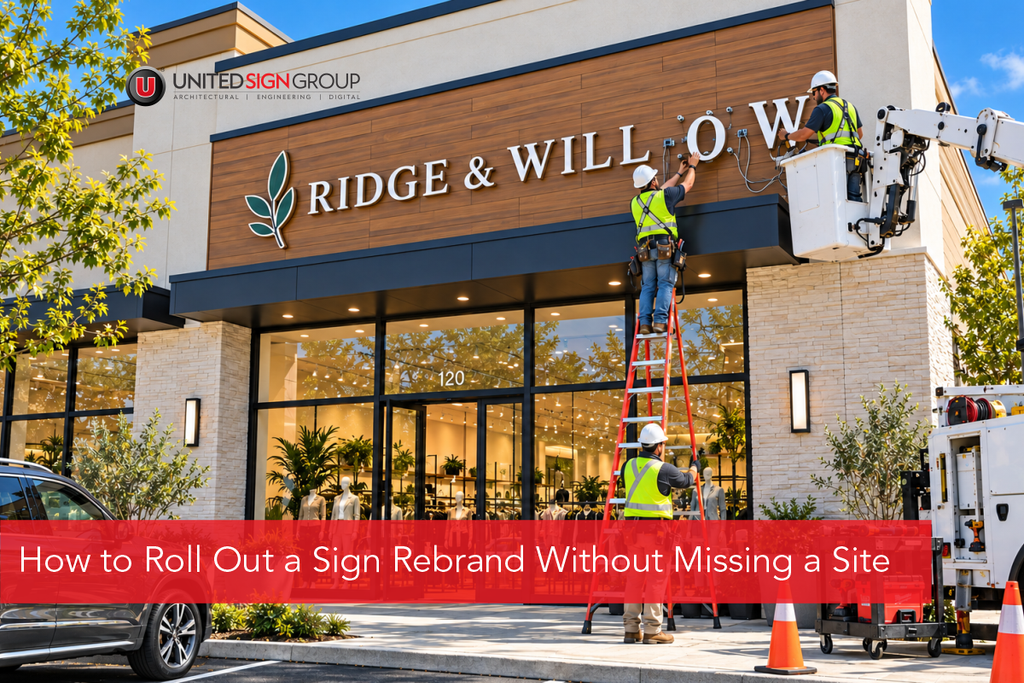
Each jurisdiction reviews applications on its own terms. Size limits, illumination rules, and documentation requirements vary from city to city. Permitting, not fabrication, usually sets the pace of the whole rollout.
For that reason, start applications early. Landlord approvals should run alongside permit reviews, not after them. Sites that clear review first can then install first.
Phase the Rollout to Fit Your Budget
Few brands rebrand every site at once. Instead, group locations by region, priority market, or opening date. Grouping lets installers work efficiently and keeps travel costs down.
Phasing also protects the schedule. If one site hits a permit delay, the rest of the program keeps moving.
A Practical Rollout Checklist
- Audit every site first. Capture photos, measurements, and electrical details.
- Lock one brand spec. Approve colors, materials, and lighting before fabrication.
- Start permits and landlord approvals early. Run them in parallel.
- Group sites into phases. Use region or priority to organize installs.
- Track each location individually. Every site needs its own status and documentation.
- Confirm closeout records. Keep photos and paperwork for every finished sign.
A Multi-Location Signage Program Needs One Point of Contact
Coordination breaks down when several vendors manage separate pieces. A single partner keeps design, permitting, fabrication, and installation on one plan.
United Signs has managed signage programs nationwide for more than 30 years. Its project management structure handles location-level tracking and program-level oversight at the same time. That includes multiple jurisdictions, landlords, and installation schedules. The company also supports brands through its retail signage services, backed by 10,000+ completed projects and 12 locations.
If your brand is planning a rebrand across dozens of sites, bring the program team in before design begins.
Talk to our nationwide program team.
FAQs
It is one plan for designing, permitting, fabricating, and installing signs across many locations. A single team coordinates every site instead of managing each one separately.
Permitting and landlord approvals most often set the pace. Each jurisdiction reviews applications separately, so starting early keeps the schedule on track.
Yes. Many brands group sites by region or priority and install in waves. Phasing spreads cost and limits the impact of a delay at any one site.
They approve one brand spec covering colors, materials, and lighting. Every installer then builds to that same spec at every site.