Have you ever seen a brand budgeting for the crane wait. We haven’t seen it because nobody does. That’s the part that gets everyone.
A client signs off on a fast install outdoor LED display expecting it up in a couple weeks. Then procurement calls back: crane’s booked out six weeks, maybe more if the site’s tight. The display isn’t the holdup. It never is. It’s the thing underneath it, the equipment, the labor, the weather window, all stacking up before anyone even plugs the sign in.
We’ve watched this happen more than once.
Why a Fast Install Outdoor LED Display Surpasses the Old Timeline
Where does the time actually go on a traditional job?
Big panels, in simple words, mean a crane. Cranes mean booking weeks ahead (assuming one’s even available). Not every electrical crew is certified for crane-assisted work either, so the contractor pool shrinks fast, and OSHA’s crane rules add their own layer of scheduling on top. You have one bad-weather week and the whole thing slides another month. Then a module fails down the line and you’re renting the same crane again, for one part. None of that is really about the LED. It’s logistics.
The Scenario (Now This Helps Sums Up the Problem)
We had a retail client that experienced an unpleasant signage scenario a year ago. They wanted their storefront sign live by Valentine’s Day last year. The crane wasn’t free until March. Installing itself takes two days, while the wait takes six weeks. By the time it was lit, the promotion it was built for was already over.
That’s the gap that matters significantly, “signed” to “live,” and it’s the one Holon was built to close.
Crane-Free LED and What It Actually Changes
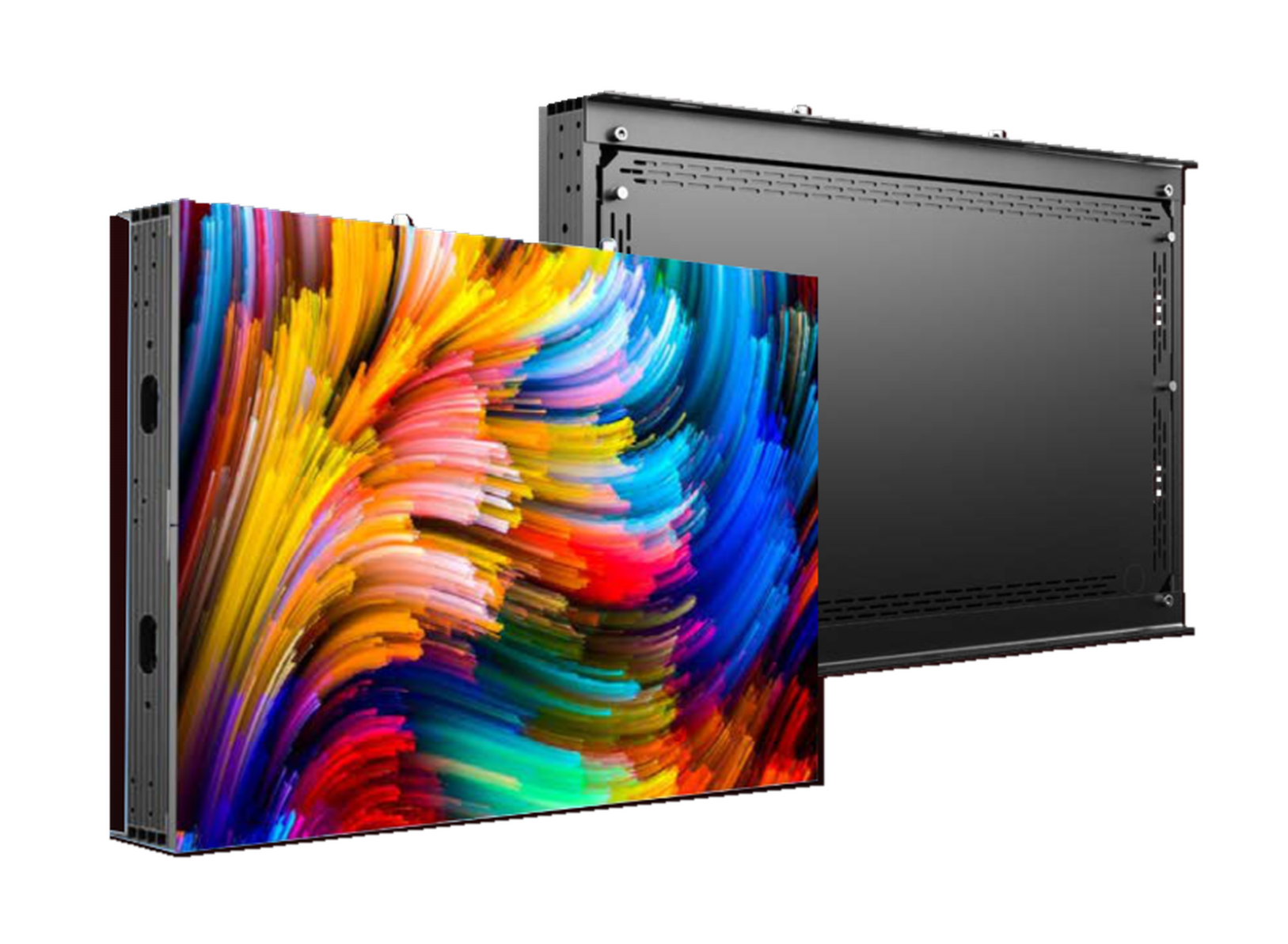
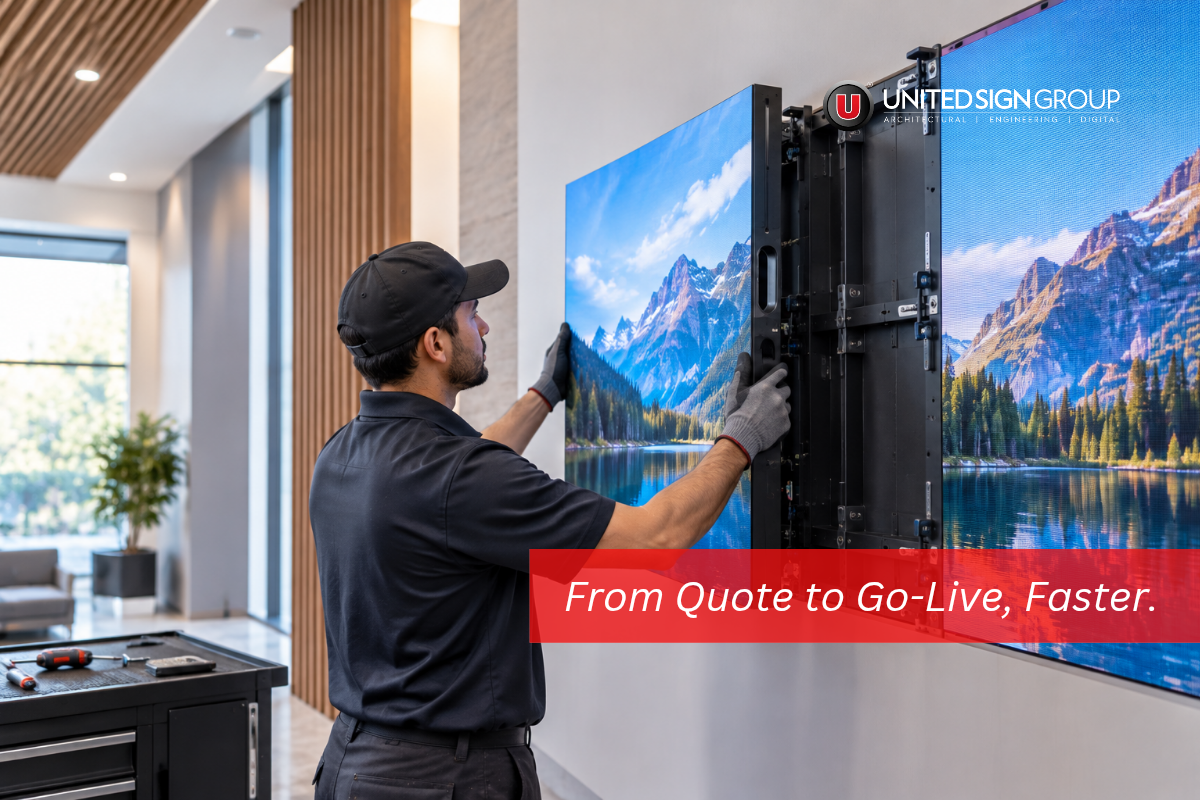
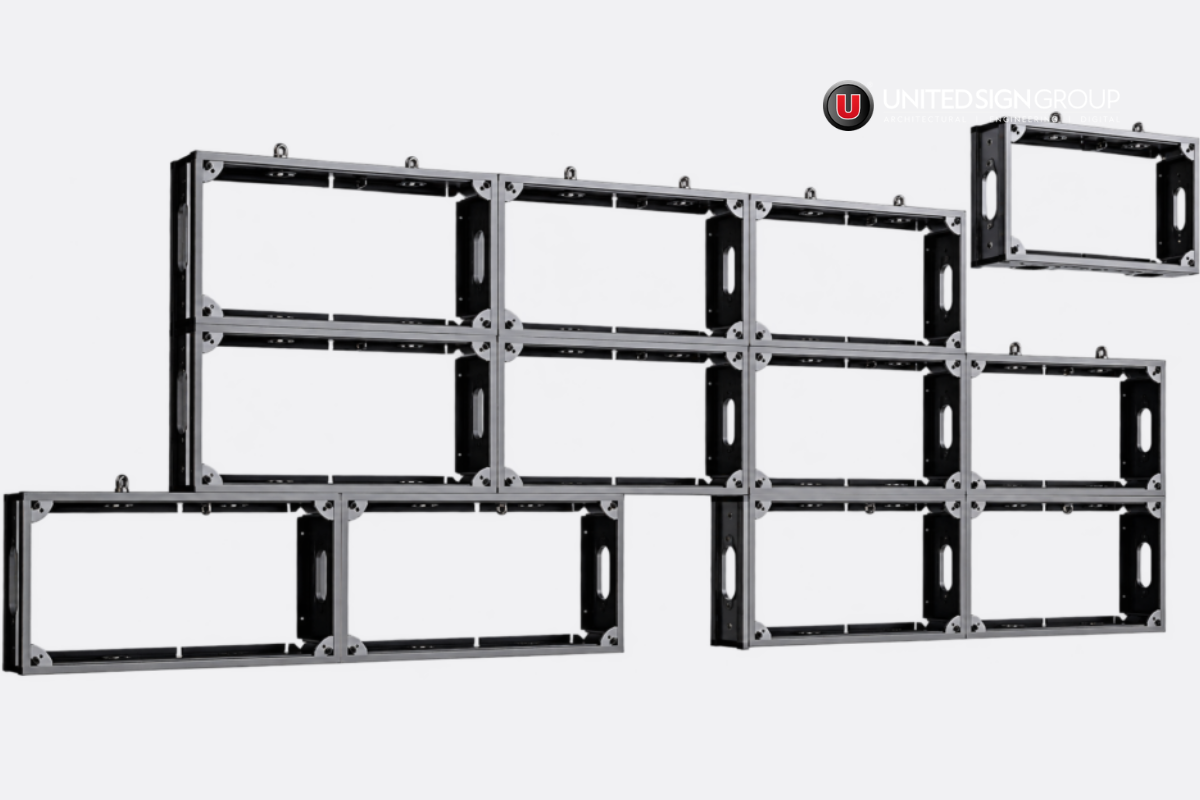
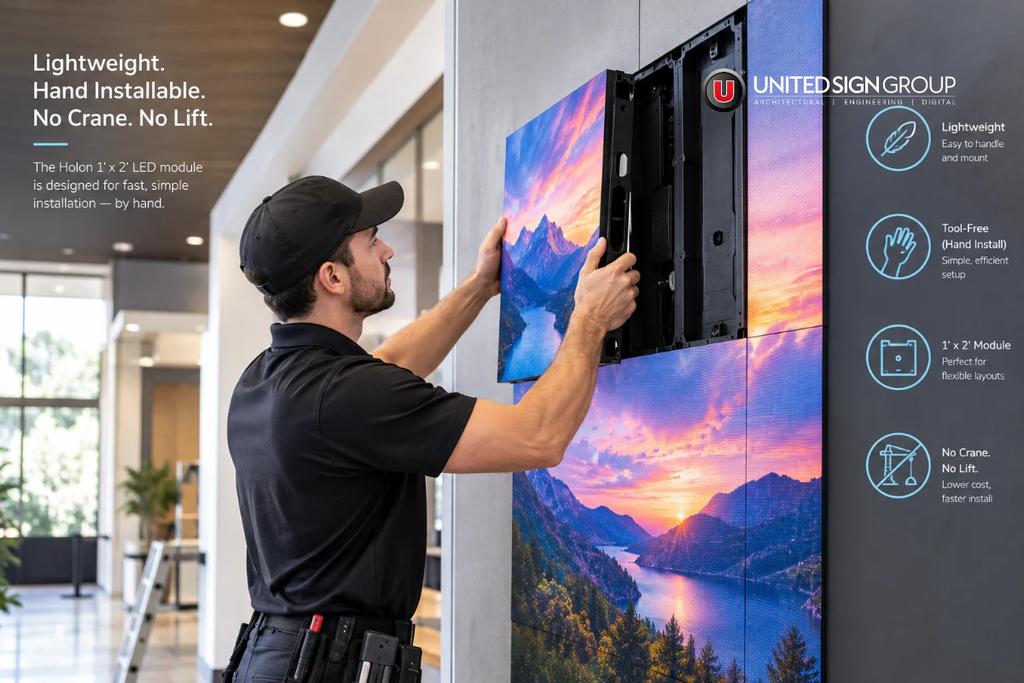
Holon skips the big single panel. Instead, it’s built from 1’x2′ modules, 8.8 lb apiece, light enough that one person picks it up and mounts it by hand.
- No crane, no lift, no rental slot to chase down, each module carries its own power supply and control board
- Plug-and-play means a standard crew can do the work, not a specialized one
- One installer can put up a small-to-mid screen in a few hours, new build or retrofit, doesn’t matter which
- Weather stops being the deciding factor when nothing heavy has to stay stable outdoors
Traditional Install vs. Modular Outdoor LED: A Side-by-Side Look
| Factor | Traditional Outdoor LED | Modular Outdoor LED (Holon) |
| Equipment needed | Crane or lift | None – handheld |
| Crew size | Specialized, crane-certified | Often just one installer |
| Weather risk | High | Low |
| Module replacement | Crane again | Hand swap |
| Install time (small to medium) | Days to weeks | A few hours |
Modular Outdoor LED and the Maintenance Payoff
Install speed matters on day one. What matters after that is what happens when something breaks, and something always eventually breaks.
With Holon, the system usually catches a failing module before anyone notices it on screen. Nobody’s climbing up to diagnose it in place. The bad unit comes out, a new one goes in. There’s no fan inside to clog with dust or burn out in summer heat, each module only draws around 30 watts, and the power supply runs well under its rated load, so it just lasts longer. Every module has a handle and a safety cable built in, so pulling one off the wall doesn’t need a toolkit or special training.
Our team swapped a failed module at the client’s location in under 15 minutes (no crane or no second visit scheduled).
What used to mean a service call, a crane rental, and half a day of waiting now takes one person a few minutes.
Why Fast Installation Is More Than a Business Decision
A dark sign is not beneficial in any sense. In fact, a stadium board that’s not up for opening week costs sponsor impressions that never come back. A retailer’s storefront sign missing its launch window costs the launch. Just think, a hotel lobby without its display during peak season loses exactly the first impression it needed to make.
Close that gap between quote and go-live, and the display starts earning its cost back sooner. It also tends to hold up better over time, since less exposure before monitoring kicks in usually means fewer early surprises. Full specs are on the US-Holon product page, and our LED basics guide covers pixel pitch and brightness if you’re still weighing options alongside install speed.
Frequently Asked Questions
Smaller, lighter modules, under 9 lb each, that one person mounts by hand instead of a crane crew lifting a single large panel.
Usually less, once crane rental, specialized labor, and weather-delay costs are out of the picture.
A few hours for a small-to-mid screen with one installer, versus weeks for a crane-dependent job.
No, it’s easier. A failed module comes off by hand and gets swapped, no crane needed for one part.
Yes. It flags a failing module and sends an alert automatically, often before it shows up on screen.
Get a Timeline You Can Actually Plan Around
Would you agree that a quote on paper doesn’t mean much if the install eats three extra weeks nobody planned for? Holon is built so it doesn’t. Request a deployment plan and find out what your actual timeline looks like.