A guest’s stay starts well before the front desk. In fact, it starts at the road, where they look for your name, and it continues through every turn, hallway, and door they pass. Hotel signage carries that whole journey. When it works, guests arrive relaxed and, as a result, find what they need without asking. On the other hand, when it falls short, the first complaint is often about something simple, like not knowing where to park.
This guide walks through the signs a property needs, from the entrance to the pool deck, and what brand managers and owners should plan before ordering.
Why Hotel Signage Shapes the Guest Experience
Signs do two jobs at once. First, they direct people. Second, they express your brand before anyone speaks to your staff. Because of that, hotel signage affects both satisfaction and perception.
For example, consider what a guest notices in the first five minutes:
- Can they find the property from the road?
- Is the entrance clear, or do they circle the block?
- Do the lobby and elevator signs make sense?
- Does everything look like one brand?
Consequently, if any answer is no, the stay starts on the wrong foot.
Hotel Monument Sign: The First Impression
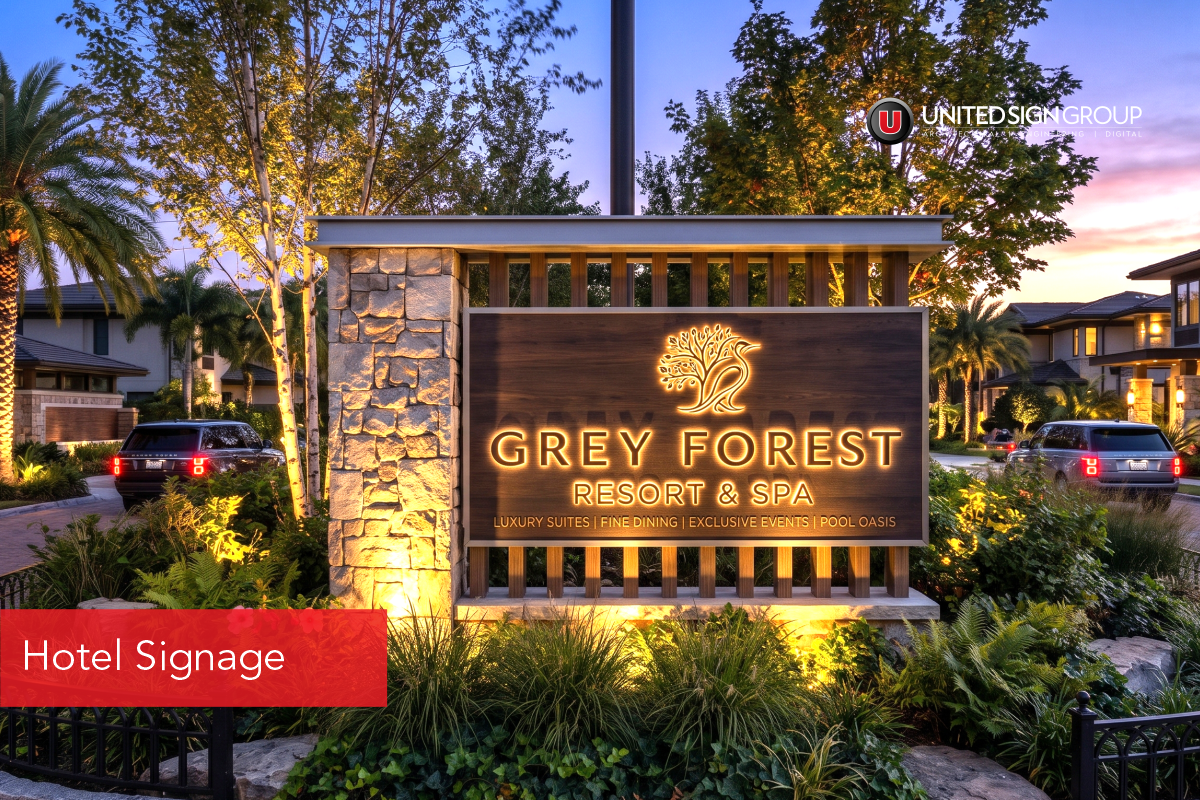
The hotel monument sign is usually the first piece of signage a guest sees. For that reason, it has to be readable at driving speed, consistent with your brand, and sized for the site.
What to plan:
- Placement. Set it where drivers have time to read it, so they can turn safely.
- Lighting. Internal LEDs, halo-lit letters, or external uplighting also keep it visible at night.
- Materials. For example, stone, metal, and dimensional lettering often match resort architecture well.
- Landscaping. In addition, plants and lighting around the base make the sign feel part of the property.
Additionally, check local sign codes early. Setback, height, and lighting rules can change your design before it starts. For general guidance, the International Sign Association is a useful starting point.
Exterior Wayfinding for Cars and Pedestrians
Once a guest turns in, exterior wayfinding takes over. Hospitality signage at this stage keeps traffic moving and keeps people calm.
At minimum, plan signs for:
- Entry and exit lanes
- Valet, self-parking, and guest drop-off
- Parking garage levels and zones
- Loading and service areas, which should be clearly marked as staff only
- Pedestrian paths to the lobby, spa, restaurants, and pool
Here, simple wins. For that reason, use large type, strong contrast, and few words per sign.
Lobby and Interior Hotel Signage
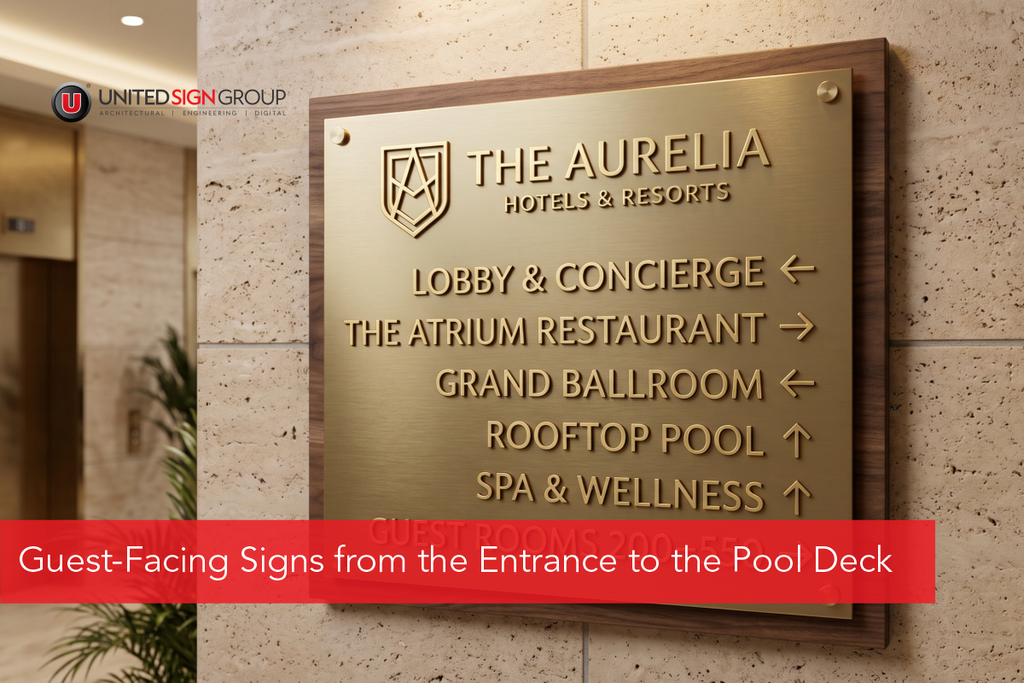
Inside, however, the tone changes. Interior hotel signage should feel like part of the design, not an afterthought. At the same time, it has to be clear.
Key interior signs include:
- Reception and concierge signs
- Elevator and stair directories
- Room number signs and floor markers
- Restaurant, bar, and meeting room signs
- Restroom and amenity signs
- Back-of-house door signs
Moreover, interior signs are where material choices show most. Brushed metal, wood, glass, and backlit panels can all support the look of the space. Because guests stand close to these signs, finish quality matters.
Pool Deck and Outdoor Amenity Signage
The pool deck deserves its own plan. For one thing, guests are barefoot, relaxed, and often unfamiliar with the layout. At the same time, this area has more safety and compliance needs than most.
Common signs include:
- Pool rules and hours
- Depth markers and safety notices
- Towel and cabana information
- Poolside dining or bar menus
- Spa, fitness, and beach access directions
Since these signs sit in sun, water, and chemicals, material choice is critical. Marine-grade hardware, UV-stable finishes, and corrosion-resistant metals keep signs looking sharp. Likewise, for resorts near the coast, salt air adds one more reason to specify materials carefully.
ADA and Code Requirements
Accessibility is a requirement, not a design preference. For example, permanent room and space identification signs generally need tactile characters and Braille, along with proper mounting height and contrast.
In addition, local codes can add more rules for fire exits, occupancy, and pool safety. Therefore, build compliance into the plan from day one, since changing signs after install costs more.
Keeping Hospitality Signage Consistent Across the Property
Consistency is what turns a collection of signs into a system. Hospitality signage works best when every piece shares:
- A single type family and size scale
- A controlled color palette
- Matching materials and finishes
- A common mounting and placement logic
Brand managers with multiple properties benefit most from a documented sign program. A sign family gives each location a shared standard while leaving room for local conditions.
How to Plan Your Hotel Signage Project
A clear process keeps budgets and timelines on track.
- Walk the guest journey. Start at the road and end at the pool deck. Note every decision point.
- List every sign type. Group them by exterior, interior, and amenity areas.
- Set priorities. Safety, compliance, and arrival signs come first.
- Confirm codes and approvals. Include city rules, ADA, and any brand standards.
- Choose materials for each setting. Match them to weather and wear.
- Phase the work if needed. Large properties often install in stages around occupancy.
Book a Hospitality Signage Consultation
If you are opening, rebranding, or updating a property, plan the sign program early. It saves time, controls cost, and gives guests a smoother stay from the first turn.
Book a hospitality signage consultation or call (800) 935-8094. A specialist responds within 24 hours with a clear next step and no obligation.
FAQs
A hotel typically needs a monument or pylon sign, exterior wayfinding, lobby and directory signs, room and floor identification, amenity signs, and safety signs for areas like the pool. Requirements vary by property type and local code.
Cost depends on the number of signs, their size, materials, lighting, and installation needs. A single monument sign costs far less than a full property program. A site survey and a signage plan give you a reliable number.
Yes. Permanent room and space identification signs generally need tactile characters, Braille, and the right mounting height and contrast. Your sign partner should build these requirements into the design from the start.
Often, yes. Large projects are usually phased, with work scheduled around guest activity, so areas stay usable while installs happen in sections.