A printed billboard says the same thing every day, until someone drives out and physically replaces it. Digital billboards let you advertise in real time instead, changing your message the moment something actually changes.
A digital billboard doesn’t work that way. It can change based on:
- Time of day
- Weather
- Current inventory
- Whatever else matters to the business behind it
No truck. No ladder needed. Skip the print shop entirely. Just an update pushed remotely.
What It Means to Advertise in Real Time
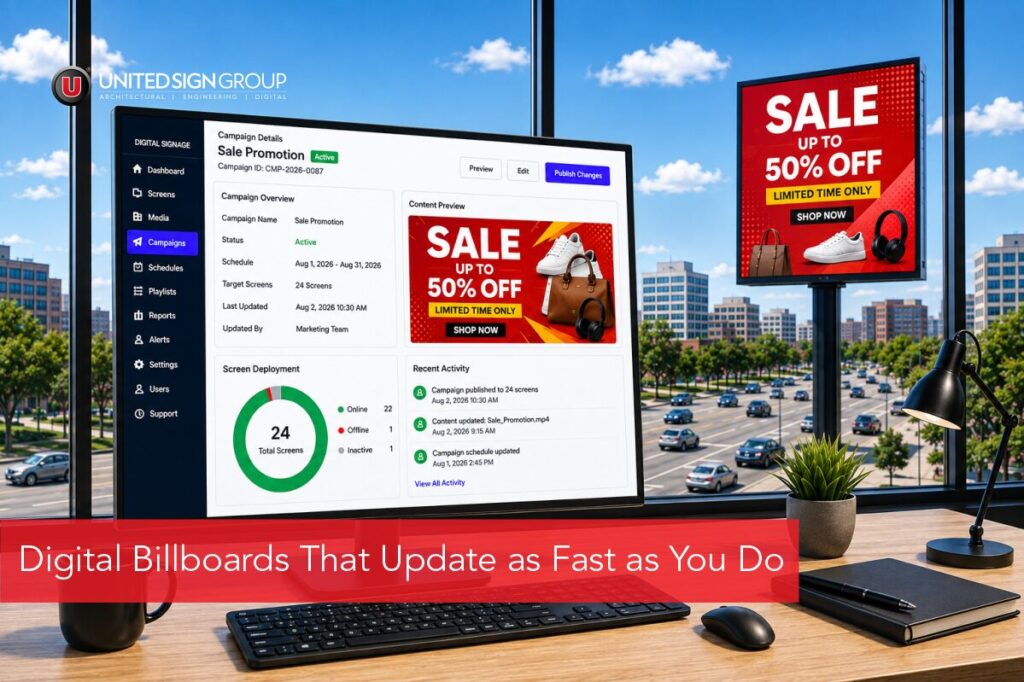
Content updates happen remotely, often within minutes, letting you advertise in real time without anyone visiting the sign in person.
A few examples:
- For example, a restaurant pushes a lunch special at 11am and swaps to dinner by 5pm.
- Retailers can pull a promotion the moment inventory runs out.
- Dealerships update a weekend sale the second it ends.
Because of this, none of this needs new vinyl, an install crew, or weeks of advance planning.
However, static locks in a message. Digital lets it move.
In short, that’s the core difference.
Where You Can Advertise in Real Time
- Weather-triggered messaging. Umbrellas, heaters, or cold drinks, messaging that shifts with current conditions instead of running one generic line all season.
- Time-of-day targeting. Coffee in the morning, lunch specials midday, and happy hour by evening. Same structure, different message.
- Inventory updates. Pull or adjust a message the moment something sells out or changes.
- Multiple advertisers, one structure. Meanwhile, digital rotates between advertisers throughout the day. Static can’t do this at all.
- Fast response to current events. Update quickly without waiting on a print production timeline.
Advertise in Real Time: What It Looks Like in Practice
A car dealership running a weekend sale:
On a static billboard, crews build the promotion once, print it once, and it stays up whether the sale is still relevant or not. Sometimes it’s advertising a deal that already ended.
On a digital billboard, the dealership swaps in a new offer the moment the sale wraps, no print vendor, no new install.
A coffee shop near a highway exit:
Static signage has to pick one message and stick with it.
A digital display runs a breakfast promo during the morning commute, then switches to an afternoon pick-me-up message, reaching two different audiences on the same structure.
How This Affects Ad Spend
By comparison, static billboards mean a new production run every time the message changes. That cost repeats with each update.
Digital shifts that. As a result, once you build the display, you can advertise in real time at close to zero cost per update, handled through content management software instead of physical replacement.
On top of that, there’s also multi-advertiser revenue potential. A digital structure can host rotating ads from several businesses, generating more potential revenue from a single location than a static billboard selling one printed face to one advertiser.
What Real-Time Capability Actually Requires
Of course, it’s not just about the display hardware. Most of what makes digital signage work in real time comes down to software and connectivity.
- A content management system that lets you schedule and push updates remotely
- A reliable connection to keep the display synced
- Hardware built to run continuously, since a real-time system loses its value if the sign goes dark during the exact window it was supposed to update
Before choosing a vendor, ask:
- How are content updates pushed?
- Can scheduling be automated in advance?
- What happens if a scheduled update fails to load?
Should You Advertise in Real Time? Not Every Business Needs To
Still, not necessarily.
- One long-term brand message? Real-time flexibility may not add much value.
- Daily specials, shifting inventory, or fast-moving promotions? This is where real-time capability earns its keep.
FAQs
Updates are typically pushed remotely and can go live within minutes, depending on the content management system and connection reliability.
Yes. Content scheduling can be set up in advance to rotate messages by time of day, day of week, or other triggers without manual updates each time.
Not necessarily. Businesses running a single long-term message may not need the added flexibility, and a static billboard could be the more cost-effective choice in that case.
This depends on the display’s software and monitoring setup. It’s worth asking any vendor how failures are detected and resolved before committing to a system.