It’s not just a service problem when a busy street billboard drops a section for the first time; it’s a trust problem. Damaged LED screens don’t go unnoticed. They often jeopardize the whole LED display. This is when LED billboard redundancy is extremely helpful. A large-format outdoor LED board that is robust and built with redundancy provides a seamless and stable board, even with missing sections.
This is what DOOH media companies and service managers care about the most. They not only want a screen that works, but they also want to avoid and limit visible downtime that may cost money and create frustration. For digital billboards, the problems can very easily become a public issue. Redundancy helps avoid these problems.
Why do large-format boards make visible downtime a bigger problem
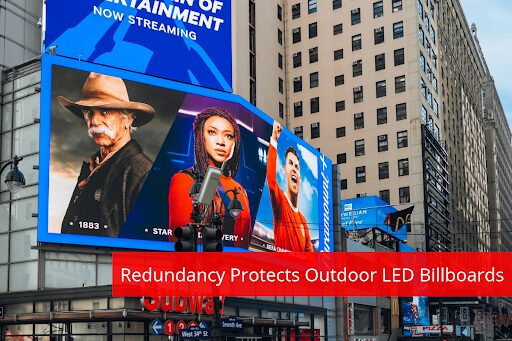
A large-format outdoor LED display is meant to be very visible. That is exactly what it is meant to do: capture the attention of people in traffic and from far away, even during the day. Unfortunately, when a large display contains an LED screen that is malfunctioning, the large display itself is even more visible.
A large display that is malfunctioning and showing incomplete messages does not capture the attention of a large audience and shows a lack of trust. This is why a large display fails as an advertisement. The cost of large display LED screen downtime extends much further than the cost of servicing the display; it is a cost to trust.
What redundancy actually does
Redundancy sounds technical, but the idea is straightforward. It gives the display more than one path for staying stable, so a problem in one area does not automatically turn into a visible failure. That is especially useful in outdoor LED systems where uptime matters, and repairs may not happen instantly.
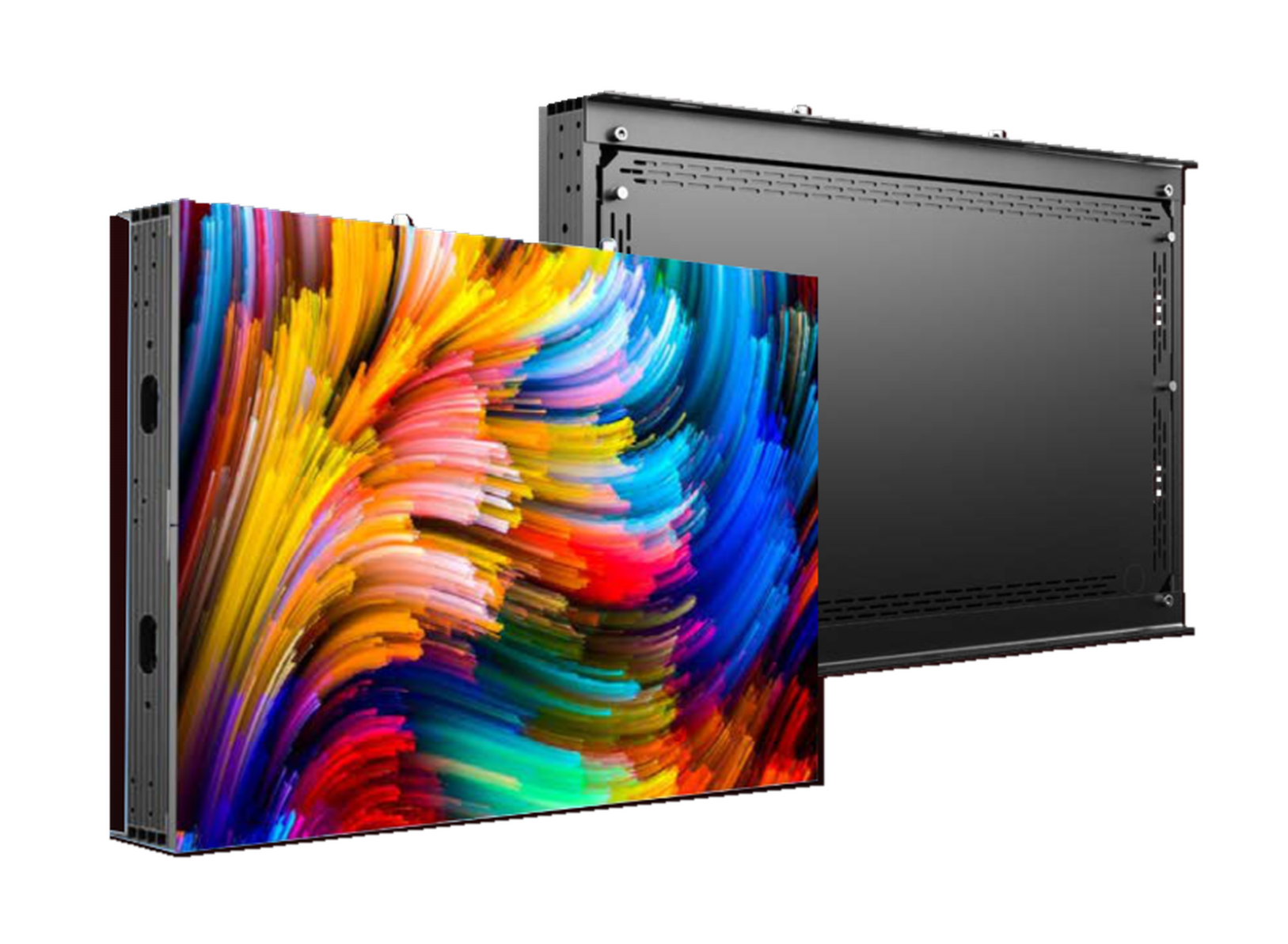
For March II, redundancy is part of the broader design story alongside 10,000+ nits, 26,000:1 contrast, energy savings, cloud monitoring, and quick service. That combination matters because it means the board is not only bright and high-contrast, but also built with real-world operation in mind. For outdoor media companies, that is the kind of product logic that supports long-term ownership value.
Connector redundancy without the jargon
Connector redundancy is one of those features that sounds complex but becomes easy to appreciate when a problem shows up. In simple terms, it helps protect the signal path between parts of the system. So if one connection or path runs into trouble, the display is less likely to lose its composure in a way the public can see.
For service managers, that means fewer visible interruptions and fewer panicked calls. The board keeps doing its job more gracefully, which is exactly what you want on a digital billboard that has to stay presentable all day. It is not about making the system fancy. It is about making it harder for a small fault to become a visible one.
Dual power supply redundancy creates an additional layer
Redundancy is beneficial with power as well. Having a dual power supply design gives the system a better chance of remaining stable when one of the supplies has a problem. It doesn’t mean the display doesn’t need maintenance, but the board does have a safety net.
For outdoor media companies, a single faulty power path should not mean a dark patch will show on the display. On a large-format outdoor LED board, this kind of redundancy means less risk of sudden obvious downtime. From a service standpoint, it means a longer window to diagnose, respond to, and fix the problem before the issue becomes apparent to everyone.
Calibration memory
Once again, another uncommon feature of redundant power supplies is an expression of creativity, that being calibration memory. It is most often practiced when display units are serviced, because the stored calibration means that when the display is serviced, the display will not only not drift, but it might not even be serviceable. In fact, especially for large outdoor displays, this is a huge advantage in retaining.
One of the many added bonuses of an outdoor display is that it appears to be a large, smooth display as opposed to smaller displays, which have been serviced. For large DOOH operators, this is great because customers are pleased when displays have a positive effect. Furthermore, maintenance is less disruptive because the display does not need to be reconstructed after every service is performed.
Monitoring keeps small issues from becoming big ones
Cloud monitoring is where the whole redundancy story becomes practical. If the team can see issues early, they can respond before the public sees a problem. That is one of the biggest reasons March II is relevant for service managers. It turns the screen into something that can be watched and managed, not just admired from a distance.
This matters especially for outdoor media companies running multiple sites. A board that reports issues early is easier to maintain, easier to trust, and easier to keep profitable. Monitoring does not replace service work, but it makes service much smarter. That can be the difference between a quick fix and a visible outage.
Why this matters for ROI
When buyers compare outdoor LED billboards, they often focus on brightness first. That is understandable, especially with large-format screens. But brightness alone does not protect revenue. A board also has to stay visible, stable, and easy to service. That is where redundancy, monitoring, and quick service start to matter just as much as image quality.
March II brings those pieces together in a way that makes sense for real ownership. It offers strong visibility, energy savings, redundancy, cloud monitoring, and quick service, all important for operators who care about long-term ROI, not just the initial install. If the board stays up, stays bright, and stays easier to manage, the investment works harder for longer.
Nike, for example, built its brand on consistency and recognition, and that is exactly the standard a large-format outdoor LED board has to meet in the real world. If the screen is part of the brand experience, it has to stay dependable, polished, and visible.
Talk with us about redundant outdoor LED systems
If you are comparing boards for a network or a new site, the best question is not just how bright the display is. It is how well the system protects itself when something goes wrong. That is where LED billboard redundancy, calibration memory, dual power supply redundancy, and cloud monitoring become a real advantage.
If you want a display that is built to handle visible downtime better, talk with us about redundant outdoor LED systems and see how March II can support your network with stronger uptime, cleaner visuals, and better long-term value.