Outdoor displays in hot climates have just one job: stay bright, stay stable, and stay up and running, no matter how much the sun beats on its cabinet throughout the day. Therefore, an LED display’s heat management can no longer be a ‘back-of-house’ engineer’s task, but a ‘front-line’ buying specification for every digital outdoor LED billboard and sign.
If you are buying for desert roads, tropical cities, or any region of the world where heat plays a major factor, the LED display’s most important attribute will no longer be its appearance on a render but its ability to endure on the ground. This is exactly where United Signs power-driven Genesis II steps in with a full array of weather-proof casing, display, brightness, common-cathode energy savings, serviceability & maintenance information to give our clients what they demand for and in real working conditions.
Heat is the real test
The problem with outdoor signs in a ‘hot zone’ is that an outdoor LED cabinet absorbs the external heat radiating from sunshine and the ambient temperature, and it generates its own internally. The heat will accumulate, making an outdoor LED display unreliable in the long term if not properly addressed; making cooling an absolute reliability necessity for all displays in the hottest climates, not just a ‘nice to have’.
That is why an LED display needs its IP-rated protection. And thus, it also needs to have all its heat radiating from inside it without retaining the trapped warm air within its cabinet by simply relying solely on passive cooling. Protection is to keep the weather outside, and heat management must be employed for all performance aspects to remain inside!
Common buyer considerations for hot regions
The buying strategy in hot climates typically depends upon just a few technical questions, such as:
- Does the cabinet have the necessary provisions to effectively facilitate sufficient airflow?
- Is the system efficient enough not to generate too much heat?
- Is it possible for it to dissipate any internally generated heat with the materials used?
- Can access to key components be easily managed in such a way as to make the servicing process non-disruptive?
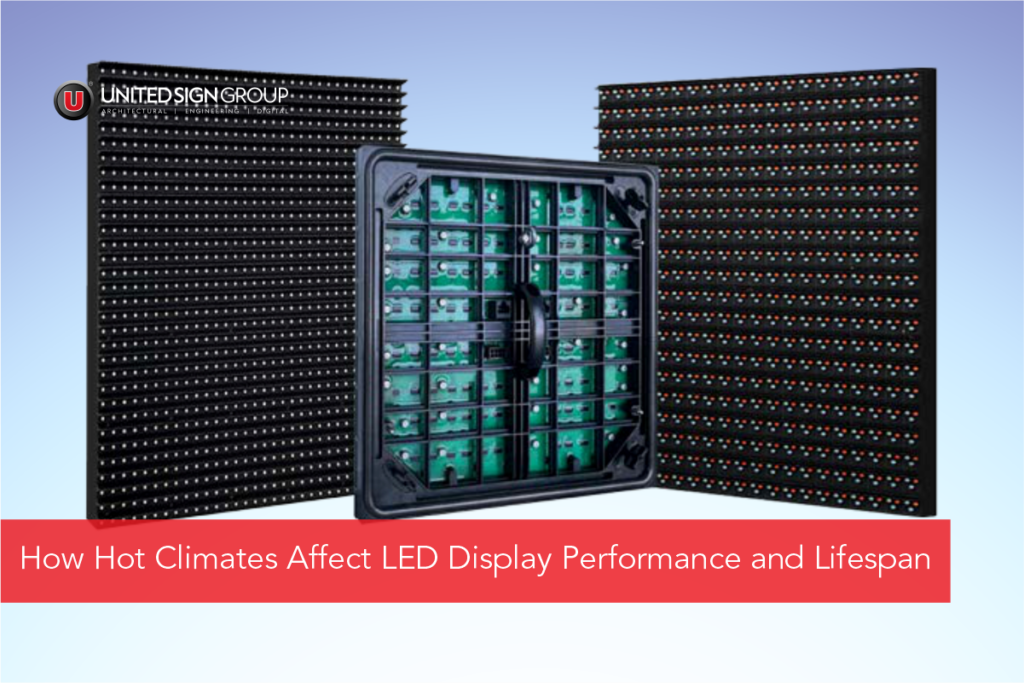
These are some of the reasons for copper layers and thermostatic fans to be key considerations in a display system. Copper dissipates heat while thermostatic fans regulate it based upon internal temperature increases, thereby avoiding the system overheating and running at its optimum in any circumstance. The buyer does not have to memorize technical specifications, but needs to be privy to the features that guarantee minimal downtime of the digital display and thus a higher ROI in the long run.
Why Genesis II suits hot regions!
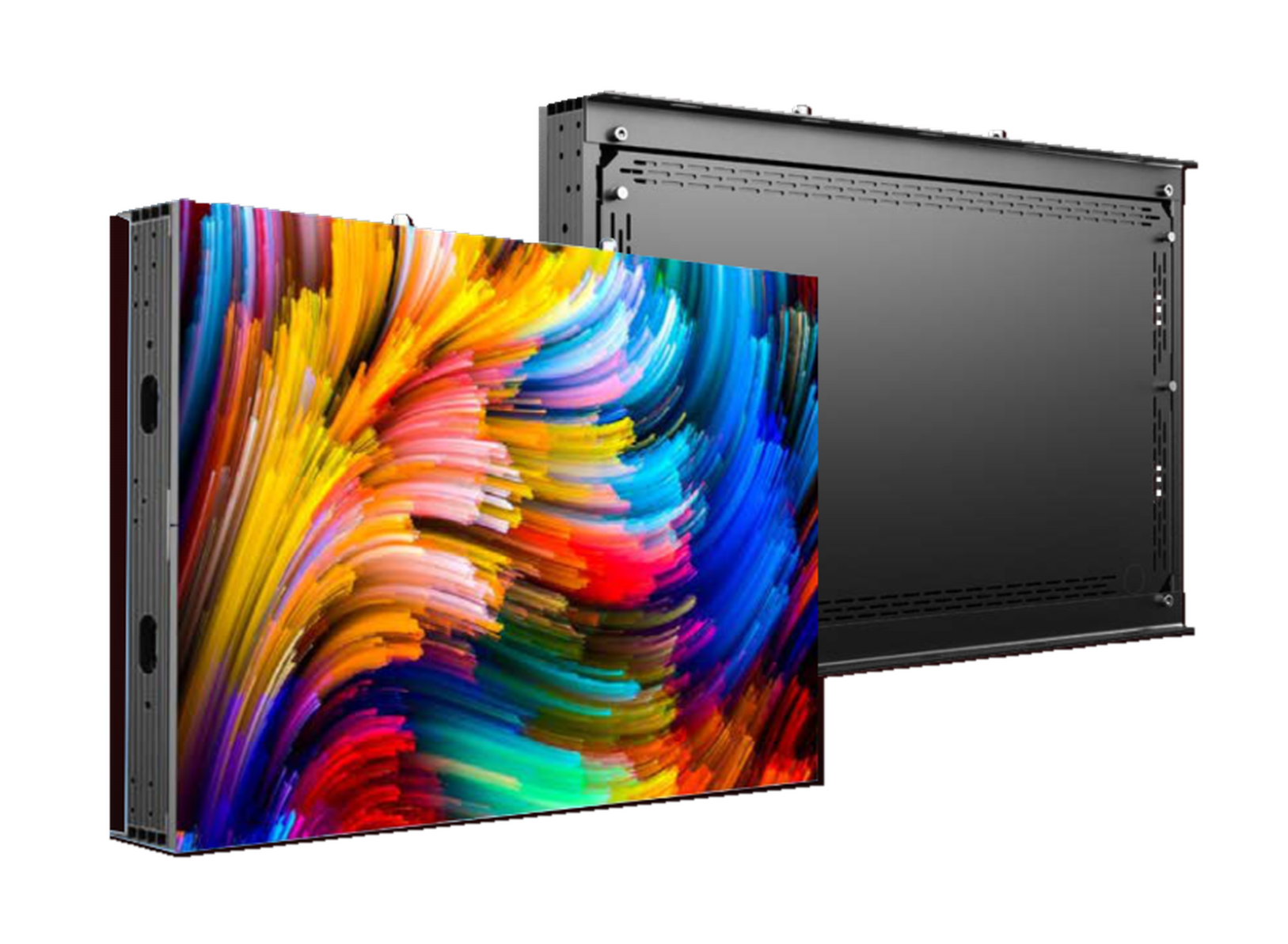
Genesis II by United Signs is carefully designed to give you the highest standards for digital outdoor billboards and signs, even when your digital display experiences extreme temperatures. Its weather-proof cabinet supports a long outdoor life, and the higher contrast and brightness levels maintain top-notch performance even in challenging conditions.
Fact: Genesis II’s common cathode design is ideal in the hottest climates because it minimizes power consumption and thereby reduces the amount of internal heat generated in any outdoor digital billboard, signage, or LED sign display. This translates to much less thermal load and less reliance upon heavy passive cooling.
In a hot climate, the speed and ease of accessing and servicing digital billboard hardware or LED sign maintenance parts is not considered a luxury, but it is a necessity to protect your company and its customers against frequent costly ‘downtime’. In effect, the easier that an LED display or sign is maintained and monitored, the ‘cheaper’ it is to own and operate overall, through its life cycle.
Why does this come back to ROI?
Buying a display with effective LED display heat management will ensure a more reliable product that is less likely to lead to heat-related repair issues down the line. These benefits translate directly into less costly ownership and a digital display you can count on in the long term. Our Genesis II offers weather-proof casing, common cathode technology, brightness, and contrast features combined with monitor capability and excellent serviceability. It is indeed one of the most sensible and well-considered purchases in hot climate environments for today’s digital billboard buyers.
FAQ
- What is LED display heat management?
LED display heat management is the discipline of designing systems and cabinets in ways that keep the components within a digital display at safe operating temperatures, which is crucial for digital billboards and outdoor signage in hot climates to maintain performance and lifespan.
- Why is LED display heat management important for outdoor digital billboards in hot countries?
Heat is a major enemy to all electronic equipment, especially LED components. In hot countries, external heat from sunshine is added to internal heat created from internal components, contributing to an overall elevated thermal stress, which causes reliability issues and reduces LED product lifetime & increases ongoing maintenance costs.
- What are the benefits of the common-cathode configuration in hot climates?
Common-cathode power configurations reduce energy consumption when compared to standard configurations. Lower power means lower heat generated, and less internal temperature to be dissipated. Thus, it reduces the need to rely heavily on cooling and enhances reliability, consequently.
Get help designing for hot climates
If you are planning digital billboards or outdoor LED signs for a hot region, get help designing for hot climates – let’s get started here!