Flex face framing shows up on billboards, large building cabinets, and pylon signs everywhere, but most billboard owners only learn how it actually works once they’re already deciding whether to use it. Here’s a straightforward look at the materials, what installation involves, and what upkeep actually looks like once it’s up.
What Flex Face Framing Is
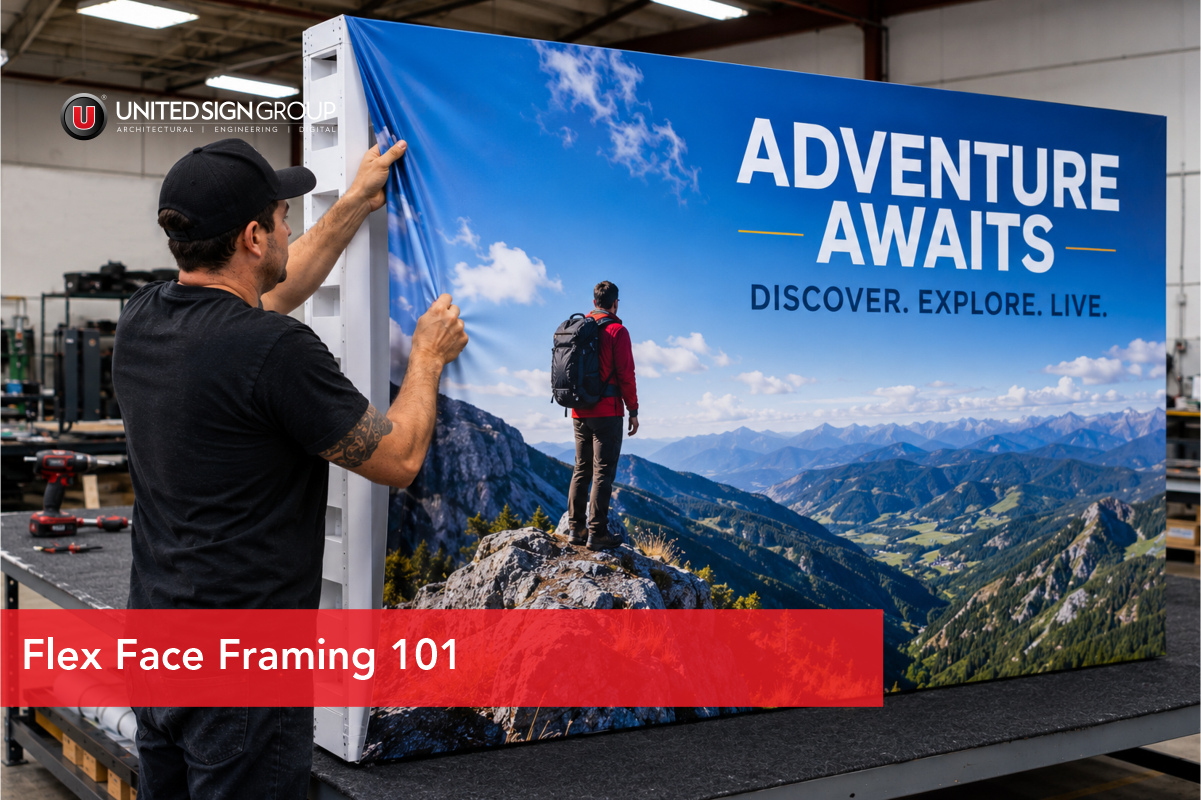
A flex face system uses a tension frame built into the sign cabinet, with a flexible vinyl or fabric material stretched tightly across it. Instead of bolting a rigid panel into place, crews pull the material taut and secure it around the edges, similar to how crews stretch a drum skin over its frame.
This construction is what makes flex face practical at large sizes, using the same tension fabric structure principles seen in larger fabric buildings. Rigid panels get heavy and expensive fast once you’re talking about billboard-scale dimensions. A tension-frame system spreads that load across flexible material instead, without needing the same structural bulk.
The Materials Involved

Flex face substrates are typically translucent vinyl or fabric, and manufacturers engineer them specifically for outdoor illuminated signage.
- Backlit color performance. The material needs to hold color accurately and evenly when illuminated from behind, not just look right under daylight.
- UV resistance. Sun exposure over years can fade or degrade lower-quality substrates, so material grade matters for longevity.
- Tear and sag resistance. A properly rated substrate resists stretching out of shape or tearing under wind pressure.
- Weight and shippability. Lighter materials mean the face can ship rolled or flat, cutting freight costs significantly compared to rigid panels.
Not all flex face framing material comes in the same grade, and cheaper substrates tend to show wear, fading, or sagging faster than premium options. This is worth asking about directly before choosing a vendor.
How Installation Works
Flex face installation generally follows a few steps:
- Crews prepare the tension frame on the cabinet, either as new construction or a retrofit onto an existing structure.
- They position the face material across the frame, typically starting from one edge and working across to keep tension even.
- They stretch the material and secure it around the perimeter, using a track or clamping system built into the frame.
- They check tension across the full surface to avoid wrinkles, sagging, or uneven stretch that could show up once the sign lights up.
Because the material is lightweight and doesn’t require heavy equipment to handle, installation is generally faster than mounting a rigid panel of comparable size, and the face itself doesn’t require specialized lifting equipment.
Retrofitting an Existing Cabinet
One advantage of flex face is that it can often go onto an existing billboard structure instead of requiring a full rebuild. This depends on whether the current cabinet can support a tension frame system, so an evaluation of the existing structure is a necessary first step before committing to a retrofit.
What Upkeep Actually Looks Like
Flex face doesn’t require constant attention, but a few things are worth checking periodically:
- Tension consistency. Over time, material can loosen slightly, and re-tensioning keeps the face looking sharp and prevents sagging.
- Edge and track condition. The points where the material secures to the frame take the most stress, so inspect these areas for wear.
- Surface cleaning. Dirt and debris buildup can dull backlit color performance, so periodic cleaning keeps the sign looking as intended.
- Damage checks after severe weather. High winds or storms are the most likely cause of tears or frame stress, so a post-storm check is a good habit.
Rigid panels can crack, warp, or need full replacement after damage. Flex face repairs are often more contained by comparison. since the material itself can be patched or, if needed, replaced without touching the underlying structure.
Why This Matters for Billboard Owners
Understanding flex face framing materials and installation upfront helps set realistic expectations for how a flex face sign will perform and what it’ll take to keep it looking good. It also helps when comparing vendor quotes, since substrate quality and installation approach can vary more than most owners expect.
FAQs
This varies by sign size and whether it’s new construction or a retrofit, but installation is generally faster than mounting a comparable rigid panel due to the material’s lighter weight and simpler handling.
Not typically. Quality substrates are built for years of outdoor service, though replacement timing depends on climate exposure and material grade.
Often, yes. Depending on the extent of the damage, the material can sometimes be patched rather than requiring a full face replacement.
Sagging usually comes from tension loosening gradually, which is why periodic tension checks are part of normal upkeep.