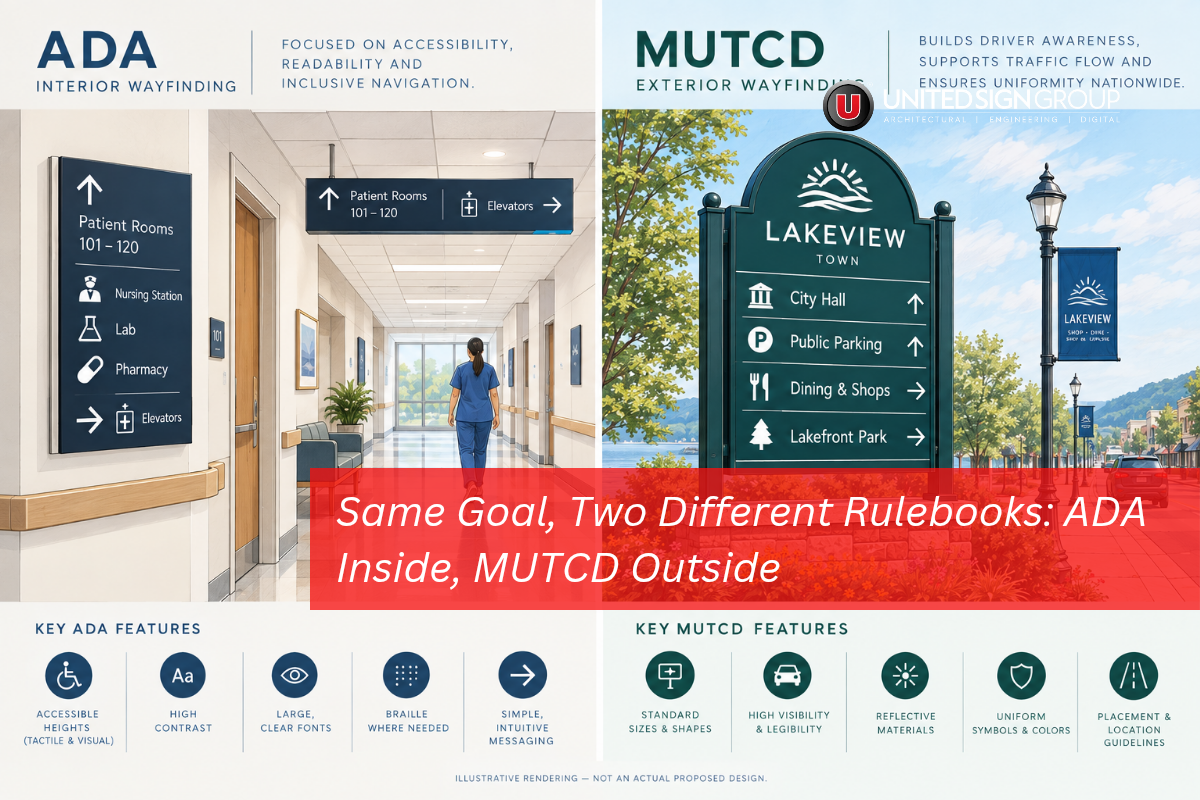
Step through a building’s front door, and the whole sign design rulebook flips. Interior vs. exterior wayfinding signage runs on two separate codes. Two separate regulators, too. The physical conditions barely overlap. Both chase the same outcome, though: getting a stranger to the right spot without a wrong turn.
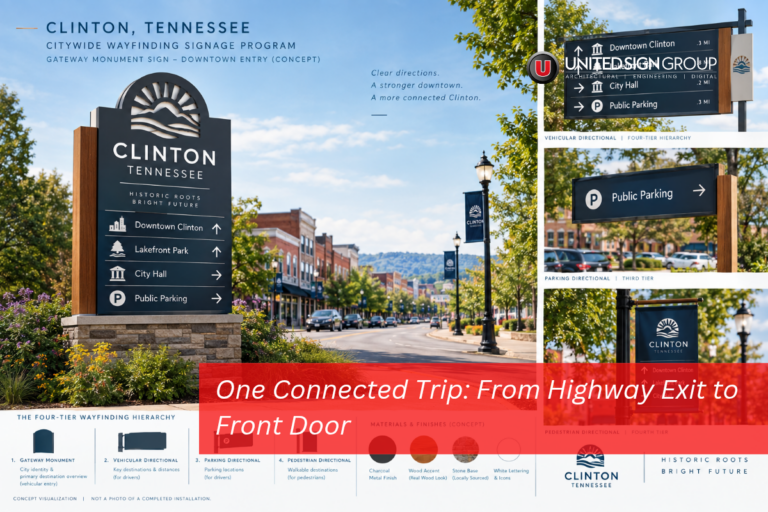
United Signs has proposed programs on both sides of that line. One is a planned interior wayfinding system for a VA medical center in New Hampshire. The other is a citywide exterior program mapped out for Clinton, Tennessee. That one covers streets, sidewalks, and parking instead of hallways. Neither project has broken ground yet, so nothing here reflects finished work. Together, though, the two proposals draw a clean line between what changes indoors and what changes the moment a sign steps outside.
Interior vs. Exterior Wayfinding Signage: Two Codes, Two Regulators
You walk inside a building, and ADA compliance takes the wheel. Walk outside onto a public road, and something else takes over. MUTCD standards. State transportation departments. Same underlying job. The design constraints barely overlap.
What Interior Signage Has to Get Right
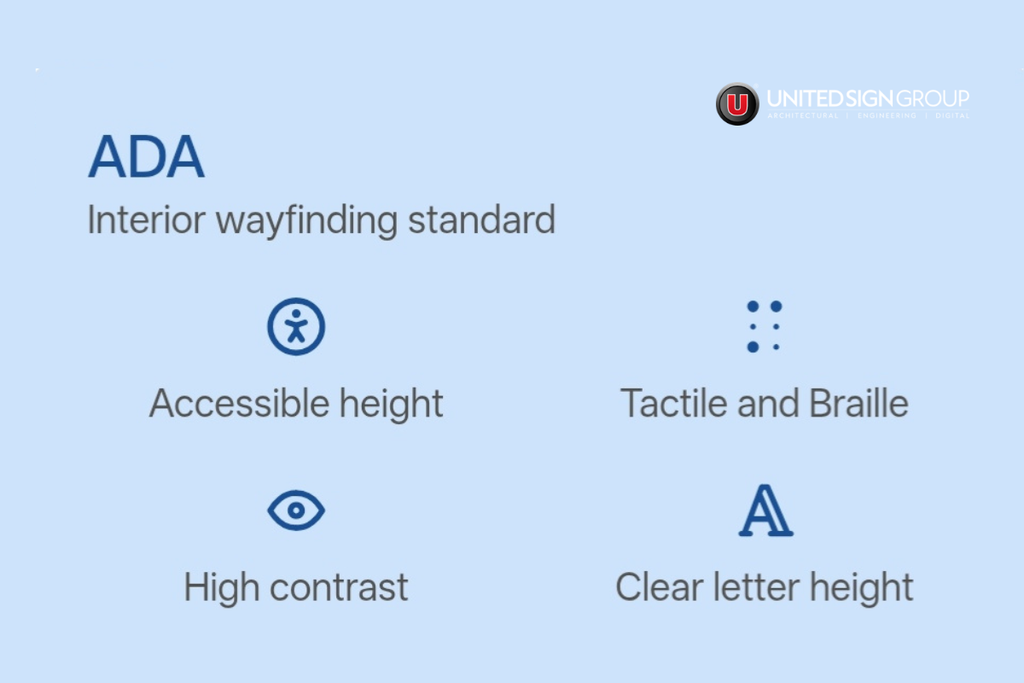
Interior wayfinding lives and dies on accessibility detail. Tactile characters. Grade 2 Braille. A minimum 70% visual contrast. Letter height that can’t dip below 5/8 of an inch on applicable signs. The proposed VA Manchester program stacks a federal design manual, PG-18-10, right on top of those standard ADA rules. It adds antimicrobial finishes, too, since the signs live in a clinical setting where infection control actually matters. That single program covers 232 signs across five sign types. All of it is planned for a hospital that can’t shut its doors during construction.
None of that shows up on a roadway sign. A hallway doesn’t have traffic.
What Exterior Signage Has to Get Right
Exterior wayfinding answers to the road instead. Sight distance shapes where a sign can go. So does vehicle speed. So does who actually owns the strip of land the sign would sit on. A sign inside a state right-of-way needs Tennessee’s Department of Transportation involved early, not as an afterthought. Roadway signage also has to align with the current MUTCD standard. That’s the federal rulebook behind how traffic and directional signs get designed everywhere in the country.
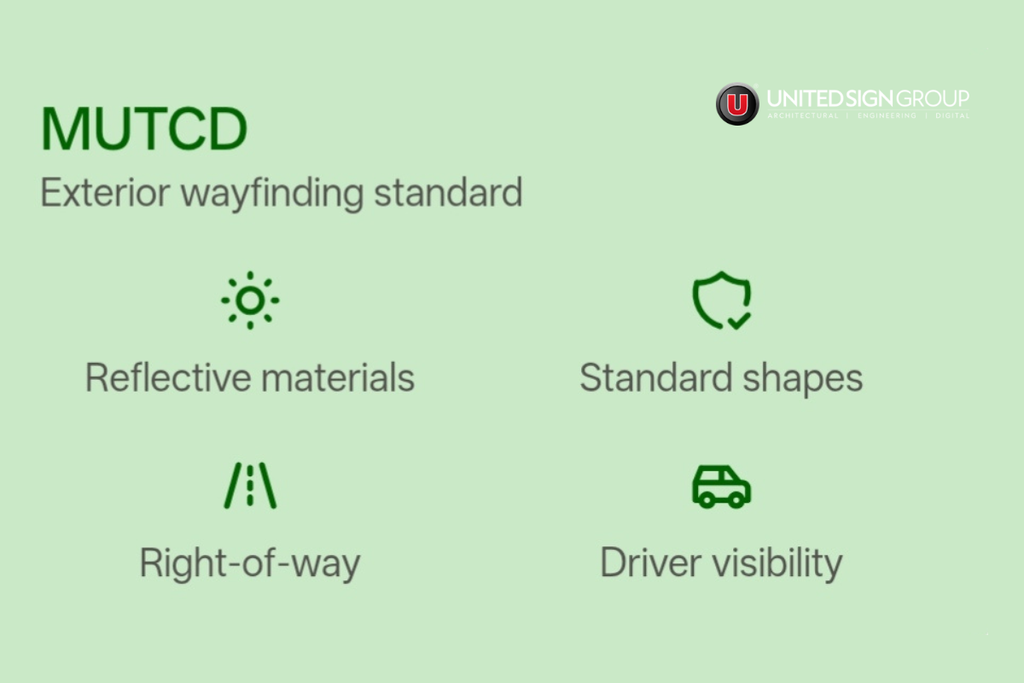
Clinton’s proposed program covers 55 locations across seven sign types. It splits between vehicular guidance and a pedestrian layer that takes over once a visitor parks and starts walking. Before any of it goes into full production, the plan even calls for prototyping a couple of signs first. Legibility gets tested. So does contrast, mounting height, and nighttime reflectivity, right out in the field. Interior signage never has to worry about how it reads under headlights at 9 PM.
When One Site Needs Both
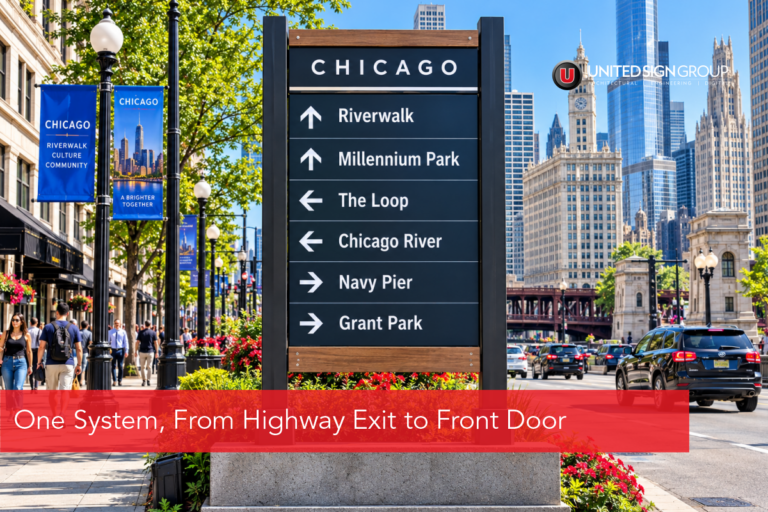
Plenty of real sites need interior and exterior wayfinding working together. A hospital campus is the clearest case. Exterior signage carries a visitor from the highway to the right parking lot and entrance. Interior signage takes over the moment they walk in, guiding them the rest of the way to radiology or the waiting room. Split that job between two vendors who’ve never spoken, and the handoff breaks. That gap between “outside the building” and “inside the building” is exactly where confusion creeps in. A single design-build team can carry that transition without a seam.
Interior vs. Exterior Wayfinding Signage: Fast Answers
Exterior, by a wide margin. It answers to MUTCD, state DOT approval, and right-of-way ownership. Interior signage mostly just has to satisfy ADA, plus whatever facility-specific standard sits on top of it.
Yes. There’s a real advantage in choosing United Signs that does. A design-build team that’s already navigated both rulebooks can carry a visitor from the parking lot to the front desk. No handoff between two specialists who don’t talk to each other.
Planning a Program on Either Side of the Door
Whether the project lives outdoors on a public road or indoors down a hospital corridor, the same principle holds up. One team. One set of standards to track. Also, one person is accountable if something goes wrong. Talk to United Signs about a program covering either side, or both at once.
For the full detail behind each standard, read our case studies on interior wayfinding for a VA medical center and citywide wayfinding for Clinton, Tennessee.