A scalable event LED system faces two numbers that rarely share a conversation. First, growth. TrendForce forecasts the LED rental display market at USD 2.244 billion by 2029, rising about 8% a year from 2024. Second, pressure. In its 2024 State of the Industry survey of around 300 professionals, Special Events found 37% naming reduced client budgets as a top-three concern. One is a forecast. The other is a small survey. Read both as signals, not guarantees.
Still, the message is clear. Clients want more screen for less money. So the system you pick has to stretch across small shows and big ones without a rebuild each time.
Why a Scalable Event LED System Means More Than “Big”
Vendors love to sell size. Scalability is something else. It means you can start with one screen, add another, and change the layout. Meanwhile, the whole wall stays matched in brightness and color. It also means you can fix one failed piece without losing the night.
So judge a system on three things. How does it grow? How does it break? How fast does it recover? Brightness and pixel pitch still matter. However, they start the evaluation. They don’t finish it.
The Buyer Checklist for a Scalable Event LED System
Take this list to every vendor, including us:
| Check | Why it matters | Ask the vendor |
| Module and cabinet sizes | Module and cabinet sizes | Which cabinet sizes exist, and do they mix in one wall? |
| Weight | Rigging and handling limits decide what you can hang or stack | What’s the cabinet weight per square foot? |
| Connections | Fast, repeatable plugs shorten load-in and teardown | Are power and signal connectors quick-release and weather-proof? |
| Redundant power | One failed supply shouldn’t end the show | Which cabinet sizes include it? |
| Calibration | Swapped modules must match the rest of the wall | Does a replacement carry its own calibration data? |
| Service access | Repairs happen under time pressure | Can technicians reach modules from the front, rear, or both? |
| Monitoring | You want the alert before the audience sees the problem | Is cloud monitoring included or optional? What does it report? |
| Brightness and viewing distance | Daylight and distance decide whether the image reads | What are the rated nits and ideal viewing range at my pitch? |
| Weather rating | Outdoor events don’t wait for good weather | What’s the IP rating, in writing? |
| Support and warranty | Gear fails on weekends | What does the parts warranty cover, and for how long? |
Don’t skip the last row. If a vendor answers the first nine well and the tenth vaguely, listen to that
How a Scalable Event LED System Handles Growth
Commence with the first three rows. Standard cabinet sizes, manageable weight, and quick connectors decide how fast you build and rebuild a wall. Therefore, ask for exact sizes and weights before you ask about price.
How a Scalable Event LED System Handles Failure
Next, look at rows four through seven. Redundant power, stored calibration, easy service access, and monitoring decide what a bad moment costs you. As a result, they matter more on show day than any spec on the brochure.
Rental LED, Staging LED, and Event LED Do Different Jobs
Producers often use these terms as if they mean the same thing. They don’t, and that’s where specs go wrong.
- Rental LED gets built and torn down again and again. Handling speed and road durability come first.
- Staging LED often sits close to the audience. Tight pixel pitch and consistent color come first.
- Event LED at a permanent or semi-permanent outdoor venue faces sun and weather. Daylight brightness and easy service come first.
So name the job before you compare quotes. A system that excels at one can be the wrong buy for another.
Where the Adapto Series Fits in a Scalable Event LED System
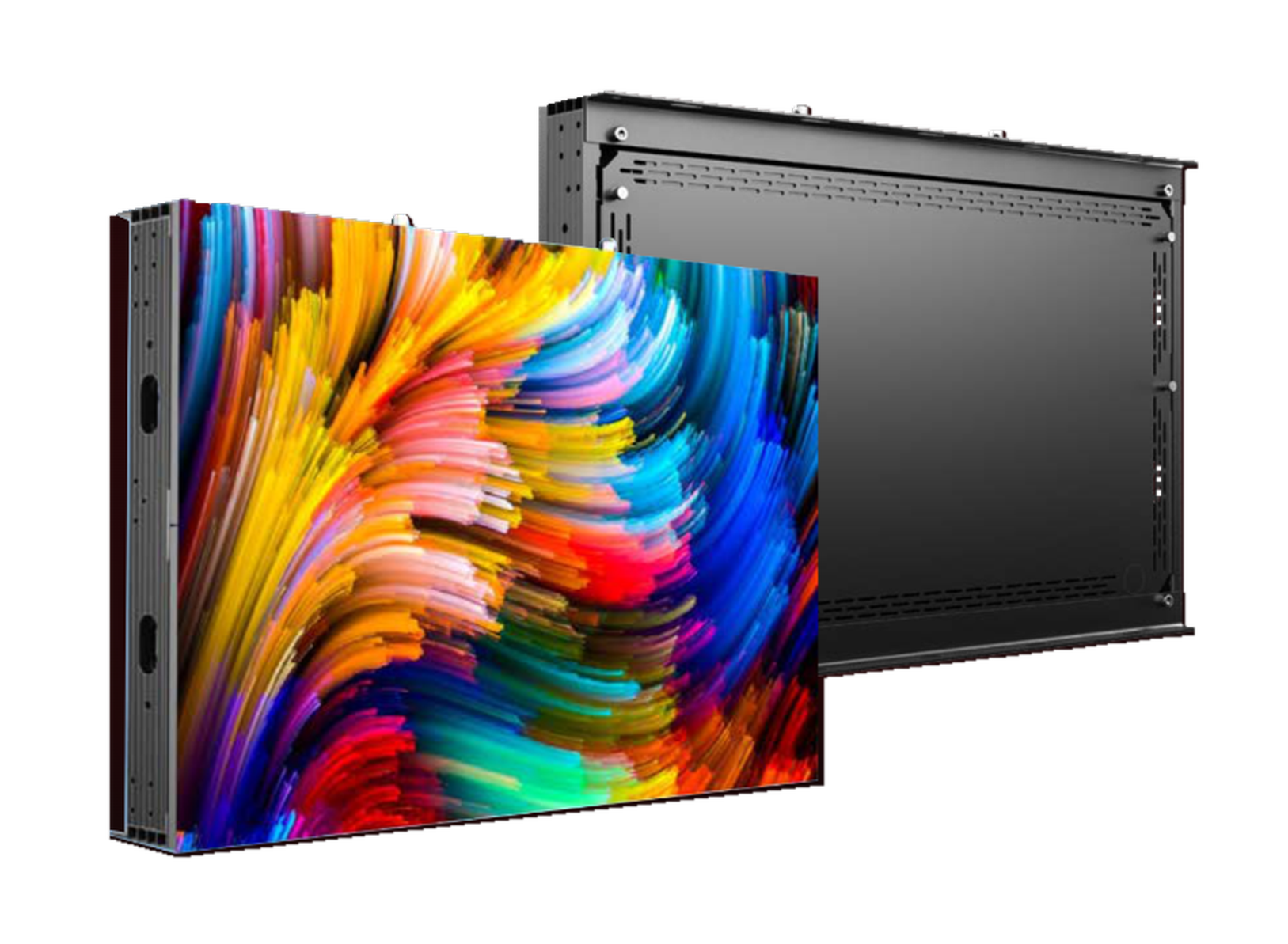
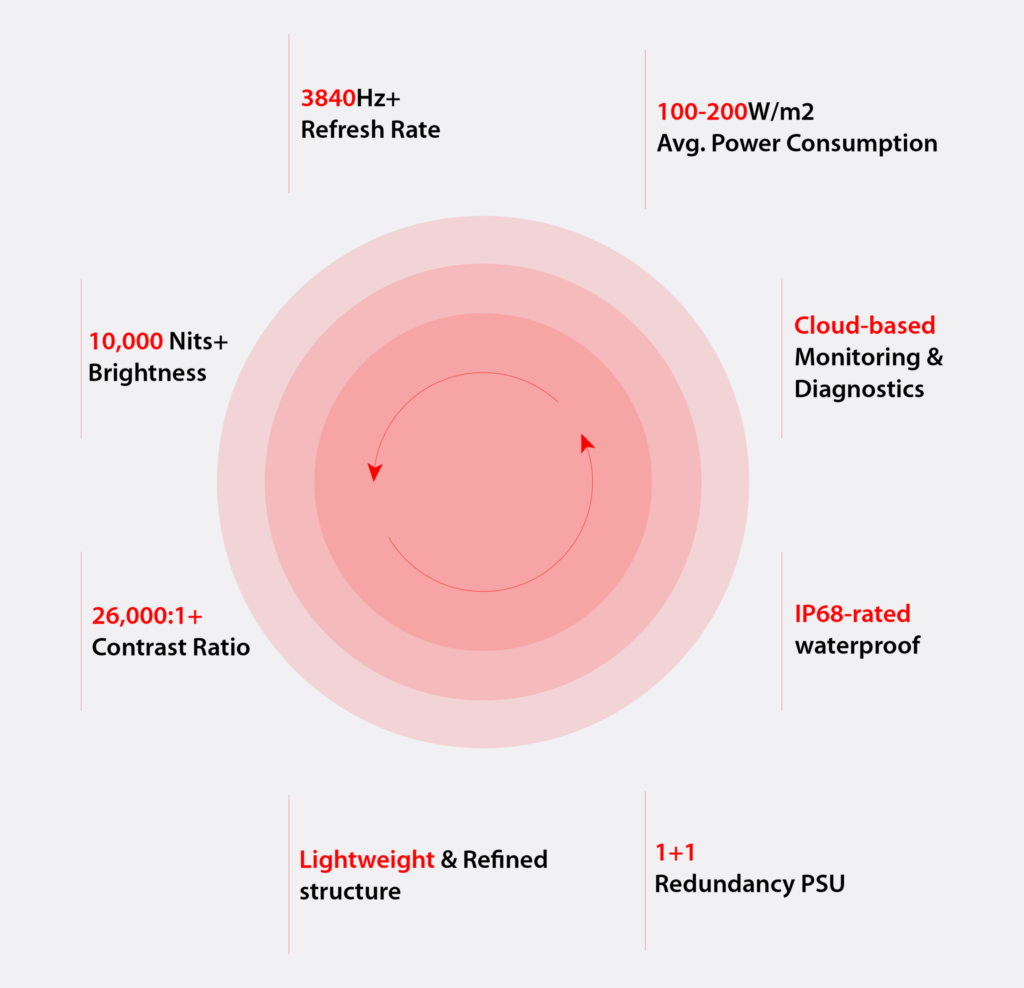
- Modules: 320 x 320 mm, 3.3 lb each, in four standard cabinet sizes
- Image: 10,000+ nits and a 26,000:1 contrast ratio
- Pitch: 6.67 mm and 10 mm options, with ideal viewing ranges of 18 ft and 28 ft or greater
- Service: front and rear access, quick-connect weatherproof connectors, and calibration data stored in each module
- Power: 1+1 redundancy on some cabinet sizes, so confirm yours
- Monitoring: cloud monitoring described as included, with email fault alerts and remote scheduling
Suppose your project is a fixed outdoor event screen, such as an amphitheater, a fairground, or a plaza. Then Adapto may fit well. On the other hand, if you need a rental or touring wall, talk to us first. We’ll tell you plainly whether it works. Meanwhile, our LED basics guide and pixel pitch guide will help you narrow the specs.
Start a project conversation
Tell us about your event, your venue, and how often the screen moves. Then we’ll walk through this checklist with you, line by line. If Adapto fits, we’ll say so. If another system fits better, we’ll say that instead. Start a project conversation and we’ll take it from there.