A driver on the highway has a few seconds to decide where to stop for fuel. First, they read the brand. Then they check the price and make the turn. Gas station signs do all of that work before anyone sets foot on your lot. If your signs are hard to read, dim, or out of date, that driver keeps going.
This guide covers the signs that matter most for petroleum and c-store operators: pylons, LED fuel price signs, canopy branding, and convenience store signage. Along the way, it covers compliance and planning so your next sign project stays on schedule.
Why Gas Station Signs Decide Who Gets the Stop
Fuel is a convenience purchase, so customers choose fast. In most cases, visibility and price clarity drive that choice. For that reason, your signs act as your first salesperson.
Your site needs to answer four questions at a glance:
- Who are you? The brand shows on the pylon and canopy.
- What does fuel cost? The price sign shows it clearly.
- Can I get in easily? Entrance and lane signs guide the turn.
- What else do you sell? Store signage points to food, drinks, and services.
If any answer is unclear, the driver simply chooses a competitor.
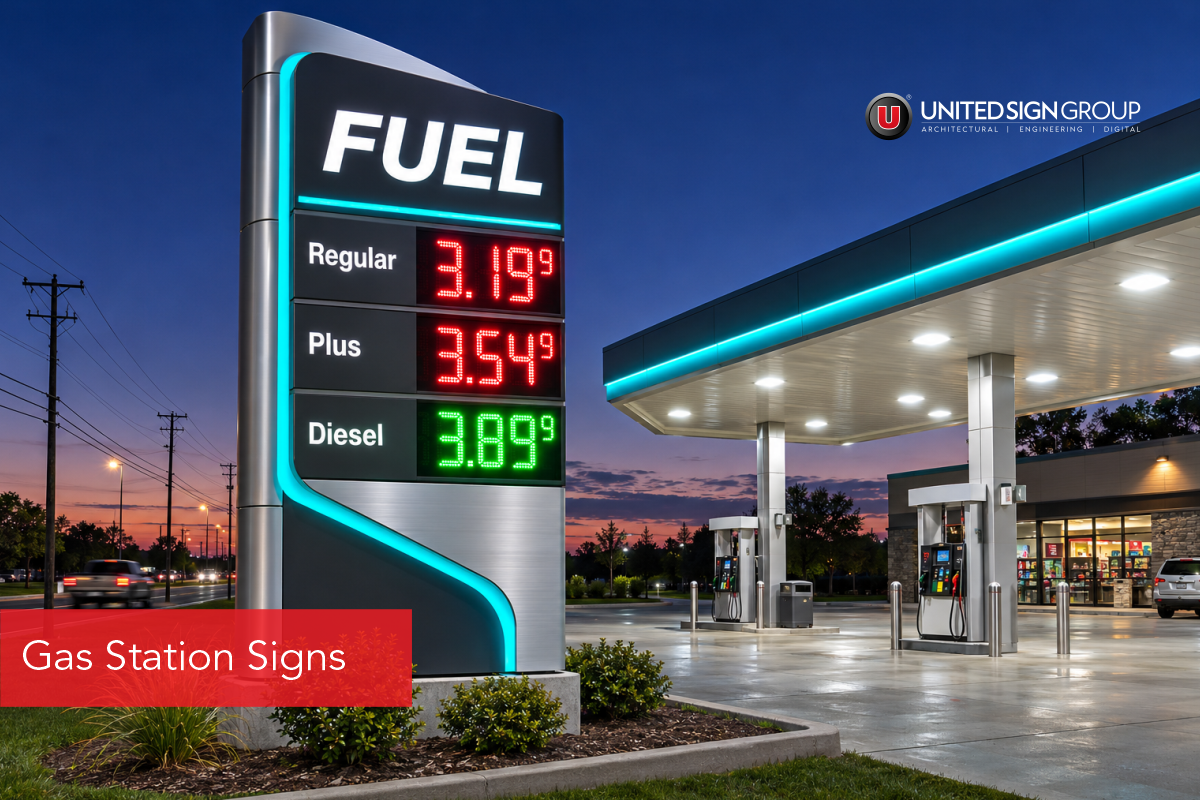
Pylon Signs: The First Thing Drivers See
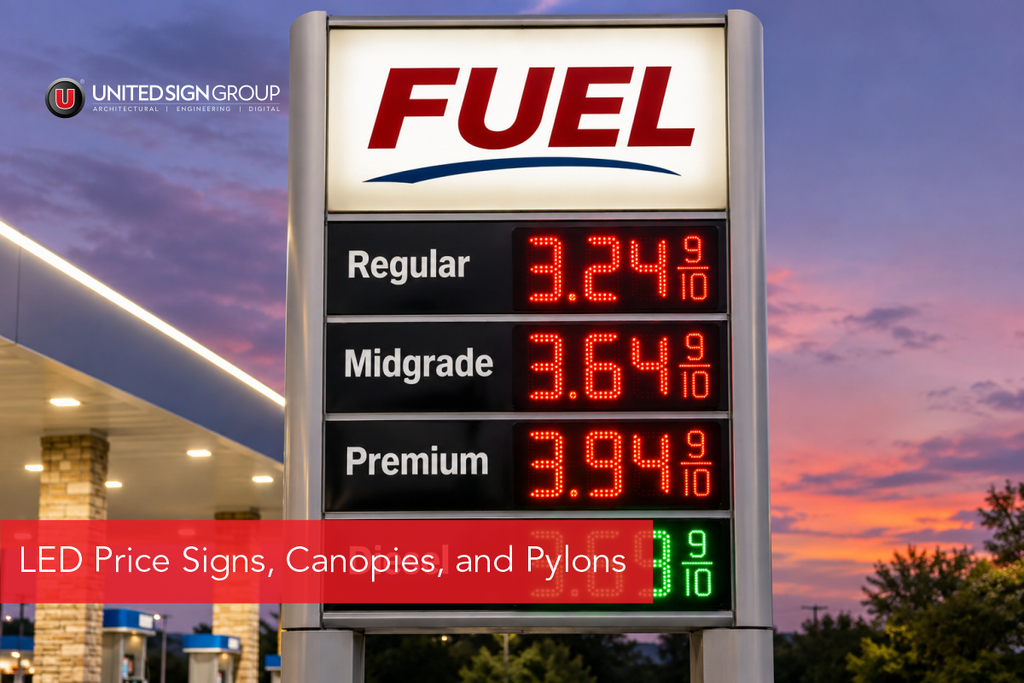
The pylon is the tallest sign on your property and the one most drivers notice first. Because it carries your brand and usually your fuel prices, it has to read from a distance.
What to plan:
- Height and placement. Place it where drivers from both directions can see it in time to turn.
- Panel layout. Give the brand mark and price section enough room, so neither feels cramped.
- Illumination. For example, LED lighting keeps the sign bright and even after dark.
- Structure and foundation. In addition, engineering should match local wind and soil conditions.
- Brand standards. If you operate under a fuel brand, follow its approved layout and colors.
Pylons also face the most scrutiny from city reviewers. For that reason, start the permit process early.
LED Fuel Price Signs: Accuracy and Readability
LED fuel price signs have largely replaced manual changeable-letter panels. They show prices in bright digits that stay legible in daylight and at night. As a result, operators can update them without a crew climbing a ladder.
Why operators switch to LED:
- Faster price changes. For instance, staff can update prices from inside the store, often through a controller or software.
- Fewer errors. Likewise, digital updates cut down on mismatches between the sign and the pump.
- Better visibility. Bright digits read from farther away than painted or plastic numbers.
- Lower upkeep. Finally, there are no letters to replace or fade.
In addition, LEDs use less power than older lighting, which helps operating costs across multiple sites. Brightness control also matters. Therefore, good systems dim at night so the sign stays readable without glare for drivers or neighbors.
Canopy and Fascia Signs That Build the Brand
The canopy is the largest branded surface on most fuel sites. In fact, its signs and lighting shape how the whole station looks from the road and from the pump.
Common canopy elements include:
- Fascia band signs with the brand name or logo
- LED canopy lighting that lights the fueling area evenly
- Pump island signage that identifies fuel grades and services
- Column wraps and trim that tie the canopy design together
Even lighting matters here. For example, dark spots make a site feel unsafe, while bright, uniform light helps customers feel comfortable fueling at night.
Convenience Store Signage Inside and Out
Convenience store signage turns a fuel stop into a store visit. In short, the goal is to tell customers what you offer before they walk in.
Outside:
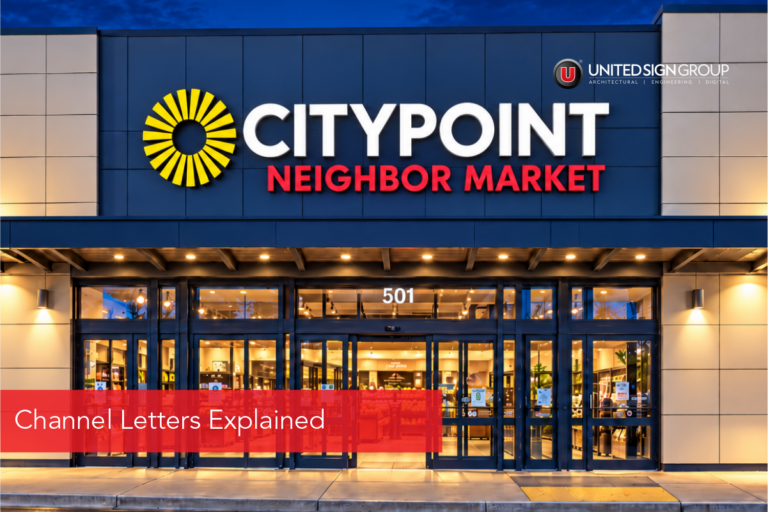
- Building signs and channel letters for the store name
- Window graphics for food programs, deals, and services
- Entrance and door signs that show hours and policies
Inside:
- Menu boards and food service signs
- Aisle and category signs
- Promotional displays near the register
Because customers decide quickly, keep messages short and consistent. Clear convenience store signage also supports higher-margin sales, since shoppers see what they want without asking.
Compliance Rules for Gas Station Signs
Overall, fuel sites face more sign rules than most retail properties. Requirements vary by state and city, and they often cover:
- Price display. Many jurisdictions regulate how and where you show fuel prices.
- Sign size and height. For example, zoning codes limit pylon dimensions.
- Illumination. Meanwhile, some areas restrict brightness or hours of operation.
- Electrical safety. Illuminated signs generally need listed components and proper installation.
- Brand and lease requirements. Beyond that, fuel suppliers and landlords may set their own standards.
Therefore, confirm local rules before you finalize any design. A sign partner that handles permits can flag conflicts early and avoid redesigns.
How to Plan a Gas Station Signs Upgrade
Overall, a clear process keeps cost and downtime under control.
- Audit your site. List every sign, its condition, and its lighting.
- Check codes and brand rules. Compare your plan against local zoning and supplier standards.
- Prioritize by impact. Start with the pylon and price sign, since they affect traffic most.
- Plan for power and data. Price signs need electrical and control connections.
- Schedule around operations. Crews can often work during off-peak hours so the site stays open.
- Confirm service and warranty. Ask who handles repairs after install.
Common Mistakes With Gas Station Signs
In most cases, problems come from skipping steps. Watch for these:
- Undersized price digits. Drivers cannot read them in time.
- Ignoring local sign codes. As a result, approvals stall and cost rises.
- Mismatched brightness. Overly bright signs draw complaints, and dim signs lose traffic.
- Neglecting maintenance. Burned-out sections and faded faces hurt the whole site.
- Treating each sign separately. Pylon, canopy, and store signs should read as one system.
FAQs
What signs does a gas station need?
Most stations need a pylon or monument sign, an LED fuel price sign, canopy fascia signs, pump island signs, building and entrance signs, and required regulatory notices. Local code and your fuel brand may add more.
Are LED fuel price signs worth the investment?
For most operators, yes. They update faster, reduce pricing errors, and stay bright and readable. They also cut maintenance compared with manual panels.
Do gas station signs need permits?
Usually, yes. Cities often require permits for new signs and many sign face changes. Requirements vary, so check local code before you order.
How long does a gas station sign project take?
Timelines depend on sign type, permits, and site conditions. Simple updates move faster, while new pylons and canopy programs take longer. A site audit and permit review give you a realistic schedule.
See Our Petroleum Signage Portfolio
If you are updating a single site or rolling out a program across many, it helps to see finished work first. Browse our past projects to see how we handle pylons, price signs, canopies, and store signage for fuel and convenience retailers.
See our petroleum signage portfolio or call (800) 935-8094. A specialist responds within 24 hours with a clear next step and no obligation.