How many would agree than an outdoor LED display for stadiums lives or dies by one thing: whether people can see it? That sounds obvious until you list what “see it” demands. Midday sun hammering the screen. Rain, heat, and cold, season after season. And a repair crew that can get in and out quickly when something fails on the worst possible day.
Let’s start with some numbers, because they set the stakes.
- $9.46 billion: U.S. out-of-home advertising hit a record in 2025, up 3.6%, per OAAA data reported by MediaPost
- 36.3%: That’s digital’s share of the total, and it grew 10.5% year over year, according to the same release as carried by Billboard Insider. Do the math and digital is roughly $3.4 billion of that pie. (That last figure is our calculation, not theirs.)
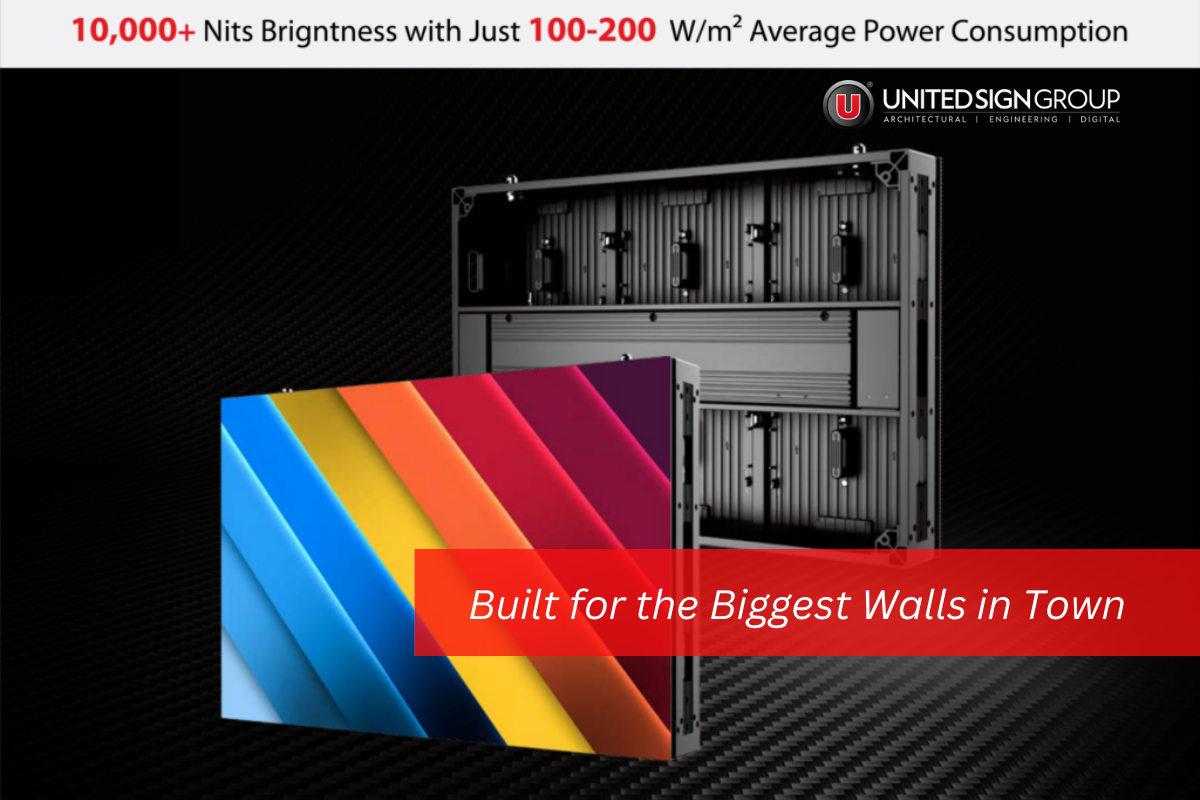
- 10,000+ nits and 26,000:1 contrast: Those are the rated brightness and contrast on the US-March II spec sheet.
- 18 W per square foot on average, 54 W at the top end. That’s March II’s rated draw on its SMD models.
- If you run a venue, those numbers hit differently than they do for an ad buyer. You aren’t shopping for pixels. You’re shopping for something that has to stand outside for years, in front of a crowd, and never give anyone a reason to look away.
Big Screens Are Getting Bigger Slices of the Budget
Digital keeps eating into traditional outdoor advertising. If your screen sells sponsorships, ads, or both, that trend is your tailwind. A stadium board, a plaza wall, and a station facade all fight for the same attention that a roadside digital billboard does. The difference is that your audience stands close and can’t easily leave.
So before you ask how big, ask three other things. How bright? What is the operational cost? How fast to fix? March II is built around those questions, and is highly suitable as roadside billboards, stadium screens, arenas, and transportation hubs.
Visibility: The Sun Never Takes a Day Off
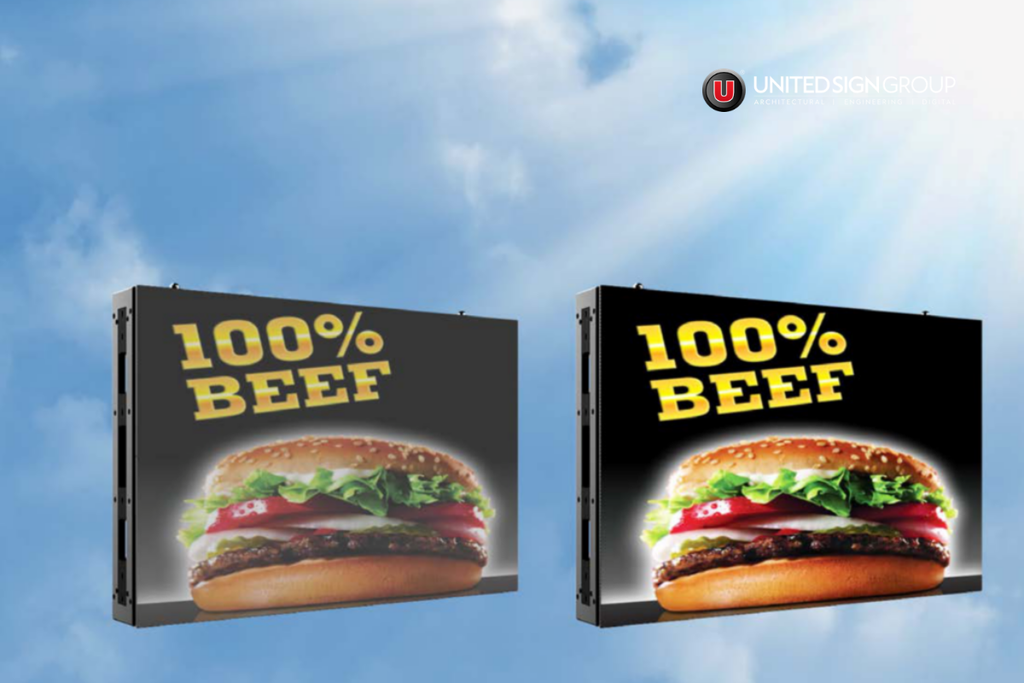
Brightness settles most arguments here. In direct daylight, a dim screen simply disappears.
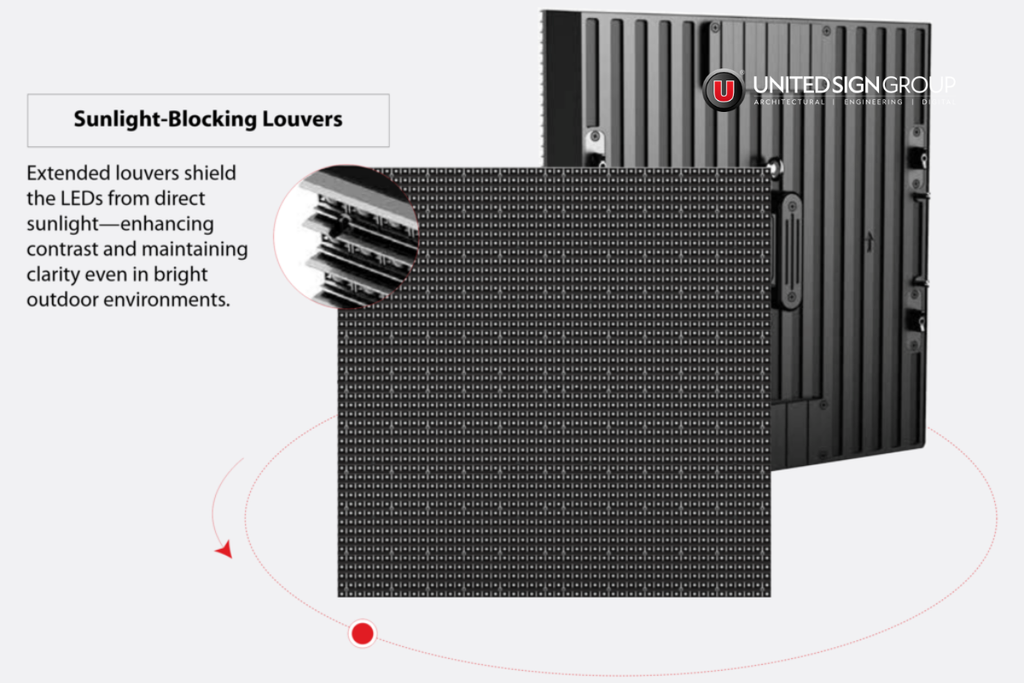
March II is rated at 10,000+ nits, and it adds sunlight-blocking louvers and a matte black anti-glare finish so the image doesn’t wash out.
Then comes pixel pitch, which decides how close someone can stand before the picture falls apart:
| Pixel Pitch | Ideal viewing range |
| 4 mm | 16 ft or greater |
| 6.67 mm | 18 ft or greater |
| 10 mm | 28 ft or greater |
A concourse wall that people brush past needs a tighter pitch than a facade seen from across a parking lot. Our pixel pitch guide breaks down how to choose.
Where the Electric Bill Sneaks Up on You
Big LED screens drink power, and they drink it every hour they’re on. So even a modest efficiency gap grows into real money.
Try it with the size our March II uses in its own example: 14 feet by 48 feet. At 18 W per square foot, that’s about 12.1 kW. Leave it running day and night at the page’s $0.16 per kWh and you burn roughly 105,961 kWh a year, which comes to about $16,954. That’s our arithmetic, so swap in your own rate and your real hours.
March II drives its LEDs common-cathode and uses power supplies above 90% efficiency. As a result, it’s touted to offer savings of up to 56 percent for a double-sided billboard at 10,000 nits running around the clock. Ask any vendor, us included, for measured draw on your actual setup before you lean on a number like that.
What Happens When Something Breaks
On a game night or a packed commute, one bad part shouldn’t kill the whole display.
The backup plan
March II sheds light on 1+1 redundancy. Two power supplies run side by side, so if one fails, the other picks up the full load. The module power and signal pins are set up redundantly too. March II also promises “zero display interruption.”
The weather plan
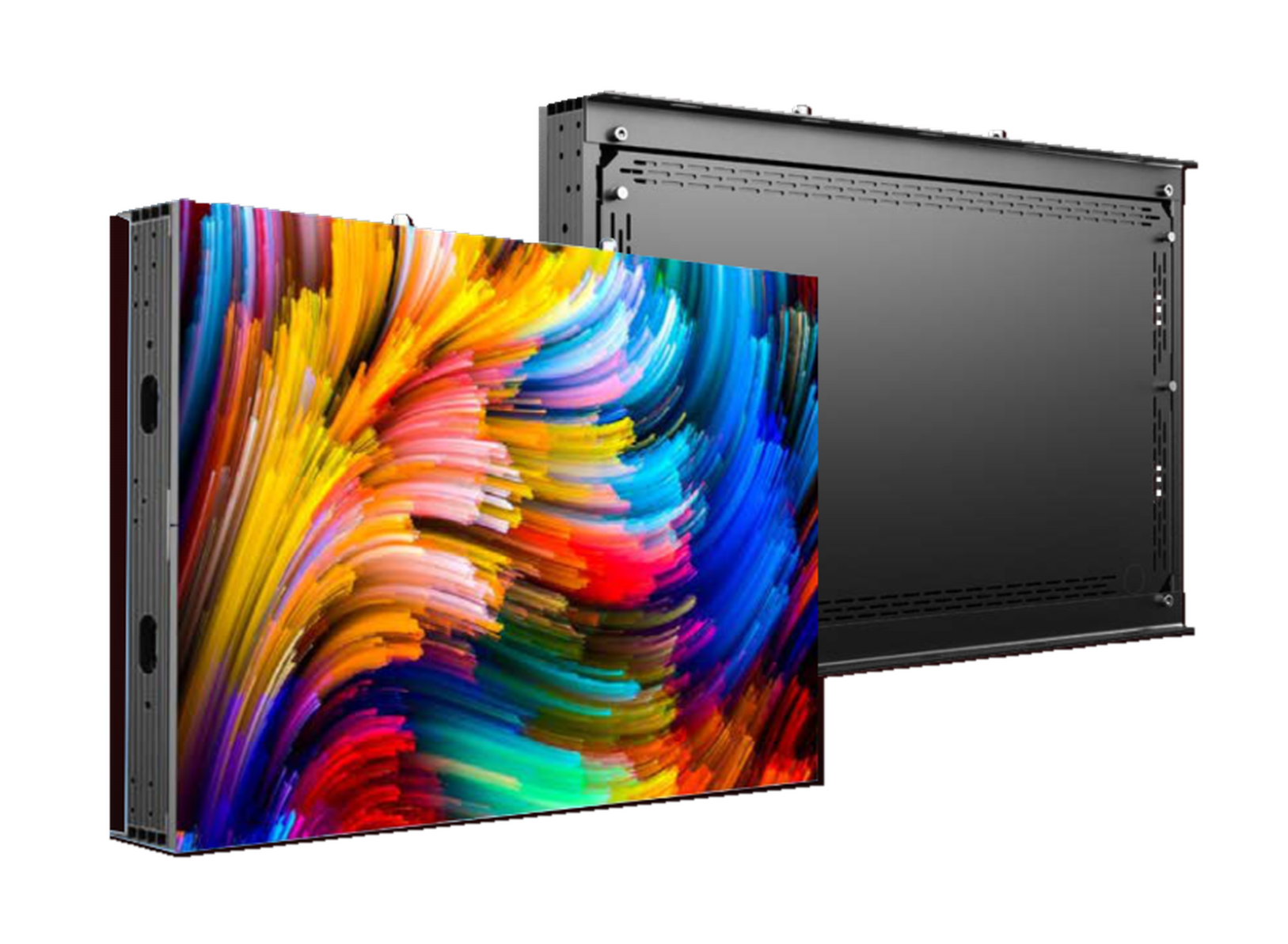
The cabinet does the heavy lifting. March II is rated IP65, meaning dust-tight and protected against water jets. It’s built from aluminum extrusion at 7.2 lb per square foot and runs from -40°F to +140°F. A fan switches on and off by software as temperatures change, and the power supply sits sealed against the aluminum back panel.
Fixing It Fast, Installing It Faster
On a large wall, a small delay costs real money. March II leans on three design choices to keep delays short:
- Modules release from the front with a simple lock, and the rear opens for power and signal parts
- Weatherproof quick-connect plugs mean technicians don’t rewire anything
- Every module stores its own calibration on a smart chip, so a replacement matches the rest of the wall
Setup gets help from the cabinet design too. They lock into a consistent grid, which speeds leveling and squaring, and March II has about 90° to 180° corner splicing and curved builds. We won’t promise a schedule, because your site, your structure, and your crew set it.
Watching Your Screens From Anywhere
Plan a large-format display project. Tell us about your venue, your viewing distances, and your power rate, and we’ll map March II to your site, with brightness, redundancy, service access, and monitoring spelled out. You’ll leave with a plan you can price, not a brochure. Plan a large-format display project and we’ll start with your site.