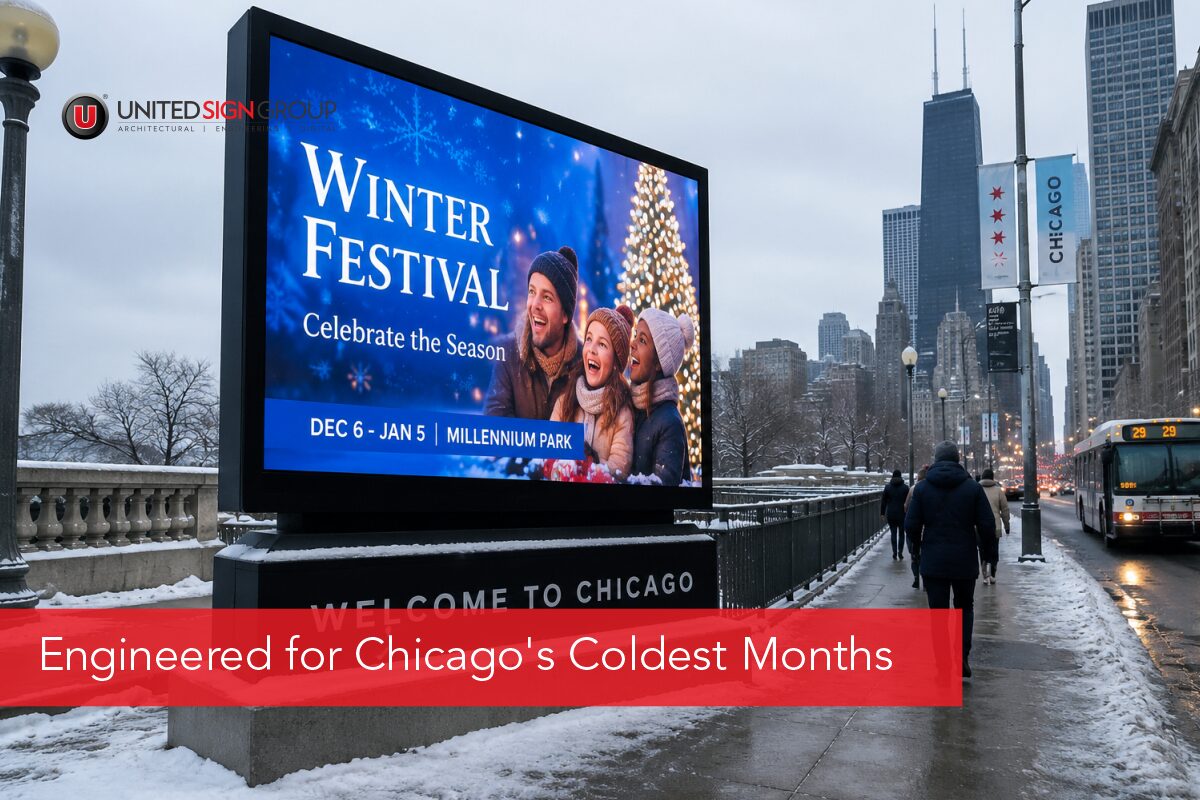
Winter is the real test for outdoor LED signs Chicago businesses depend on. Sub-zero cold snaps, lake-effect snow off Lake Michigan, wind cutting through downtown corridors. An outdoor LED display here faces conditions most manufacturers never design for. Maybe you own a shop in Wicker Park. Maybe you manage signage across Cook County. Either way, know how cold affects a display before you sign off on a purchase.
Why Cold Is a Different Problem for Outdoor LED Signs in Chicago
Southern markets worry about heat dissipation. LED components generate their own heat. In Florida or Texas, the challenge is moving that heat out fast enough to protect internal parts. Chicago flips the equation. Here, you need to keep internal components warm enough to function. You also need to block moisture, which freezes, expands, and cracks any part that lacks a proper seal.
This matters, because many outdoor LED signs Chicago buyers find carry warm-climate assumptions in their design. A display that performs well in Phoenix or Orlando won’t automatically suit a Loop storefront. The same goes for a suburban Chicagoland retail center. The engineering priorities are different, and that difference shows up the first time temperatures drop into single digits.
Lake-effect snow adds another layer to the problem. It’s wetter and heavier than typical inland snowfall, and it can accumulate quickly during a single system. A cabinet that can’t shed that weight and moisture risks water intrusion. Temperatures swing above freezing and back down constantly through an Illinois winter.
Freeze-Thaw Cycles Do the Real Damage to Outdoor LED Signs
The biggest threat to outdoor signage in Chicago isn’t usually a single brutal cold snap. It’s the repeated freeze-thaw cycle that runs through a typical season here. Moisture works into small gaps, freezes, expands, and widens the gap slightly. Repeat that dozens of times over a winter and untreated components crack, corrode, or fail outright. Often you see no warning until the display goes dark.
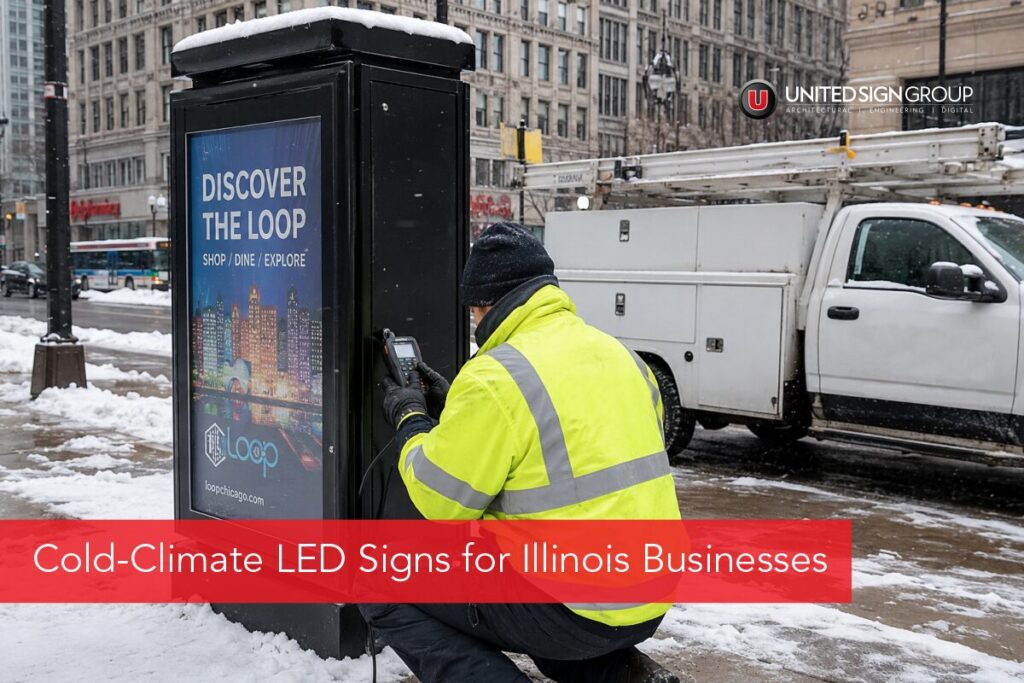
This is why material selection matters as much as the display technology itself. Manufacturers must test components for sub-zero performance. A generic “outdoor use” rating means little when someone wrote that spec sheet for a different climate.
Thermal Management Keeps Outdoor LED Signs Running in Winter
A well-built outdoor LED display uses thermal management systems designed to regulate internal temperature in both directions, keeping components cool enough in summer and warm enough in winter to avoid cold-related failures. Sealed cabinets play a role here too. A tightly sealed enclosure keeps snowmelt and condensation from reaching circuit boards and power supplies, which is exactly where cold-weather failures tend to start.
For Chicago specifically, this pairs with a structural requirement: displays and their mounting systems need to be engineered for the city’s wind load standards, since lakefront gusts add stress that inland installations rarely deal with. A sign that’s thermally sound but structurally undersized for local wind conditions is still a liability once winter storms roll through.
What Chicago Retail and Municipal Buyers Should Ask
Before choosing an outdoor LED sign for a Chicago location, run through this list with any vendor:
- Has the display been tested for sub-zero operation, not just cold-weather tolerance in general terms?
- Is the cabinet sealed against moisture intrusion, including snowmelt and condensation buildup during warmer stretches?
- Does the structural design account for Chicago’s wind load requirements, especially near the lakefront or in high-rise corridors?
- Who handles permitting? Chicago’s Department of Buildings requires e-permit filings, and projects near public ways may also need Grant of Privilege approval through BACP.
- What does the maintenance plan look like for freeze-thaw seasons? Ask specifically how often components are checked for corrosion or moisture damage.
- Is the vendor familiar with Chicago’s Municipal Code, including Title 13-20 and Title 17-12 sign provisions?
Why This Matters More for Municipal Buyers
Municipal signage projects often involve multiple sites, longer service life expectations, and public accountability if a display fails. A sign that goes dark in a park district or a transit corridor during winter isn’t just an inconvenience. It’s a visible failure that reflects on the organization that installed it, and one that draws attention at exactly the wrong time. Choosing hardware built for the climate from the start avoids that outcome and reduces the maintenance burden over the life of the display.
A Team That Knows Chicago’s Winters and Its Permit Process
Materials and engineering matter, but so does working with a company that understands Chicago’s permitting layers, from DOB e-permits to historic district reviews in select community areas. United Signs has installed 10,000+ signs in the Chicago area and manages design, permitting, fabrication, and installation in-house, with materials selected specifically for the region’s freeze-thaw cycles and lake-effect snow loads.
If your outdoor LED display needs to hold up through another Chicago winter, it’s worth a conversation before the cold sets in.
Frequently Asked Questions
Heat-resistant design focuses on dissipating heat generated by the display itself. Cold-weather design focuses on keeping components warm enough to function and sealed against moisture that freezes and causes cracking.
Yes, if the cabinet isn’t properly sealed. Lake-effect snow is heavier and wetter than typical snowfall, and repeated freeze-thaw cycles can force moisture into small gaps over a season.
Yes. Signage projects go through the Chicago Department of Buildings e-permit system, and signs projecting over a public way may also require a Grant of Privilege through BACP.
This depends on the display and installation, but a maintenance plan built around freeze-thaw seasons should include regular checks for moisture intrusion and corrosion, not just a single inspection at season’s end.