Choosing between front access and rear access is not a small spec detail. It changes how your front access outdoor LED project gets installed, serviced, cooled, and maintained over time. For integrators and architects, that choice can decide whether an outdoor LED sign feels elegant in the field or cumbersome after commissioning.
Genesis II is built for the U.S. outdoor LED signs and digital billboards market, with years of real-world installations behind it. That matters because cabinet access is not only about service. It also affects footprint, weather resilience, brightness strategy, and long-term ownership.
The Real Outdoor Display Problem
Outdoor LED projects rarely fail because the screen was “too bright enough.” They fail because the site was misread. Tight setbacks, narrow plazas, wall-mount constraints, roadside access, coastal humidity, and future service paths all shape the cabinet choice.
That is why the front access versus rear access decision should happen early. It belongs in the design conversation, not in the panic phase before install.
Why Access Style Matters
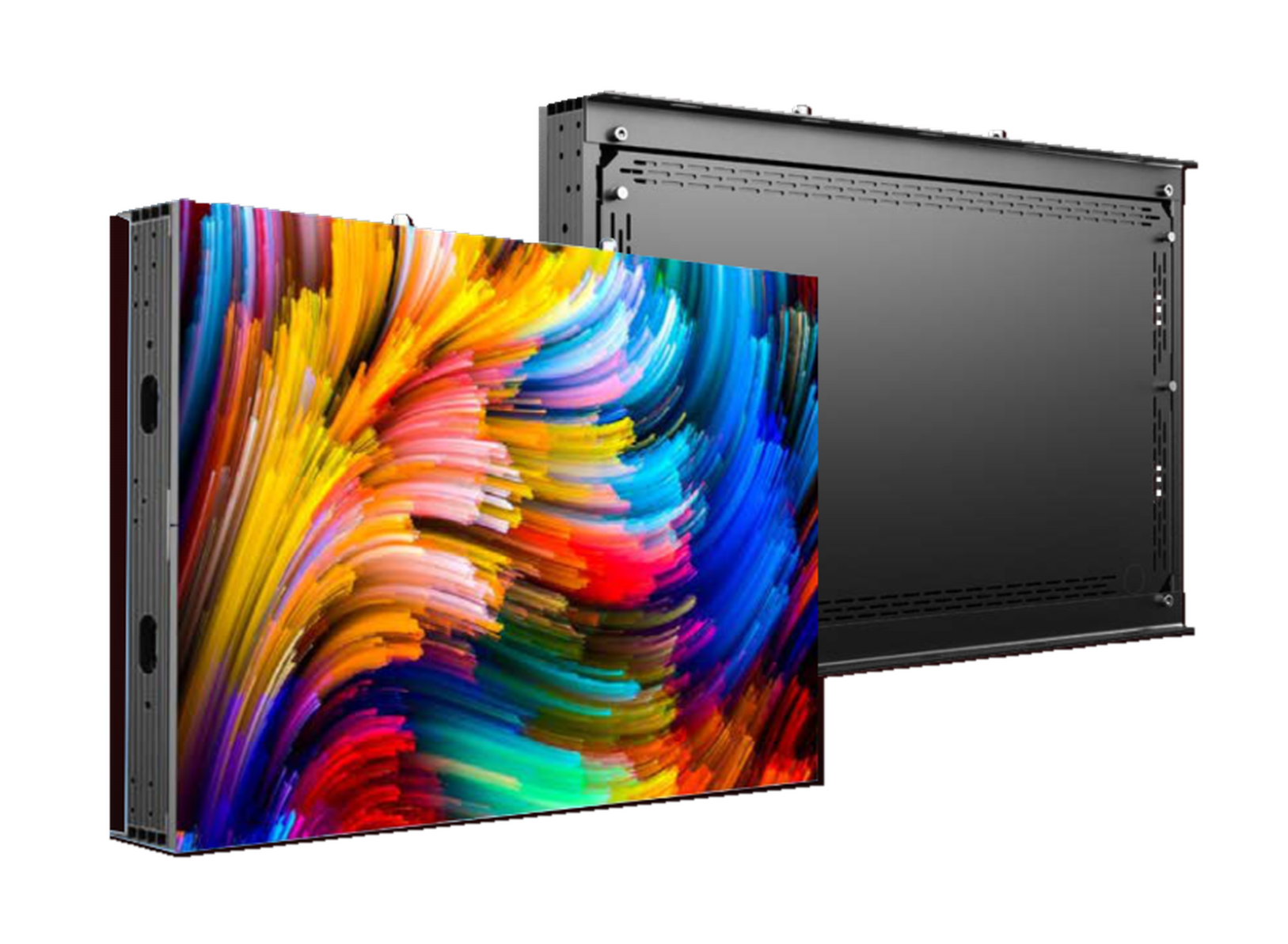
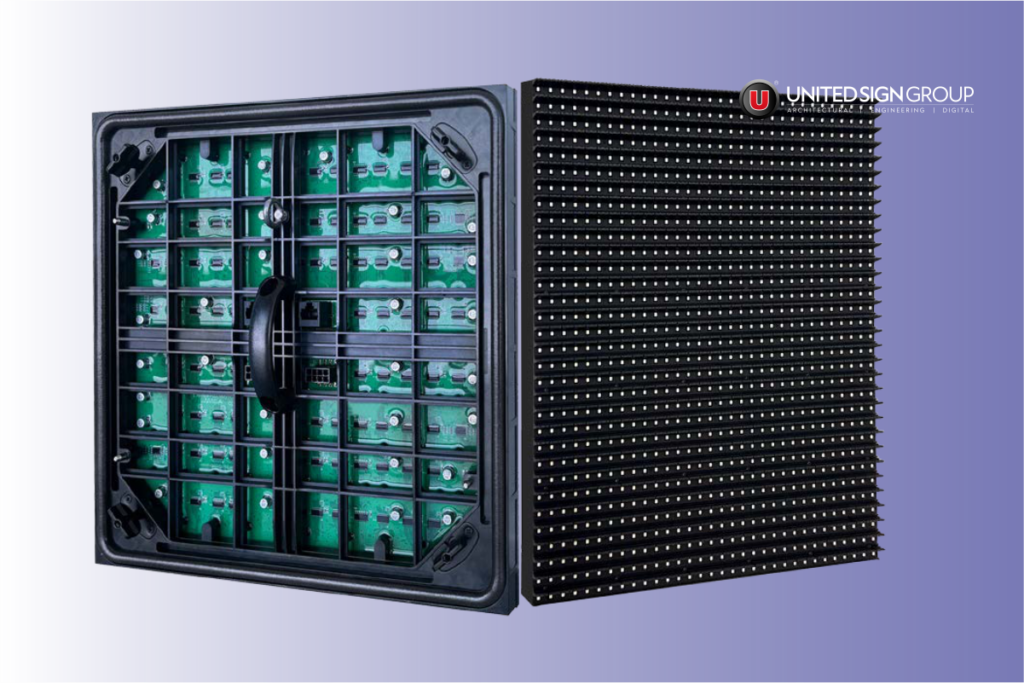
Front access cabinets let technicians service modules from the display face. Rear access cabinets need clearance behind the wall, which can be fine on open structures but awkward on rooftops, facades, and constrained urban sites.
For integrators, front access often means easier maintenance planning and fewer access compromises. For architects, it can mean cleaner site lines and less dependence on deep structural clearances.
Where Front Access Fits Best
Front access outdoor LED works best when the project has limited rear clearance, a tight perimeter, or a facade that must stay visually clean. It is especially practical for digital billboards, building-mounted displays, and sites where service crews cannot always work from behind the cabinet.
Genesis II supports that kind of deployment with a weatherproof cabinet, monitoring, serviceability, and design flexibility. It is built for long-life outdoor use in hot climates, coastal humidity, and freezing winters.
Where Rear Access Still Makes Sense
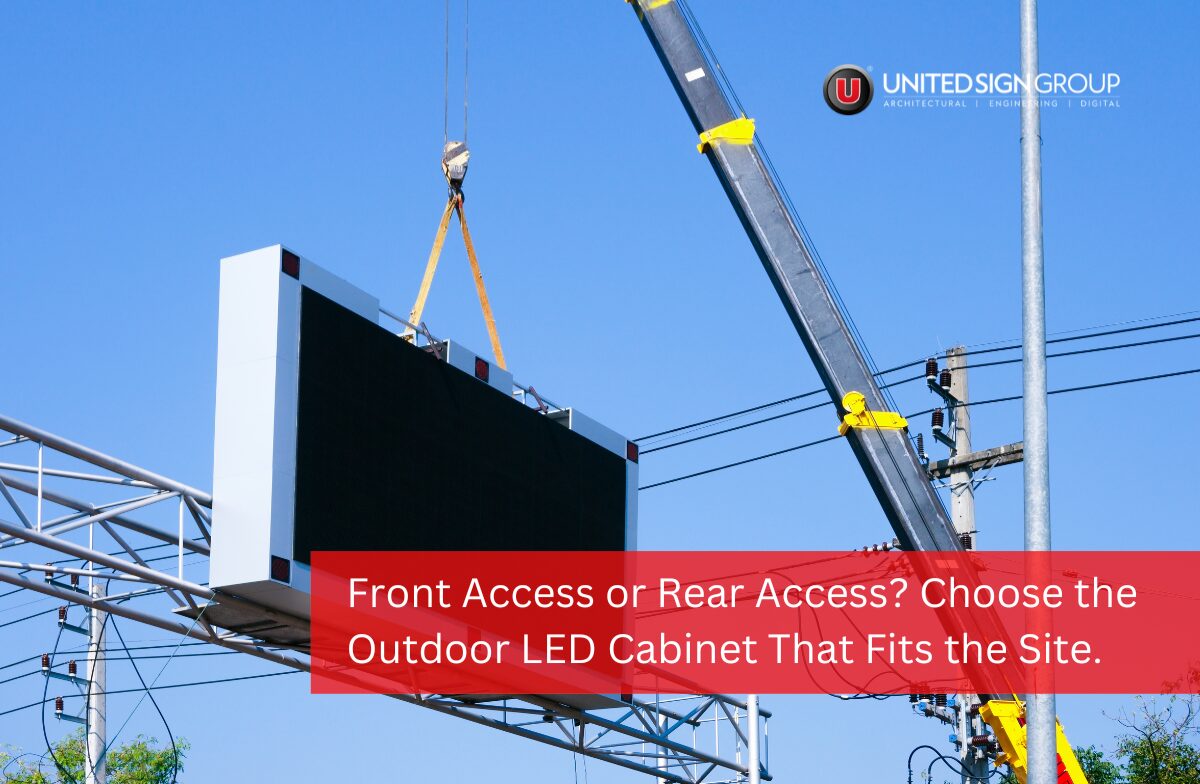
Rear access remains useful when the site gives you generous service space and the structure can accommodate it without friction. It can be straightforward on ground-mounted frames, open towers, and large installations where access lanes already exist.
If the team can build around the cabinet and maintain it comfortably, rear access can work well. The problem is not rear access itself. The problem is forcing rear access into a site that does not truly support it.
Durability, Brightness and Serviceability
A good outdoor LED cabinet should do more than open in the right direction. It should stand up to weather, preserve brightness, and keep service simple over years of use.
Genesis II brings common-cathode energy savings, strong brightness and contrast, and monitoring that supports long-term service planning. That makes it relevant for both outdoor LED signs and digital billboards where uptime matters more than showroom language.
For buyers, this is the useful rule: choose the access style that reduces future friction, not the one that merely looks familiar on a spec sheet.
Buying factor for project teams:
Use front access if your project has:
• Tight rear clearance
• Facade-mounted or urban installs
• Difficult service access
• A need for cleaner architectural integration
Use rear access if your project has:
• Open service space behind the screen
• A structure designed for back maintenance
• Easy crew access and low physical constraints
Project Fit in One Line
Front access outdoor LED is the better fit when service space is tight. Rear access is fine when the site gives you room to breathe. Genesis II helps integrators and architects choose based on the project, not the habit.
We’d love to help you…
If you are planning an IP-rated LED project, a roadside digital billboard, or a weatherproof outdoor LED sign, get project-specific advice before you lock the cabinet style. Genesis II gives you the performance base. The site plan decides the access strategy.