New York’s Sign Rules Aren’t One-Size-Fits-All
New York doesn’t have one set of sign rules. It has layers of them, and which layers apply to your storefront depends on your borough, your zoning district, and sometimes even whether your building sits inside a historic district. If you’re a property or storefront owner planning an outdoor LED display in New York, understanding this landscape before you commit to a design saves time, money, and a lot of back-and-forth with city offices.
NYC’s Outdoor LED Display New York Rules, Explained
The NYC Department of Buildings issues sign permits., and illuminated signs also need a separate electrical permit, which you file alongside the standard one. That alone puts NYC ahead of most cities in complexity. The NYC Zoning Resolution adds another layer. It sets permitted sign area, height, and illumination type based on your zoning district. Rules can shift from one block to the next.
Then there’s the Landmarks Preservation Commission. Any sign on a designated individual landmark or inside one of the city’s historic districts needs LPC approval before a DOB permit can move forward. New York has more than 150 historic districts across the five boroughs. This affects far more storefronts than owners expect — many don’t realize their block carries that designation at all.
This isn’t a complete list of every requirement that could apply to your property. Rules vary by district and change over time. Confirm your zoning designation and landmark status directly with NYC DOB or the LPC before starting your project, or work with a signage partner who checks this before design begins.
Outdoor LED Display New York: Brightness and Size Rules
Two things drive most of the friction between a great sign design and a DOB rejection: sign area and brightness.
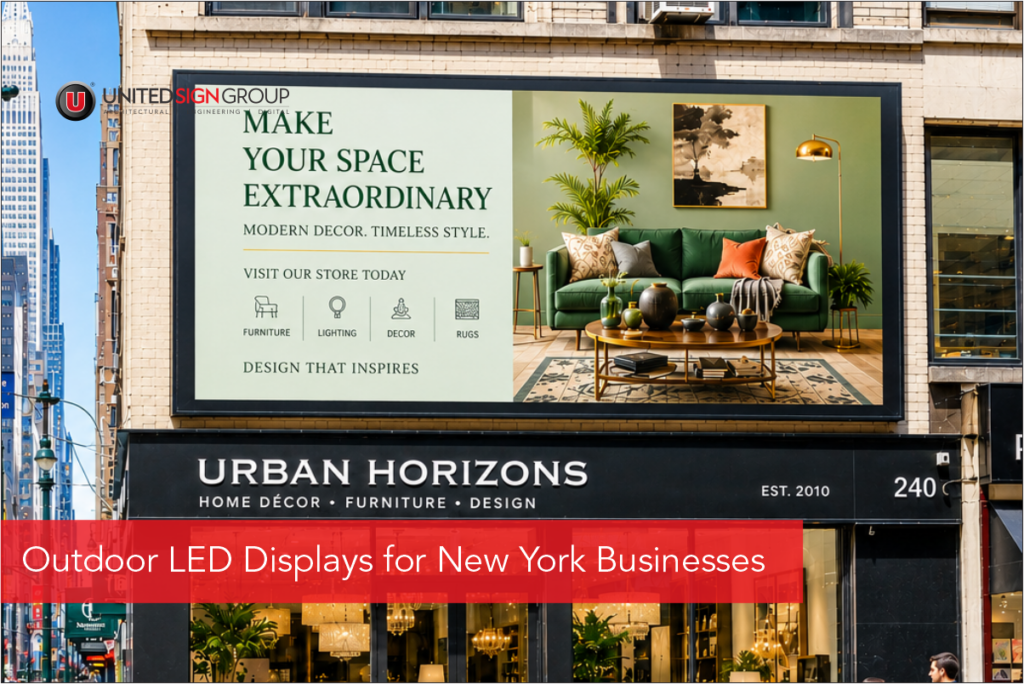
For any outdoor LED display, New York ties permitted sign area to your zoning district and building frontage, not a flat citywide number. A display sized for a wide-open commercial corridor may be oversized for a denser mixed-use block a few streets over. This is why you need to confirm zoning designation before making layout decisions, not after.
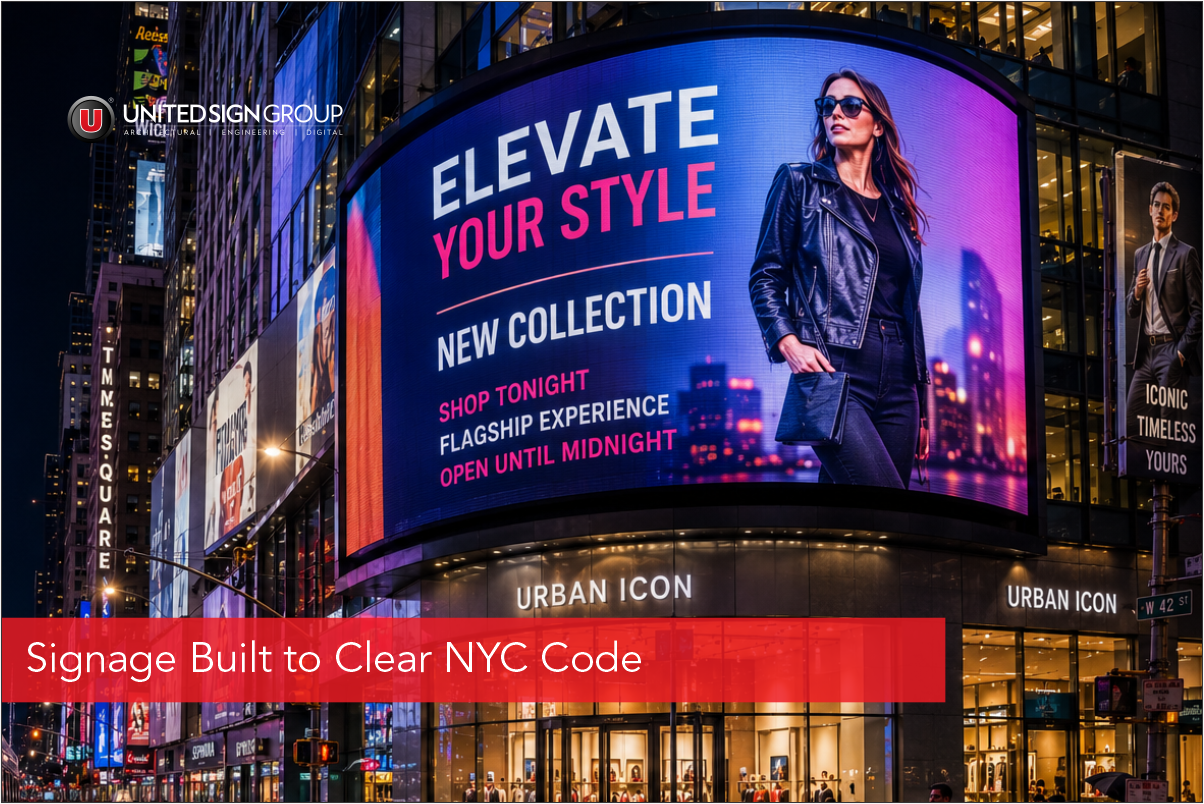
Brightness control matters just as much. In dense streetscapes, a sign competes with storefronts, traffic signals, and other displays within a few feet of each other. A display that’s too bright can draw complaints or scrutiny, even if it technically clears sign area rules. One that’s dimmed appropriately reads clearly without overwhelming the block. Getting this right is as much a design decision as it is a compliance one.
Planning Your Outdoor LED Display New York Project: A Practical Checklist
- Confirm your zoning district and what it permits for sign area, height, and illumination type.
- Check your landmark status. If your building sits within a historic district or is individually designated, LPC review comes before DOB permitting.
- Ask whether your building has additional restrictions. Co-op boards and landlords sometimes layer their own facade rules on top of city code.
- Plan for two permit tracks if your sign is illuminated. You file a standard sign permit and an electrical permit separately.
- Talk to a licensed contractor early. DOB filings require licensed, registered contractors, and starting that relationship early avoids delays later.
- Build in review time. LPC submissions and DOB correction letters can add weeks to a timeline that wasn’t planned for it.
Why Getting Your Outdoor LED Display New York Permit Right Matters
A rejected permit or an unexpected correction letter near opening day often costs signage projects time and money in New York. Confirming zoning and landmark status before design starts, rather than after a sign is built, is the difference between a smooth install and a costly redesign.
Outdoor LED Display New York: Why Local Experience Helps
A team that handles zoning review, DOB filing, LPC coordination, and electrical permitting under one roof makes working through NYC’s permitting layers easier. United Signs has installed 10,000+ outdoor LED displays across New York, covering all five boroughs and the broader Tri-State region. The team manages design, engineering, and permitting in-house from the start of a project.
Before finalizing your outdoor LED display New York design, confirm your zoning and landmark status directly with NYC DOB or the LPC. Or work with a signage partner who handles that review as part of the process.
FAQs
The NYC Department of Buildings issues sign permits through its borough offices. Illuminated signs require a separate electrical permit filed at the same time.
If your building is an individual landmark or sits within a designated historic district, it needs LPC approval before DOB issues a permit. Confirming this with the LPC or DOB early avoids delays.
Brightness rules aren’t the same everywhere. Appropriate illumination depends on your zoning district and surroundings. It’s worth confirming illumination requirements for your district directly with DOB.
Timelines vary based on zoning complexity, whether your project needs LPC review, and whether DOB sends back correction letters. Building in extra review time is safer than assuming a fast turnaround.