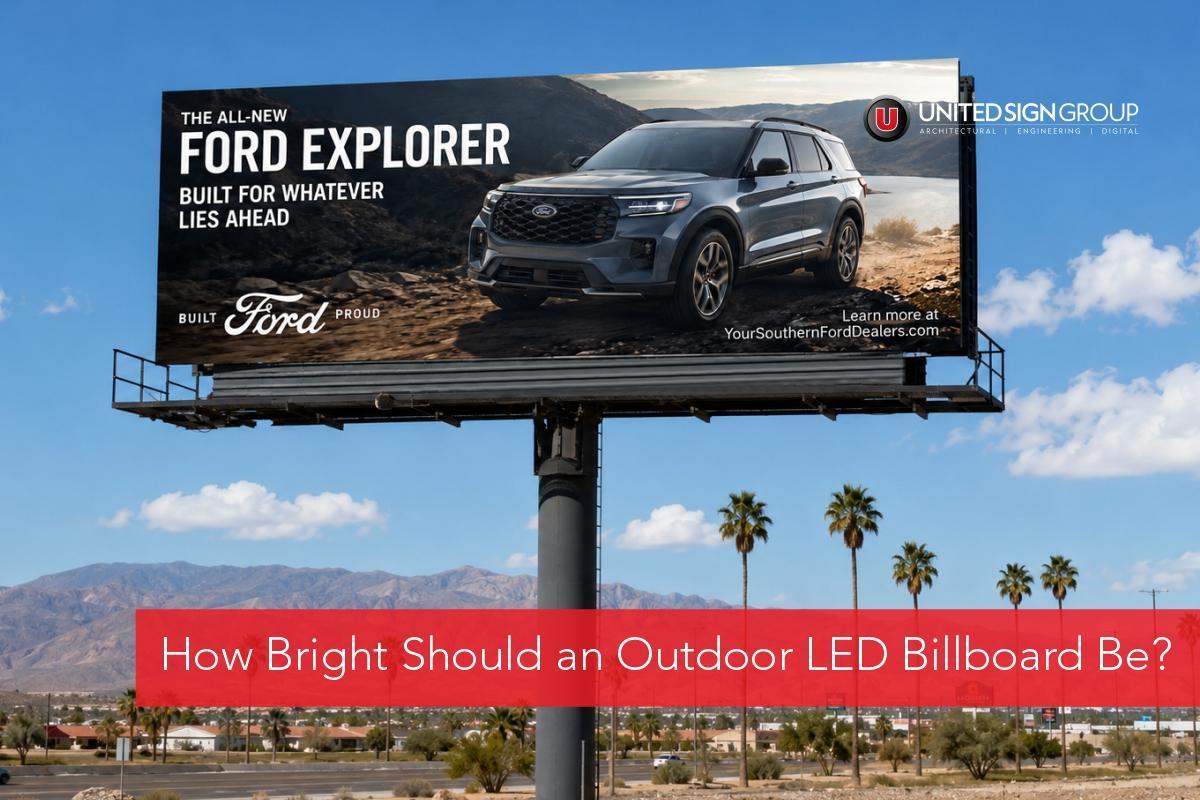
Outdoor LED billboards have one job: be seen. Yet every year, billboard owners and municipalities approve displays that look brilliant at night but fade into a dull, washed‑out blur the moment the sun comes up. It’s one of the most common and most expensive mistakes in outdoor advertising.
Brightness isn’t just a number on a spec sheet. It’s a performance factor tied to safety, legibility, energy consumption, and long‑term ROI. And with today’s technology, brightness is no longer about brute force; it’s about engineering.
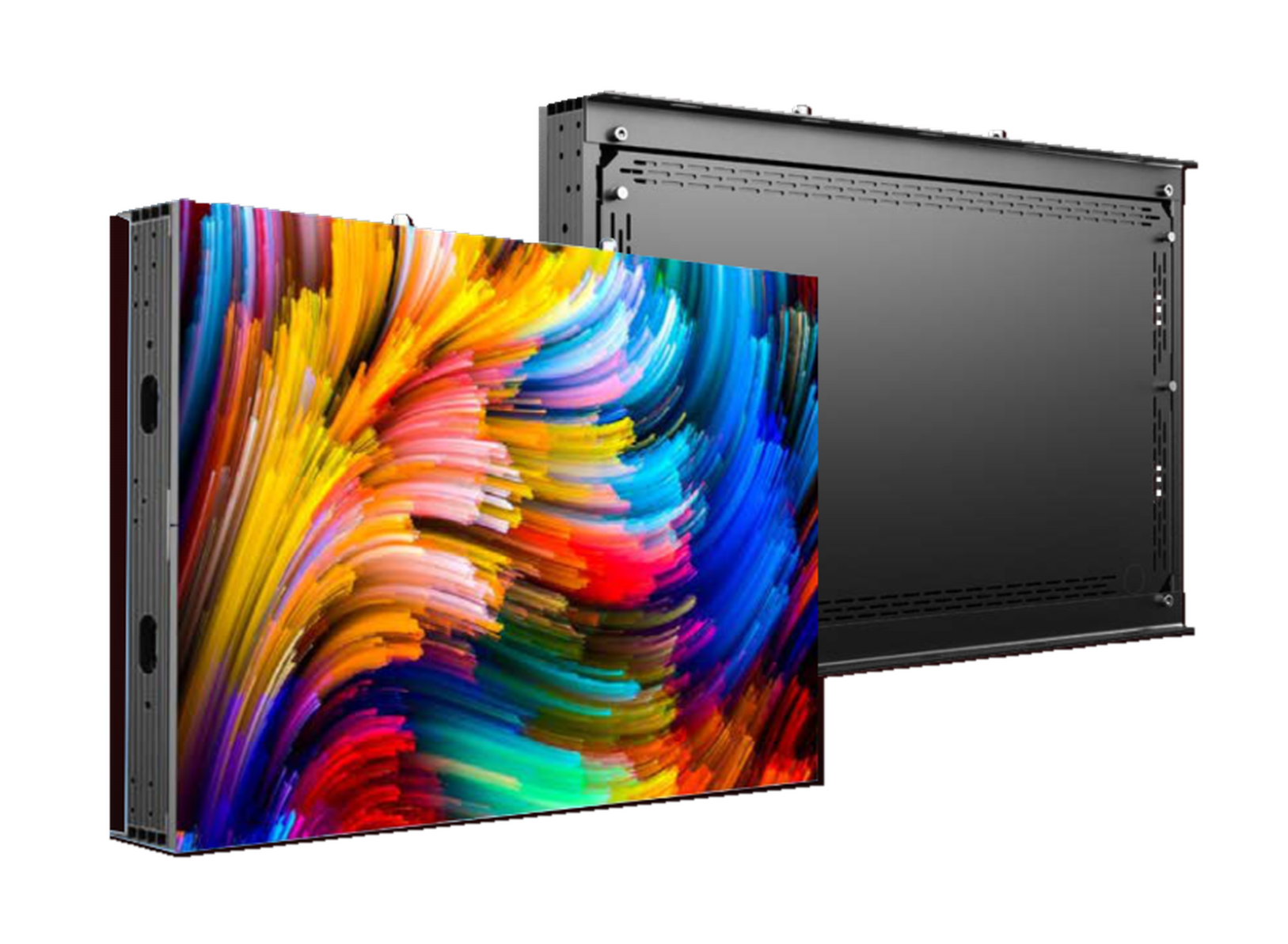
At United Signs, we spend a lot of time helping clients understand what actually determines outdoor LED readability. Spoiler: it’s not just “more nits.” It’s the relationship between nits, contrast, louvers, glare control, cabinet durability, cooling, and monitoring, all of which come together in our Genesis II outdoor LED platform.
Let’s break it down in a way that helps you make a confident, informed buying decision.
The Real Problem: The Sun Is Your Competitor
If you’ve ever driven past a digital billboard at noon and thought, “Is that ad supposed to look that faded?,” you’ve seen what happens when brightness and contrast aren’t engineered for real‑world conditions.
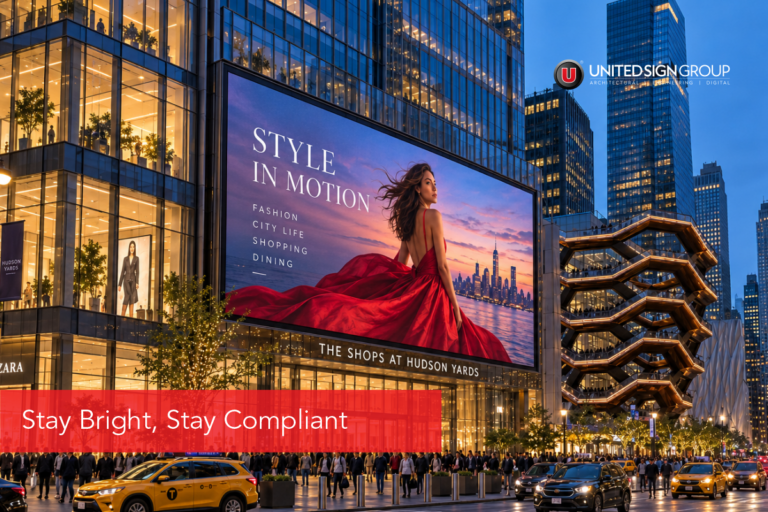
Outdoor LED signs must compete with direct sunlight, reflective pavement, glare from windshields, seasonal sun angle changes, and unpredictable weather. A billboard that underperforms in these conditions doesn’t just look bad, it loses advertisers, frustrates city planners, and undermines public trust in digital signage.
This is why brightness matters. But brightness alone is not enough.
Understanding Nits: The Most Misunderstood Number in LED Buying
A nit measures luminance, how much light the display emits per square meter. For outdoor LED billboards, here’s the reality:
– 5,000-6,000 nits work only in shaded or north‑facing locations
– 7,000-8,000 nits is the standard for most U.S. roadside digital billboards
– 9,000-10,000+ nits is required for harsh sun, southern exposure, or high‑glare environments
United Signs’ Genesis II displays are engineered to reach industry‑leading brightness levels without the energy waste typical of older LED designs. That’s because Genesis II uses common‑cathode power architecture, which reduces heat and power loss, allowing high brightness without high operating costs.
But even a 10,000‑nit display can look terrible if the contrast is poor.
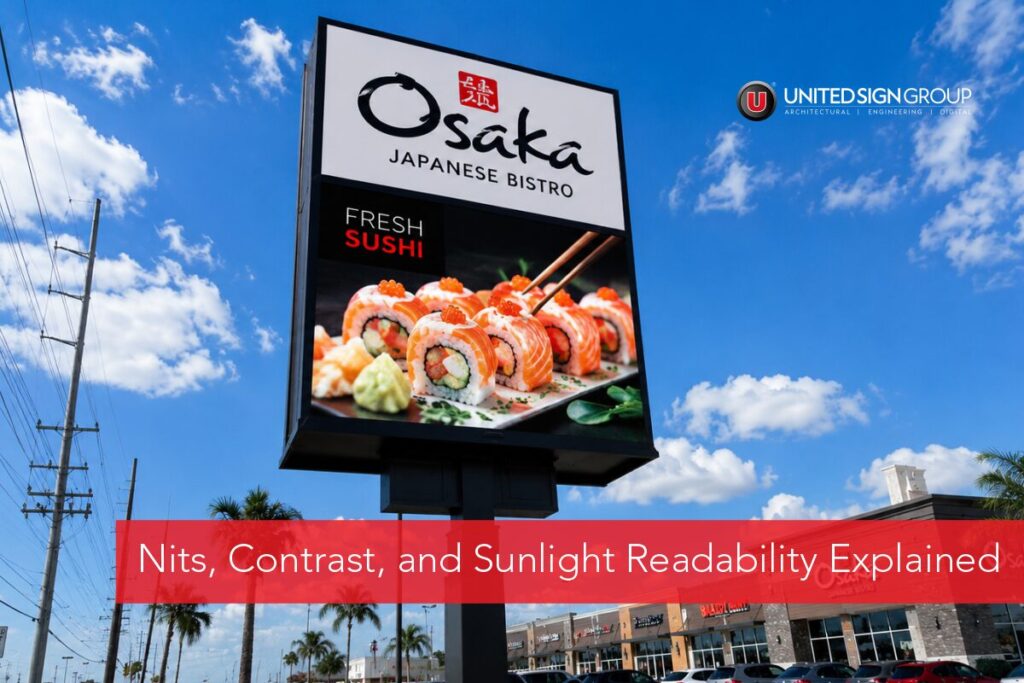
Contrast: The Secret Ingredient Behind True Daylight Readability
Brightness gets all the attention, but contrast is what makes content actually readable.
Contrast is the difference between the darkest black and the brightest white the display can produce. High contrast makes images crisp, text legible, and colors vibrant even when the sun is hitting the face of the display.
Genesis II improves contrast through:
– Deep, precision‑engineered louvers
– Anti‑glare mask materials
– Pixel‑level shading geometry
These elements block stray sunlight from washing out the LEDs, allowing the display to maintain clarity without cranking brightness to wasteful levels.
Louvers & Glare Reduction: The Unsung Heroes of Outdoor LED
Louvers are tiny overhangs above each pixel. They may be small, but they determine whether your billboard looks crisp or cloudy.
Poor louvers create washed‑out images.
Good louvers create sharp contrast and lower energy use.
United Signs designs louvers that reduce direct sun reflection, improve black levels, minimize glare, and enhance color depth. This is why two billboards with the same brightness can look completely different in the real world.
Why IP‑Rated, Weatherproof Cabinets Matter for Brightness
Brightness degrades when moisture, dust, or heat infiltrate the cabinet. That’s why IP‑rated LED cabinets are non‑negotiable for municipalities and billboard operators.
Genesis II cabinets are engineered with weatherproof sealing, corrosion‑resistant materials, optimized airflow channels, and protection against dust, rain, snow, and UV exposure.
A compromised cabinet leads to dimming, color shifts, and premature failure, problems that brightness specs alone won’t reveal.
Cooling & Energy Efficiency: The Hidden Side of Brightness
High brightness generates heat. Heat kills LEDs.
Genesis II’s common‑cathode design powers each color channel independently, reducing heat at the source. The result is lower operating temperatures, longer LED lifespan, more stable brightness over time, and up to 20–30% energy savings.
For municipalities focused on sustainability, this is a major advantage.
Monitoring & Serviceability: Because Brightness Must Be Maintained
A bright billboard is only valuable if it stays bright.
United Signs integrates real‑time remote monitoring, temperature and power diagnostics, module‑level failure alerts, and front‑and‑rear service access. This ensures uptime, compliance, and advertiser satisfaction without surprise maintenance costs.
Case Study: When Brightness Engineering Saved a Billboard
A Midwest operator installed a Genesis II display on a notoriously difficult south‑facing location. The previous LED board washed out daily between 11 AM and 3 PM.
After upgrading:
- The 10,000‑nit peak brightness cut through the glare
- Louvers improved contrast by nearly 40%
- Energy use dropped 22%
- Advertisers renewed contracts instead of canceling
This is what happens when brightness is engineered.
So…How Bright Should Your Outdoor LED Billboard Be?
Here’s a practical guide:
- Shaded or north‑facing: 6,000-7,000 nits
- Typical roadside: 7,500-8,500 nits
- High‑glare or southern exposure: 9,000-10,000+ nits
- Municipal pedestrian signage: 5,000-6,500 nits with auto‑dimming
United Signs evaluates sun angles, site conditions, and local code requirements to recommend the right brightness, not too dim, not too bright, but engineered for your environment.
Why United Signs Leads in Outdoor LED Brightness
Because brightness is not a number, it’s a system.
United Signs delivers:
- High‑brightness outdoor LED signs
- High‑contrast digital billboards
- IP‑rated, weatherproof Genesis II cabinets
- Common‑cathode energy savings
- Advanced monitoring and diagnostics
- Serviceability designed for long‑term ROI
This is outdoor LED built for American highways, municipalities, and real‑world conditions, not lab specs.
FAQs
- What’s the ideal brightness for a digital billboard?
Most roadside boards need 7,500-10,000 nits, depending on sun exposure.
- Do brighter signs use more power?
Not with common‑cathode architecture. Genesis II delivers high brightness with lower energy consumption.
- What makes a billboard readable in direct sunlight?
A combination of brightness, contrast, louvers, and glare reduction, not brightness alone.
- Why does IP rating matter?
Because moisture and dust degrade brightness and shorten LED lifespan.
Talk to an Outdoor LED Expert at United Signs
If you’re evaluating outdoor LED billboard brightness or planning a new digital display, the right engineering decisions today will determine your ROI for the next decade.
United Signs helps billboard owners and municipalities choose displays built for maximum visibility, durability, and long‑term performance
Ready to spec the right brightness for your next outdoor LED billboard?
Talk to our outdoor LED expert today.