If you own or manage a billboard, you’ve probably heard the term “flex face” thrown around by sign vendors without much explanation. A flex face billboard frame isn’t complicated once you break it down, but understanding it matters if you’re deciding how to build or refresh a structure. Here’s what flex face framing actually is, how it works, and when it makes sense.
What a Flex Face Billboard Frame Actually Means
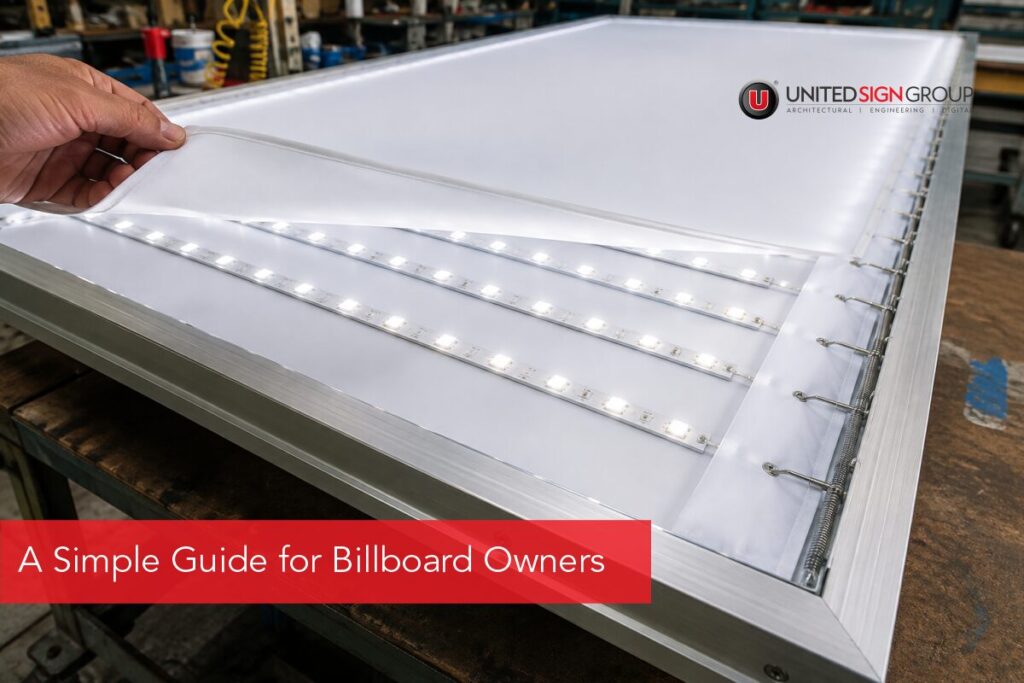
Flex face framing refers to a billboard cabinet built around a tension frame, with a flexible vinyl or fabric sign face stretched tightly across it. Instead of bolting or riveting a rigid panel in place, crews pull the material taut and secure it around the edges, similar to how a drum skin stretches over its frame. This is different from older billboard construction methods that used rigid panels or individual painted sections.
The face material itself is usually a translucent vinyl or fabric substrate. Manufacturers design it to hold color well when backlit and to resist tearing, sagging, and UV breakdown from years of outdoor exposure.
Why the Tension Frame Matters
The tension frame is what makes a flex face billboard frame practical for large sign structures. Rigid faces become heavy and expensive at big dimensions, which limits how large a single-panel sign can realistically be. A flex face billboard frame uses the same tension fabric structure principles seen in larger fabric buildings, letting the flexible material do the work across a wide area without needing the same structural bulk a rigid panel would require.
This also affects how the sign is serviced. You can ship a flex face rolled or flat, which cuts down freight costs significantly compared to shipping large rigid panels. It doesn’t require specialized equipment to install either, which matters for billboard owners managing multiple locations.
Where Flex Face Is Used
Flex face framing shows up most often on:
- Standard billboard structures, both roadside and highway-facing
- Large building-mounted cabinets
- Pylon signs and monument crowns where face size is substantial
- Shopping center anchor signage
It’s especially common anywhere a face needs quick replacement, since swapping a flex face is generally faster and cheaper than replacing a rigid panel of the same size.
Flex Face vs. Rigid Panel: A Quick Comparison
| Factor | Flex Face | Rigid Panel |
| Weight at large sizes | Lighter, easier to handle | Heavier, costlier at scale |
| Shipping | Can ship rolled or flat, lower freight cost | Requires crating, higher freight cost |
| Installation | No specialized equipment typically needed | Often needs lifts or specialized rigging |
| Face replacement speed | Generally faster | Slower, especially for large panels |
| Backlit color quality | Strong, translucent materials built for illumination | Varies by panel material |
| Durability | Resists tearing, sagging, and UV breakdown when properly installed | Durable but heavier construction adds cost |
| Best fit | Large-format illuminated cabinets, frequent face changes | Smaller signs, static installations |
What to Ask About a Flex Face Billboard Frame
If you’re weighing flex face framing for a billboard project, a few questions are worth asking any vendor:
- What substrate does the vendor use? Materials vary in durability, color performance, and UV resistance.
- Is the tension frame compatible with your existing cabinet, or does the structure need modification?
- How does the vendor secure the face to the frame? Poor tensioning can lead to sagging or wrinkling over time.
- What’s the expected lifespan of the face material under your specific climate conditions?
- How does the vendor handle replacement if the face gets damaged or needs a design update?
Retrofitting an Existing Structure with a Flex Face Billboard Frame
One advantage of flex face framing is that it can often go onto an existing billboard structure instead of requiring a full rebuild. This depends on the condition of the current cabinet and whether it can support a tension frame system, so evaluate the existing structure first before committing to a retrofit.
Why This Matters for Billboard Owners
Choosing the right face system affects more than appearance. It affects how often you’ll need to service the sign, how much a design update costs, and how the sign performs once lit. For owners managing multiple billboard locations, the lower shipping and installation costs of a flex face billboard frame can add up significantly over time compared to rigid panel systems.
FAQs
No. Manufacturers also use it on large building-mounted cabinets, pylon signs, and monument crowns wherever a project needs a large, illuminated face.
This varies by substrate and climate conditions, but manufacturers build quality materials to resist tearing, sagging, and UV breakdown for years of outdoor service.
Often, yes, though it depends on whether the existing structure can support a tension frame system. Evaluate the current cabinet before confirming a retrofit.
Yes. Manufacturers specifically design translucent flex face substrates to hold color well when backlit, which is part of why they’re common on illuminated billboard structures.