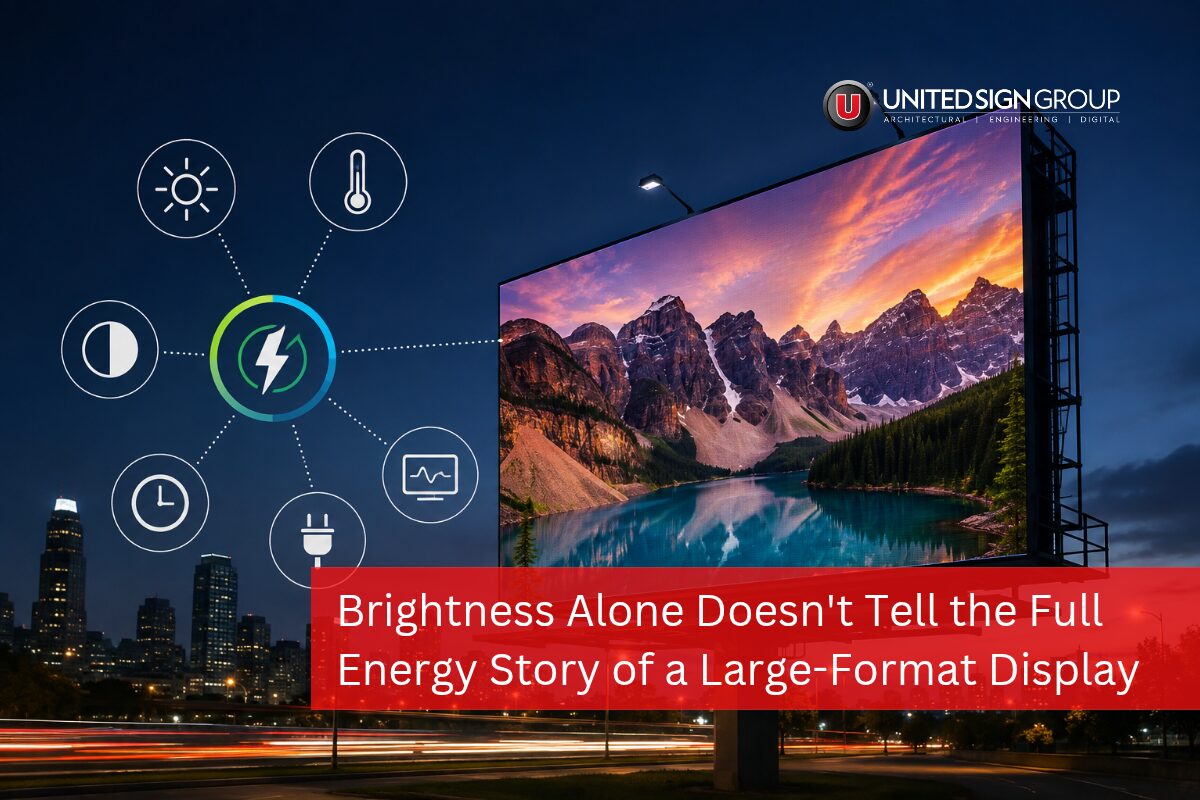
We’re talking about a hot display topic today: Large-Format LED energy savings. A few years back, a major national retail chain rolled out large-format outdoor LED displays across its flagship locations, chasing maximum brightness at every storefront. It worked. Foot traffic ticked up. Then the utility bills landed.
Nobody had modeled what “always-on, always-bright” cost across dozens of locations running around the clock. The displays weren’t broken. They were built around brightness alone, with no real strategy for power efficiency. It’s a mistake more property owners and DOOH buyers make than you’d think, and it’s entirely avoidable with the right display architecture.
Large-Format LED Energy Savings: Brightness Gets the Attention, Efficiency Acts As a Goalie for the Budget
When most buyers evaluate a large-format outdoor LED display, brightness is the first spec they chase. Nits matter. A display that washes out in direct sunlight is basically failing. But brightness is only half the equation. The other half is how much energy that brightness costs you every day, every month, and over the ten-plus years you’ll own the asset.
Large-format LED energy savings isn’t about dimming your display or compromising on visibility. It’s about engineering the panel, drivers, and software so you get full-strength performance without paying for wasted electricity. That’s exactly where digital billboard and DOOH LED buyers should focus, since many manufacturers optimize for peak nits and treat energy efficiency as an afterthought.

Common-Cathode Driving: Less Waste With Better Control
Traditional LED driving methods lose meaningful energy as heat rather than light. Common-cathode driving architecture changes that. It changes the current flow to each LED chip, reducing resistance losses and putting more of the power directly into visible brightness instead of wasted heat. Across thousands of modules on a large-format outdoor LED wall, that efficiency-gain compounds fast into real, measurable savings.
Automatic Brightness Adjustment: Matching Output to Actual Conditions
The full brightness of a billboard display on a cloudy October morning is a good example of excess power consumption. Brightness is meant to be adjusted based on ambient light in order to change the power output in an efficient and consistent way. Automatic adjustments are made to lessen the power output at night and increase it during the harsh light of midday. It also helps the display’s longevity because components that run at maximum power decay the fastest.
High-Efficiency LEDs: The Foundation Everything Else Builds On
None of the smart driving or adaptive software matters much if the LED chips themselves are inefficient. High-efficiency LEDs convert a greater share of electrical input into usable light, so your display achieves the same visual impact while drawing less power. Chip quality belongs right alongside pixel pitch on every buyer’s checklist.
Redundancy and Fast Installs: Uptime Starts Before the Display Ever Powers On
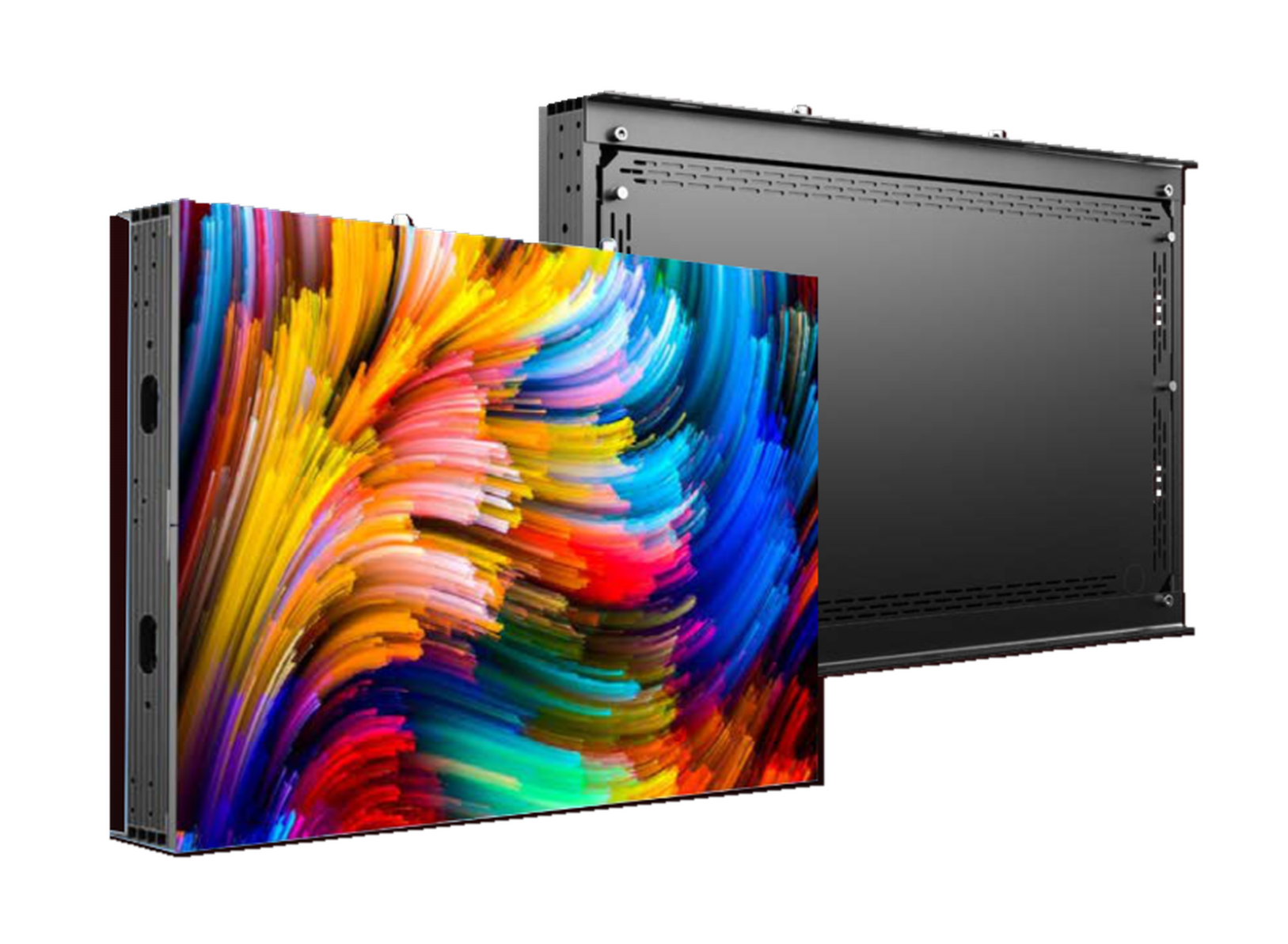
An energy efficient display doesn’t mean anything if it’s not operational. United Signs’ March II large-format LED energy savings display uses redundant power. If one supply set fails, the back up system starts up with no interruption. Those same concepts are carried into the installation. Quick detach fasteners and plug-in power and signal connectors get the crew out and you display operational faster.

Cloud-Based Energy Management: Visibility Into What You’re Actually Spending
In order to optimize something, you need to have a measure of it first. Cloud based energy management provides real time power consumption of a single display or many across a system. It also has integrated monitoring to check pixel health and power supply status.
The Real Returns of Large-Format Ownership
Add it all up, and energy-efficient ownership is a lot more than just sustainability. It’s visibility that holds up in any light and power savings on every invoice. It’s also redundancy that keeps displays running (like Bolt), faster installs, and monitoring that catches issues early. That’s the full picture of ROI, not just the brightness spec sheet.
Want to see what an energy-efficient large-format display could look like for your property? Reach out to United Signs for a display recommendation built around your site, your budget, and your long-term energy goals.