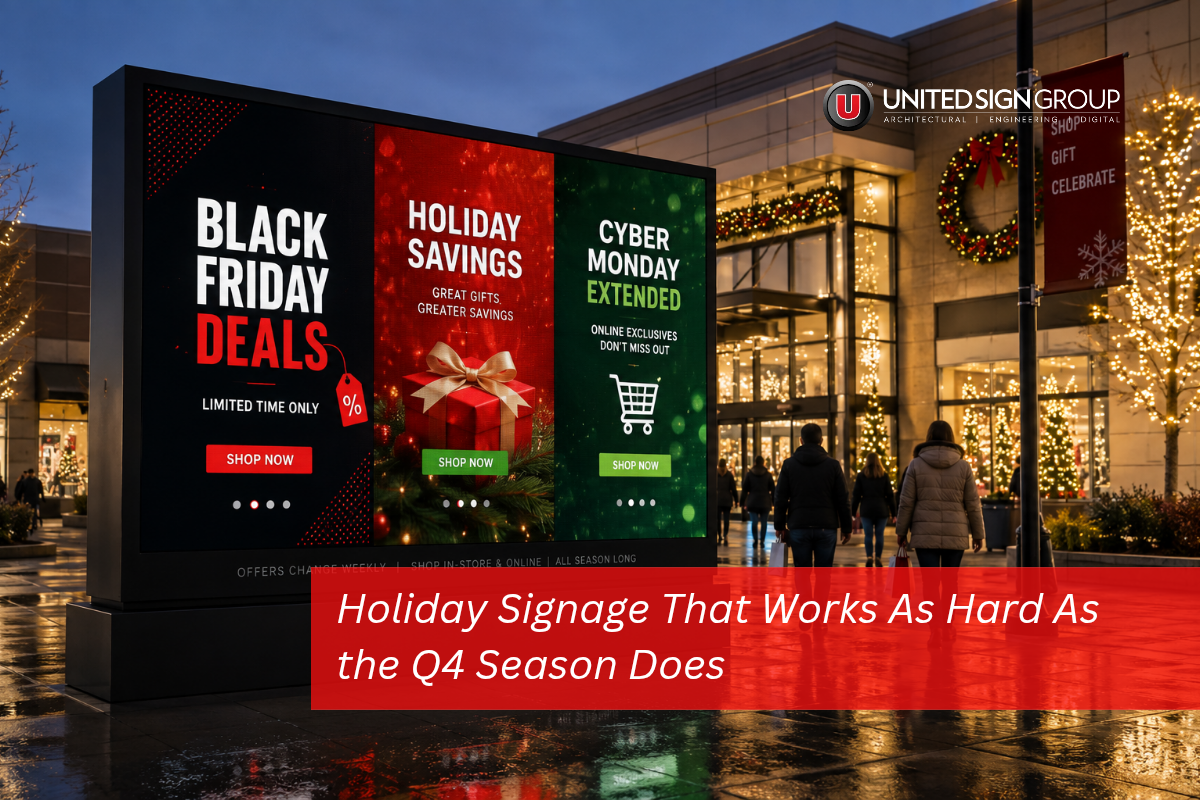
Holiday signage is working harder this quarter than almost any other marketing tool a brand has. Walk through any storefront, mall corridor, or roadside stretch in October and November and it’s doing real, visible work: pushing offers, driving coupon redemptions, counting down to Black Friday, prepping shoppers for the season, and putting new products in front of foot traffic that’s already primed to buy. Black Friday and the holidays aren’t a single weekend anymore, they’re a stretched-out, months-long buying window, and signage is one of the few channels built to hold up messaging that entire time.
Holiday Signage: What It’s Actually Doing Right Now
Holiday shopping in 2025 set a new record, with more than 202 million consumers shopping between Thanksgiving and Cyber Monday, the highest number ever tracked (Source: NRF). But the more useful shift for anyone planning holiday signage isn’t the shopper count, it’s the timeline. Retailers who spread promotions and value moments across October and early November, instead of loading everything onto one weekend, saw steadier engagement and avoided the early-November sales dip that used to be almost automatic.
That shift changes what holiday signage needs to do. A single Black Friday banner isn’t the play anymore. Signage needs to flex across weeks, not days, updating as offers change, as inventory shifts, and as the calendar moves from Black Friday into December gifting and January clearance.
What Signage Is Actually Working Overtime For
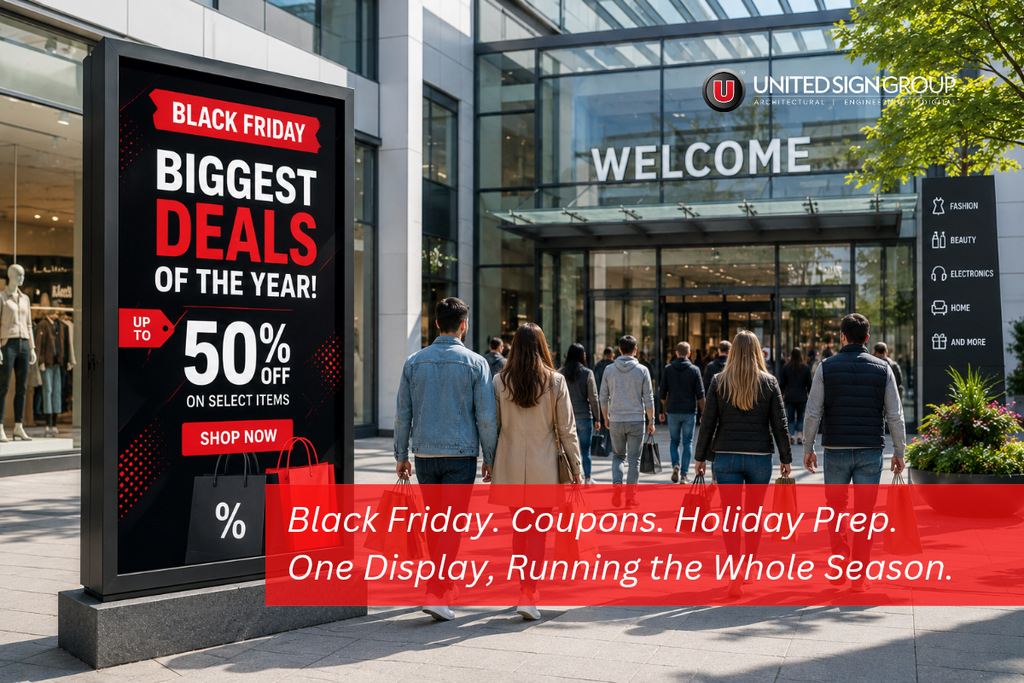
None of this is background noise. Every piece of holiday signage right now is doing one of these specific jobs:
- Offers and discount messaging. Percentage-off signage, bundle deals, “buy one get one” callouts, timed to shift as promotions change week to week.
- Coupons and redemption codes. QR-code driven signage that turns a glance into a scanned coupon, tracked through to redemption.
- Black Friday and Cyber Monday countdowns. Displays built to build urgency in the weeks leading up to the day, not just on the day itself.
- Holiday prep and gift guides. Seasonal signage points shoppers to gift categories, extended hours and shipping cutoff dates.
- Branding refreshes. Festive colors, seasonal logos, and campaign themes rolled out across signage first, before anywhere else.
- New product promotion. Q4 is peak launch season, and a new product needs visibility fast. Signage is often the quickest way to get it in front of real foot traffic.
LED Signs for Holidays vs. Static Displays
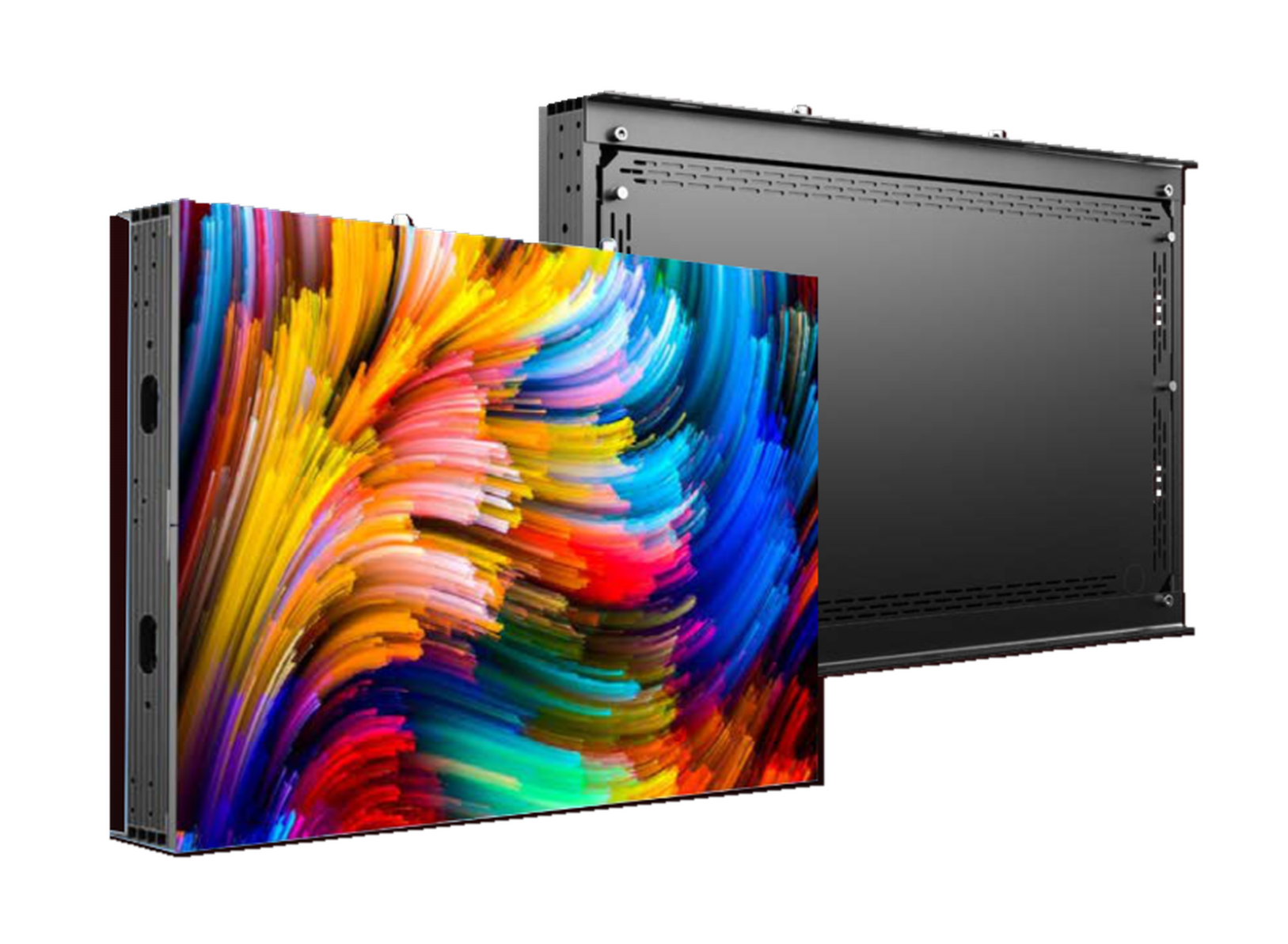
Static holiday signage has one obvious limit: once it’s printed, it’s locked. LED signs for holidays don’t have that problem. A retailer running a Tuesday-only doorbuster doesn’t need a new banner, they update the display and move on. That flexibility is exactly why LED and digital formats have become the default for anything holiday-related that needs to change more than once a season.
Contextual, Time-of-Day Holiday Messaging
The trend showing up consistently in holiday signage right now is content that shifts based on time of day and foot traffic. Morning commuters see one message, lunch traffic sees another, evening crowds get something different again. Static print can’t do this. LED signage can, and it’s becoming close to an expectation rather than a bonus feature.
Remote, Cloud-Managed Holiday Content
Updating messaging across every location from one dashboard, without a site visit, matters more in Q4 than any other quarter. Promotions change fast during the holidays, and a multi-location brand that has to physically visit each site to swap a banner is always going to be a step behind one that pushes an update remotely in minutes.
Signage for Marketing: Where It Fits Alongside Other Channels
Signage for marketing isn’t meant to replace paid social, search, or email during the holidays, it’s meant to do what those channels structurally can’t: hold a consistent, unskippable brand presence in a physical location for the entire length of the season. A billboard or storefront display doesn’t get an ad blocker. It doesn’t need a fresh bid every day. Once it’s live, it just keeps working, through Black Friday, through December, and into whatever comes next.
Out-of-home advertising has posted 18 consecutive quarters of growth heading into this year, and LED-driven formats are doing much of that work. Brands keep coming back to signage for Q4 specifically because it doesn’t get scrolled past the way a paid social ad does.
Our Interesting Take
A multi-location retail brand running holiday signage alongside its usual digital campaigns updated an outdoor LED display remotely, without a single site visit, as offers shifted from early Black Friday deals into December gifting messaging. The display kept delivering impressions straight through January clearance, long after single-day promotions from other channels had already run their course.
The Holiday Signage That Doesn’t Stop When the Season Does
Most Q4 marketing campaigns have a shelf life measured in days. Holiday signage, especially LED and digital formats, doesn’t. It’s still running for New Year’s, still updating for a January clearance push, still working long after this year’s Black Friday countdown has been taken down. That’s the real argument for giving holiday signage a real seat in the marketing plan, not an after-thought squeezed in at the last minute.
Talk to us about your holiday signage plans. We can walk through what a fast, fully-managed LED display installation looks like, from design to a live display before the season gets away from you.